

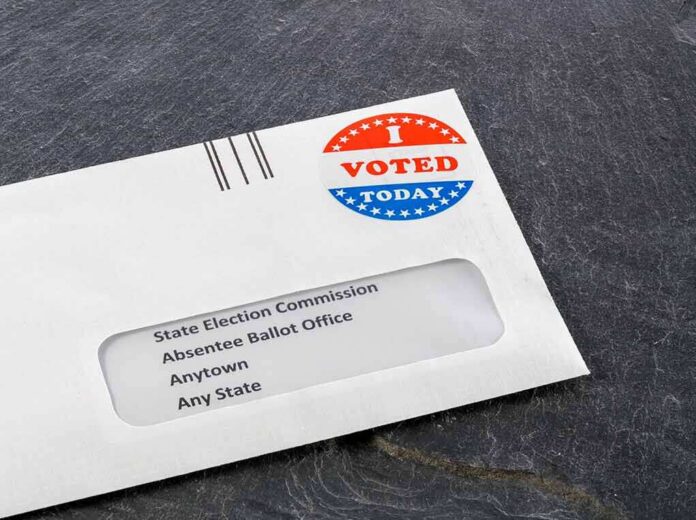
A Virginia family says a voting-rights certificate arrived for their dead dog “Biscuit,” raising fresh questions about how the state verifies identities in its mass restoration program.
Story Snapshot
- A document naming “Biscuit Rigsby” as a felon with restored rights was mailed to a Virginia address.
- State officials deny restoring a dog’s rights and say the record ties to a human with verified identifiers.
- A state lawmaker requested an investigation into the program’s controls and record matching.
- Virginia law requires removal of deceased voters and retention of cancellation records.
What Sparked The Dispute
On October 30, local and national outlets reported that a Virginia household received a rights-restoration notice addressed to “Biscuit Rigsby,” described in the paperwork as a felon whose voting rights were restored. The family says Biscuit was their deceased dog. The notice appeared to come from the state’s restoration program expanded under Governor Abigail Spanberger. Delegate Tom Garrett said a constituent sent him the material and that he is seeking an investigation into how the record cleared state checks.
The governor’s office rejected the idea that a dog’s rights were restored. A spokesperson said the record was linked to a human with a date of birth and a Social Security number. Officials also stressed that restoring civil rights is not the same as joining the voter rolls. Without access to the underlying file, the public cannot match the name on the mailer to the person in the state’s databases. That gap fuels doubt about where the breakdown occurred.
How Virginia Says The System Works
In July and August, the administration said it restored rights to more than 66,000 people and then 100,000 people. The Secretary of the Commonwealth’s Office said it both reviews applications and proactively finds eligible people, confirming eligibility before restoration. The state describes a process that checks records across agencies to ensure the person meets the governor’s standards before approval, with the goal of accuracy at scale.
State law and guidance set guardrails on voter lists. Registrars must remove deceased voters and keep cancellation records that explain why the removal occurred. The Virginia election handbook explains list maintenance steps and death-data matching to prevent ballots for the dead. These controls reduce the chance that a rights-restoration notice, on its own, leads to a live voter registration. But they do not explain how an animal name could appear on an official document.
What We Know And What We Do Not
Records show an anomalous notice naming “Biscuit Rigsby.” A lawmaker is asking how that happened and whether identity checks worked as described. Officials say a human identity sits behind the record, backed by core identifiers, and that the person was not registered to vote by virtue of restoration alone. The reports do not show that anyone voted as Biscuit. They also do not show the exact database match or review trail that produced the letter.
Virginia Del. Tom Garrett demands an investigation after a constituent received an official rights-restoration certificate for his dog, Biscuit, a beagle-hound mix, that died about five years ago.https://t.co/IjJk01U2bZ
— Bob C (@Easytime4) October 31, 2026
The scale of the program raises the stakes. High-volume processing expands access for many people with past convictions. It also raises the odds of rare errors and tensions over transparency. Both political camps share a concern here: people want accurate systems that honor law and do not waste public trust. A narrow audit could settle key facts without exposing private data. That means checking the certificate, the source record, and the reviewer sign-offs.
Why This Matters Beyond One Envelope
Election systems depend on trust built through proof, not promises. Conservatives fear sloppy rolls and loose controls. Liberals fear barriers that block reentry and second chances. Both sides fear a bureaucracy that hides mistakes. Virginia’s law already orders removal of deceased voters and keeps documentation to prove it. When a document like this surfaces, leaders should trace it end to end and publish a process report that shows what failed and what will change.
What Comes Next
Lawmakers and reporters can request the non-confidential parts of the record, including the certificate details, timestamps, and the approval path. Agencies can share rule logic for proactive matching and any exception logs from the date in question. If the record tied to a real person, the state can explain how the dog’s name ended up on the mailing while masking personal data. Clear answers would calm fears without weakening privacy or due process.
Sources:
thegatewaypundit.com, governor.virginia.gov, law.lis.virginia.gov, foxnews.com, wtvr.com, elections.es.virginia.gov