The Supreme Court has rejected an appeal from a self-described progressive Democrat who attempted to infiltrate Ohio’s Republican primary by falsely declaring himself a GOP candidate, exposing a scheme that raises serious questions about election integrity and the lengths some will go to manipulate the political process.
Story Highlights
- Samuel Ronan, a former Democratic National Committee chairman candidate, was disqualified from Ohio’s GOP primary after admitting publicly he planned to “trick” Republican voters
- The Supreme Court denied Ronan’s emergency appeal without explanation, upholding Ohio’s authority to enforce “good faith” candidacy requirements
- Federal judges ruled that states have a substantial interest in preventing fraudulent party declarations, rejecting First Amendment claims
- The case reinforces state authority to protect primary elections from cross-party sabotage tactics amid heightened political polarization
Democrat Infiltration Scheme Exposed in Ohio
Samuel Ronan filed to run as a Republican candidate for Ohio’s 15th Congressional District, signing a declaration under penalty of falsification affirming his party affiliation. Republican voter Mark Schare uncovered the deception, presenting the Franklin County Board of Elections with damning evidence from Ronan’s own public statements. In interviews and social media posts, Ronan openly admitted his strategy to run Democrats in “deep red districts” to infiltrate GOP primaries and “get a foot in the door.” Ohio Secretary of State Frank LaRose promptly disqualified Ronan, citing state law requiring candidates to run in good faith and genuinely abide by their declared party’s principles.
Courts Reject First Amendment Defense
Ronan filed a federal lawsuit claiming his disqualification violated his First Amendment rights to free speech and association. Chief U.S. District Judge Sarah D. Morrison firmly rejected this argument, ruling that Ohio has a substantial interest in preventing fraudulent attestations on official candidacy forms. The judge determined that the First Amendment does not shield candidates who make false declarations about their party affiliation with the intent to deceive voters. A federal appeals court subsequently denied Ronan’s request for restoration to the ballot, finding no merit in his constitutional claims.
Supreme Court Denies Emergency Relief
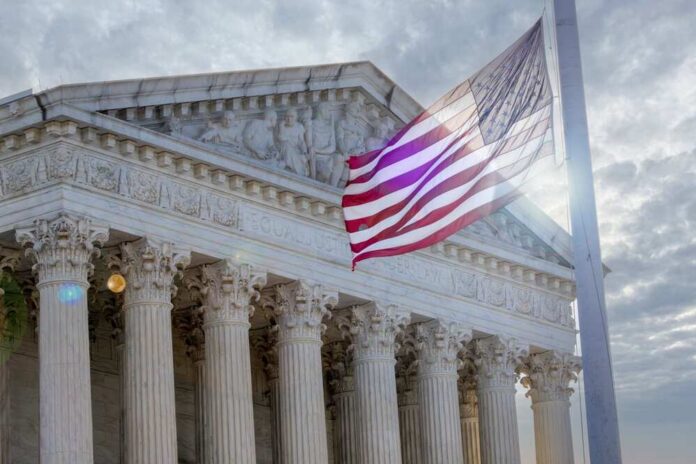
With early voting approaching for the 2026 midterm primary, Ronan filed an emergency petition with the Supreme Court seeking immediate reinstatement on the Republican ballot. Justice Brett Kavanaugh referred the matter to the full Court, which denied the petition without providing an explanation. This standard practice on the Court’s shadow docket left Ronan’s disqualification intact and ended his legal options. The Supreme Court’s decision reinforces precedents allowing states to impose reasonable ballot access restrictions, including requirements that candidates genuinely affiliate with the parties under whose banner they seek to run.
Broader Implications for Election Integrity
Ohio’s enforcement action against Ronan reflects a growing concern about cross-party manipulation tactics that undermine the integrity of primary elections. The state’s “good faith” candidacy law stems from past incidents like 2012’s “Operation Chaos,” when conservative radio host Rush Limbaugh urged Democrats to vote in GOP primaries to create mischief. This case parallels a similar situation in Nebraska, where Democrat Cindy Burbank was disqualified from the Senate primary for lacking sincere party affiliation. These enforcement actions signal that states are willing to defend the associational rights of political parties and protect voters from being deceived by candidates misrepresenting their true allegiances.
The ruling carries significant implications for both conservatives and progressives who share frustration with political gamesmanship that erodes public trust. While Ronan framed his strategy as creative political activism, the courts recognized it as fundamentally fraudulent behavior that treats elections as opportunities for manipulation rather than genuine democratic contests. For voters tired of politicians who seem more interested in clever tactics than honest representation, this decision affirms that there are limits to what candidates can claim in pursuit of office. The Supreme Court’s denial ensures that Ohio’s 15th District GOP primary will proceed without a candidate who openly admitted he was running under false pretenses to infiltrate the opposition party.
Sources:
Supreme Court blocks candidate after alleged GOP infiltration scheme exposed – Fox News
Supreme Court keeps former DNC candidate off Ohio GOP primary ballot – Courthouse News