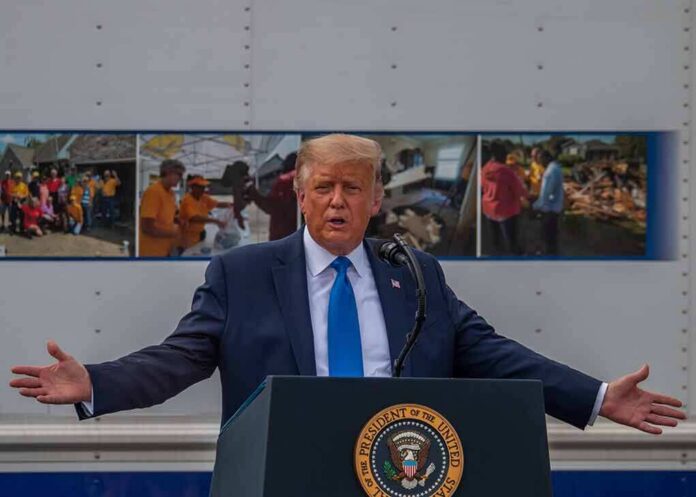
President Trump declared U.S. “majority control” over 65 billion Venezuelan barrels, while public records show only talks over stakes in select fields are confirmed.
Story Snapshot
- Trump said the U.S. secured majority control of 65 billion barrels in Venezuela.
- Reuters and Axios report negotiations for stakes in select oil fields, not full reserves.
- Early plans point to private companies developing fields under an access model.
- Key deal terms, legal structure, and taxpayer impact remain undisclosed.
What The President Announced And What Is Documented
President Trump told the country that the United States secured “majority control” of more than 65 billion barrels of Venezuela’s proven oil. He called it the biggest oil deal in world history and said it cost taxpayers nothing. Outlets repeated his claim, but did not show a contract. The strongest public reporting shows talks about U.S. stakes in more than a dozen productive fields, not a signed transfer of most reserves.
Reuters and Axios cited officials who said the administration was negotiating long-term access and ownership stakes. The reports said private firms, including American companies, would develop the fields and share revenue with Venezuelan authorities. That structure suggests a commercial model, not a direct U.S. government takeover. The same reports stressed that details were still being worked out and that a “lease” model was under consideration, with no final text released.
What Is Known About The Deal’s Scope And Limits
Axios reported the discussions focused on more than a dozen productive fields, which is far smaller than Venezuela’s full proven reserves. Reuters described the aim as securing long-term access to a portion of reserves, which could lower import costs if it advances. Both reports fall short of proving “majority control” over 65 billion barrels. The mismatch between the claim and the documented scope remains the main gap for readers to track.
Reporters also noted that investors were waiting on Venezuela to publish contract models with clear terms. Some oil companies had signed preliminary agreements, but delays remained in finalizing terms needed to launch projects. Major firms have called Venezuela “uninvestable” until stability and legal clarity improve. That caution adds risk to any forecast of fast results from the proposed access plan.
Why This Matters For Energy Prices And Public Trust
Energy access deals can shape gasoline prices and heating costs at home. If private firms can safely produce more barrels for the U.S. market, import costs could ease over time. But production depends on working rigs, reliable contracts, and security on the ground. Venezuela’s system has struggled for years with broken equipment, sanctions, and weak investment. Announcements alone do not move crude; crews, cash, and lawful terms do.
🇺🇸Donald Trump says a deal has been agreed with Delcy Rodriguez for the US to take majority control of a significant portion of 🇻🇪 Venezuela oil reserves. pic.twitter.com/JfnRkEmPLD
— Ajay Kashyap (@EverythingAjay) August 29, 2026
For many Americans, the bigger issue is trust. People on the right are tired of high energy costs and complex rules that seem to block drilling. People on the left are tired of deals that look opaque and tilted toward insiders. This story hits both nerves. The White House’s sweeping claim has not been matched with a signed deal in public view. The press reports show talks, not a finished transfer. That gap fuels doubt across the spectrum.
What To Watch Next: Proof, Terms, And Who Pays
First, watch for the signed agreement and any side letters. That paperwork should spell out which fields, what percent ownership, and which court decides disputes. Second, look for U.S. sanctions licenses that allow operations and money flows. Third, ask who pays for security, repairs, and enforcement if things go wrong. The “no cost to taxpayers” line needs an audit once terms are public, because guarantees and waivers can carry hidden costs.
Finally, track whether barrels actually move. If tankers load under new terms and deliveries reach U.S. refineries, then the plan is real in practice. If months pass without contracts, capital spending, and production growth, then the announcement was far ahead of the facts. In a time when many Americans think elites run government for themselves, transparency on this deal is not a favor; it is the baseline for public legitimacy.
Sources:
aljazeera.com, nypost.com, axios.com, reason.com, abc7.com