A man reportedly set himself on fire outside United Nations headquarters in New York, spotlighting a protest tactic long tied to Tibet and a familiar gap between advocacy claims and official confirmation.
Story Snapshot
- Advocacy groups have documented about 159 Tibetan self-immolations since 2009.
- Major outlets have verified past Tibetan cases, including an 18-year-old monk in 2016.
- The New York incident’s details, identity, and official records remain unverified in public sources.
- The silence from institutions fuels concern about who controls which facts reach the public.
What reportedly happened outside the United Nations
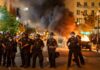
Reports on social channels and smaller outlets say a man set himself on fire near the United Nations in New York City. These claims state he carried symbols tied to Tibet and later died. At the time of writing, no public police report, medical examiner record, or major United States news story confirms the man’s identity, cause of death, or motive. A Wikipedia summary page lists the person as “unknown,” which signals that key facts are still unsettled in the public record.
This lack of clear public documentation creates confusion. Viewers see videos and posts, but cannot match them to named officials, times, and signed reports. That gap matters in a city with cameras and many witnesses. It also matters at the United Nations, where protests often try to reach a global audience. Without a formal record, people fall back on priors. Some see a cover-up. Others see rumor. Either way, trust erodes when proof lags.
Why Tibetan self-immolation is part of a documented pattern
Advocacy groups have tracked Tibetan self-immolations for more than a decade, citing 159 cases since 2009 and 127 known deaths. Their lists describe ages, locations, and whether the person was a monk, nun, or layperson. Major outlets have also verified specific cases. In 2016, an 18-year-old monk, Kalsang Wangdu, died after setting himself on fire in Sichuan Province. That report cited a well-known advocacy group and placed the act in a larger wave of protests since 2009.
Historical context shows the act as a form of political protest used in several countries. Accounts describe Buddhist monks and others who set themselves on fire to protest government abuses or to demand freedom. The tactic draws attention fast, but often leaves few forensic traces of motive beyond what witnesses, notes, or prior statements provide. This history explains why some quickly linked the New York event to Tibet, even as core facts about the man and his motives remain unconfirmed.
The verification gap: what is known, what is missing
What is known today rests on secondary sources and advocacy claims. What is missing are primary records: a New York Police Department incident report, United Nations security logs or video, and a medical examiner’s finding. No major United States news room has yet published an on-the-record story that names officials, quotes documents, and confirms the identity tied to this case. Until those items appear, the New York event remains partly unverified in the public domain.
This gap is not new with Tibet. Advocacy groups say media and institutions underplay these protests. They argue that large organizations avoid topics that upset powerful states. They also point to past cases where numbers rose while coverage fell. Documented counts by the International Campaign for Tibet and reporting by the New York Times on earlier incidents show a real, tragic pattern that is not in serious dispute, even if totals vary by source.
What this means for readers across the political divide
Americans on the right and left share a growing worry: powerful institutions decide which facts get oxygen. When an alleged protest outside the United Nations lacks fast, clear confirmation, that worry spikes. People who distrust global bodies see a system that hides pain to protect elites. People who distrust partisan media see gatekeeping at work. Both sides want proof, fast, so citizens can judge events on their own and hold leaders to account.
A man who died after setting himself on fire near United Nations headquarters in New York City has been identified by Tibetan exile groups as activist Lobga (or Lobsang) Rangzen, in what appears to have been a dramatic political protest against China’s rule over Tibet.… pic.twitter.com/uN58Luf1hH
— Juliet Njau (@NjauJuliet) July 3, 2026
Here is a practical path. First, press for records: police reports, emergency logs, and medical findings. Second, request United Nations camera footage through proper legal channels. Third, ask named advocacy groups for sworn statements and any original media they hold. Fourth, encourage a major newsroom to verify details on the ground. These steps are basic, fair, and doable. They serve truth, not a tribe. They also honor the life at the center of this claim.
Sources:
thegatewaypundit.com, savetibet.org, pbs.org