A blind Pakistani Christian nearly executed for “blasphemy” walked free only after a court called the case against him fabricated, exposing yet again how unchecked laws can ruin the lives of the weakest.
Story Snapshot
- A Lahore court acquitted blind Christian Nadeem Masih of a death-penalty blasphemy charge, calling the case fabricated.
- Police and prosecutors never produced clear evidence, specific “blasphemous” words, or independent witnesses to back the claim.
- Rights reports show Pakistan’s blasphemy laws are often used for personal vendettas and economic gain, not true faith concerns.
- The case highlights how powerful systems can crush vulnerable people while officials face little pushback or reform.
A Blind Man, A Death Penalty Law, And A Fabricated Case
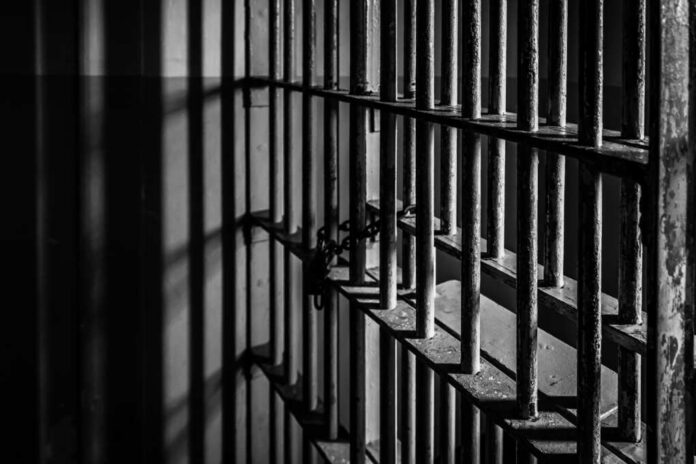
Two Muslim men went to police in Lahore and accused 49-year-old blind Christian Nadeem Masih of insulting the Prophet Muhammad. Police registered a case under Section 295-C of Pakistan’s Penal Code, a blasphemy provision that carries a mandatory death sentence upon conviction. Masih, blind since birth and walking with an iron rod in his leg, was taken into custody and spent about ten months in jail awaiting trial. His elderly mother and sisters watched, helpless, as the state moved to possibly kill him over words that were never clearly recorded.
During the trial, prosecutors claimed the alleged offense happened at 11 p.m. in a public park, based on a police report saying officers were on patrol at that time. Masih’s lawyer, Javed Sahotra, challenged this story by pointing out that the park officially closes at 9 p.m., making a supposed 11 p.m. incident hard to believe. He also stressed that the First Information Report did not even spell out the exact “blasphemous” words, a flaw that made it nearly impossible to prove a specific crime beyond a reasonable doubt.
Why The Judge Threw Out The Blasphemy Charge
Lahore Additional Sessions Judge Saad Salman Khan reviewed the evidence and found it badly lacking. Six witnesses supported the accusation, yet their statements were recorded after delays and without independent confirmation from bystanders. No call data, location data, or other digital proof was brought in to show Masih was at the park when the supposed offense happened. The judge ruled that criminal guilt cannot rest on assumptions, speculation, or vague claims, and he concluded the case against Masih had been fabricated and could not meet the standard of proof beyond a reasonable doubt.
The court accepted the defense argument that the accusation stemmed from a personal dispute rather than sincere anger at an actual insult to Islam. Sahotra said Masih had refused to let the two accusers take over his small business, giving them a clear economic motive to weaponize blasphemy laws against him. After the acquittal on June 22, 2026, the judge ordered Masih’s immediate release from Lahore’s District Camp Jail, and he was reunited with his mother and sisters the next day. Christian groups and human rights advocates in Pakistan welcomed the ruling as a rare victory for fairness in a system they say is often stacked against religious minorities.
How This Case Fits A Larger Pattern Of Abuse
Masih’s ordeal is not an isolated story but fits a wider pattern documented by international rights groups. Pakistan’s blasphemy laws allow people to file police reports without giving clear evidence or even repeating the exact words that supposedly crossed the line. A study of blasphemy trials in Lahore found that in more than 90 percent of speech cases, the precise words were never identified and complaints stayed vague, while police reports were often filed long after the alleged act. These same reports note that people accused under such laws can sit in jail for years while hearings are delayed and witnesses fail to show up.
The International Commission of Jurists has reported that over 80 percent of blasphemy cases eventually end in acquittal on appeal, with judges often saying the complaints were fabricated, driven by property grabs or family vendettas rather than honest religious outrage. Human Rights Watch has likewise warned that Pakistan’s blasphemy laws are used to target the poor and minorities, fueling land seizures, unlawful evictions, and long pretrial detention for people who lack power. Amnesty International has criticized Section 295-C in particular because it lets courts impose death sentences based only on a few oral testimonies, even when no one can repeat the exact words that led to the charge.
Why Americans Across The Spectrum Should Care
Many Americans, whether conservative or liberal, feel their own government now serves elites and special interests more than ordinary citizens. Masih’s case shows how fast a justice system can turn against someone with little money, no political connections, and serious physical limits. In Pakistan, blasphemy laws give police and accusers huge power with almost no check, and officials rarely face consequences when a case turns out to be false. That reality should worry anyone who fears what happens when law stops protecting the weak and instead becomes a weapon for the strong.
Conservatives who value religious freedom can see in Masih’s near-death experience a warning about letting government define and police belief. Liberals who focus on minority rights and economic inequality can see how a poor blind man was almost killed because others wanted his business, not because he truly attacked their faith. For both sides, the deeper concern is the same: when laws are vague, when evidence is thin, and when officials are not held to account, the system invites abuse. Masih’s acquittal is a relief—but the fact that it took ten months in jail and a brave judge to undo a fabricated case is a reminder that many others still face the same machinery with far less hope.
Sources:
lifesitenews.com, barnabasaid.org, amnesty.org, x.com, jubileecampaign.org, facebook.com, instagram.com, sahsol.lums.edu.pk, uscirf.gov, cfj.org