As toxic wildfire smoke again blankets a huge stretch of North America, millions of Americans are learning the hard way how little protection the system offers when the air itself turns hazardous.
Story Snapshot
- More than 100 million people across a dozen states are under air quality alerts due to Canadian and Minnesota wildfires.
- Some cities hit “hazardous” Air Quality Index levels, with readings hundreds of points above what is considered healthy.
- Scientists say repeated smoke waves are reversing decades of clean air progress and could drive tens of thousands of extra deaths a year.
- The crisis exposes a deeper problem: both parties talk about climate, energy, and health, but ordinary people are left to fend for themselves when disaster hits.
Wildfire smoke turns the Midwest and Northeast into a danger zone
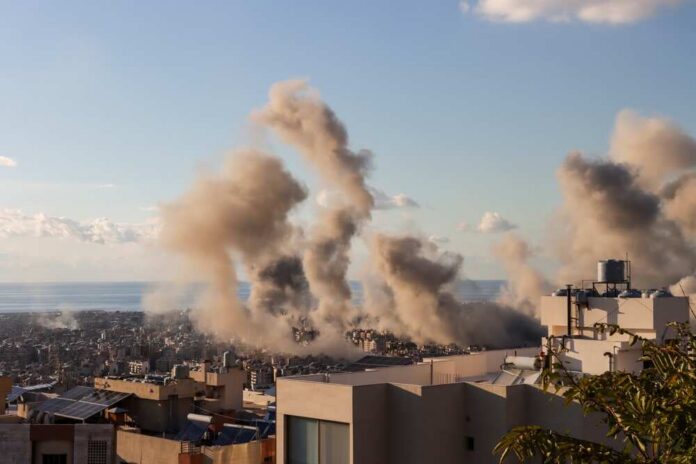
Dense smoke from major wildfires in Canada and northern Minnesota has poured into the United States, pushing air quality to dangerous levels from the Great Lakes to the East Coast. Air quality alerts now cover more than 100 million people across roughly a dozen states, including Wisconsin, Michigan, Minnesota, New York, Pennsylvania, and New England. In some areas, the Air Quality Index has jumped into categories labeled “unhealthy,” “very unhealthy,” and even “hazardous” for anyone who breathes the air for long. Residents report gray skies, burning eyes, and coughing fits, while many still head to work and school as usual because they cannot afford to stay home.
Recent events are part of a growing pattern, not a one–time fluke. Over the past decade, wildfire smoke has become a regular summer feature across much of the country, as large fires in Canada and the western United States send fine particles thousands of miles downwind. Researchers found that smoke now drives a big share of days when air pollution breaks health standards at hundreds of monitoring stations nationwide. Climate Central reports the number of Americans seeing at least one day each year with particle levels three times the federal limit has jumped 27–fold in just ten years. For families already squeezed by high costs and unstable jobs, one more invisible stress on their lungs and hearts feels like proof the system is not working.
What makes this smoke so harmful to ordinary people
Wildfire smoke is dangerous because it is loaded with tiny particles called PM2.5, which are small enough to travel deep into the lungs and even into the bloodstream. These particles can trigger asthma attacks, worsen chronic lung and heart disease, and are linked to more hospital visits and early deaths, even at levels below official “hazardous” thresholds. In this latest wave, monitors show PM2.5 levels several times higher than normal summer baselines across the Midwest and Northeast, meaning every breath carries more of this harmful dust. Health agencies urge people, especially children, older adults, and those with breathing problems, to stay inside, run air filters if they have them, and wear high–quality masks if they must be outdoors. But many workers in warehouses, construction, delivery, and service jobs lack paid leave or real protection.
Scientists warn that the long–term stakes are even higher than the short–term discomfort many people feel today. A recent study in the journal Nature estimates that, if current trends continue, wildfire smoke could contribute to about 70,000 deaths per year in the United States by 2050, up from around 40,000 per year in the 2010s. The largest increases in risk are projected for states like California, New York, Washington, Texas, and Pennsylvania, which are home to tens of millions of people. Another national analysis found that when fire smoke is included, tens of millions more Americans live in counties that fail to meet tighter particle standards. In plain terms, the more often our skies turn brown or orange, the more our basic right to breathe clean air slips away, despite decades of laws meant to protect it.
Why this crisis feeds anger at elites on both the right and the left
For many Americans, this smoke event feels like one more sign that the people in charge are not truly focused on their health and safety. Conservatives who already distrust global climate deals and federal spending see a government that talks about “climate resilience” while letting forests burn and sending mixed messages about masks and lockdown–style measures. Liberals who support stronger environmental rules see a system that still allows new fossil fuel projects, underfunds public health, and leaves poor and minority communities breathing more pollution than wealthy suburbs. Both sides look up at the same dirty sky and wonder why, after years of promises, their kids are coughing on the playground.
Officials do issue alerts, maps, and guidance, but these often rely on complex color codes and Air Quality Index numbers that many people do not fully understand. Studies show that harmful health effects can occur even at levels below the “red” or “purple” categories, especially for sensitive groups. Yet public messaging tends to focus on the worst days and dramatic photos, like bridges disappearing in smoke or cities under an eerie orange glow. That kind of coverage grabs clicks but can leave people confused about what to do on the many “just unhealthy” days that still carry real risk. The gap between official language and everyday life feeds the sense that elites are better at managing narratives than solving problems.
What this reveals about deeper policy failures
The smoke crisis sits at the crossroads of several long–running policy fights that have frustrated voters across the spectrum. Decades of land management choices, energy policy, and budget priorities helped create a landscape where hotter, drier summers fuel bigger fires and where cross–border smoke now hits cities that once enjoyed relatively clean air. While politicians argue over “America First” versus global cooperation, people from Detroit to Boston still end up breathing pollutants from fires burning hundreds or thousands of miles away. Stronger forest management, modernized firefighting, smarter energy choices, and clearer health messaging all cost money and require long–term focus, yet Congress often moves from crisis to crisis without a coherent plan.
At least 17 states under air quality alerts as Canadian wildfire smoke spreads in the Midwest and Northeast, raising questions about the World Cup final https://t.co/aGIc4ABdTe pic.twitter.com/HEUV4MJS5D
— Inspector Clueso (@IClueso) July 17, 2026
This latest blanket of smoke is not only a weather story; it is a warning about what happens when complex risks grow faster than the institutions meant to protect the public. Researchers, doctors, and even some agencies now admit that wildfire smoke is undoing years of progress made under clean air laws. Still, there is no nationwide system to protect outdoor workers on bad air days, no simple fund to help families buy air purifiers, and no real penalty for leaders who ignore long–term fire risk while chasing short–term political wins. As more summers bring hazy skies and scratchy throats, it is easy to see why many Americans on both the right and the left feel that the “deep state” and the political class breathe different air than the rest of us.
Sources:
insiderpaper.com, cnn.com, nypost.com, nbcnews.com, cbsnews.com, foxweather.com, yahoo.com, apnews.com, scientificamerican.com, weather.gov, jagranjosh.com, nature.com