
Texas just slammed the brakes on its data center boom, raising hard questions about who really controls the state’s power grid and whose needs come first.
Story Snapshot
- Governor Greg Abbott ordered a statewide pause on new data center grid approvals while regulators audit their true impact on Texas power, water, and communities.
- State officials say proposed data centers now account for most new electricity demand, at levels far beyond what the grid has ever delivered.
- Supporters see the pause as basic protection for everyday Texans after years of grid failures and elite-driven tech expansion.
- Critics warn the move could slow artificial intelligence growth, investment, and jobs, showing how the system keeps picking winners and losers.
Abbott’s Order: Hitting Pause on the Data Center Rush
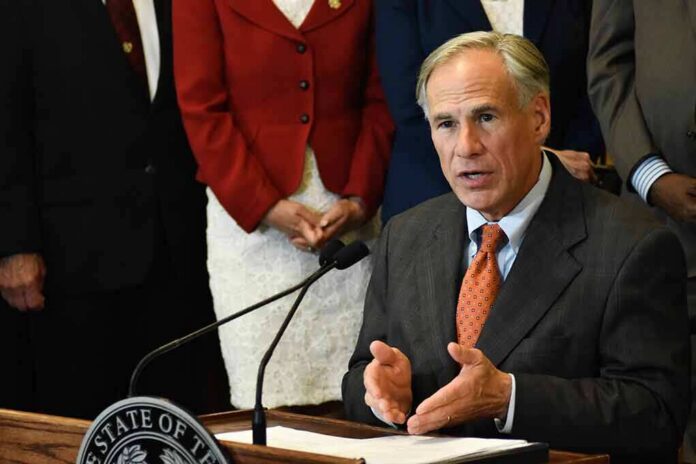
Governor Greg Abbott has ordered Texas regulators to stop approving new data center projects until the state can audit every proposal that wants to plug into the grid. In a letter to the Public Utility Commission of Texas and the Electric Reliability Council of Texas, he told them to deny new grid connections while they review each project’s power demand, water use, tax deals, and ownership. Abbott said the goal is simple: protect grid reliability so “Texans must come first,” not distant tech companies.
Texas news outlets report that this is a full moratorium on approvals, not just a minor delay. New data centers will not be able to join the Texas grid until the audit is complete and regulators are satisfied that projects will not destabilize power supplies or drain local water. Abbott also warned that any data center that refuses to cooperate with the audit or hides its real numbers should be denied electricity entirely. That threat matters in a state where recent blackouts and price spikes have already shaken public trust in the grid.
A Grid Already Under Strain From Surging Tech Demand
The Texas grid operator is now reviewing about 474 gigawatts of proposed new electricity demand, more than five times the state’s record peak load. Abbott says roughly 90% of those requests are from data centers, many tied to artificial intelligence and cloud computing. Regulators warn that they do not yet know which projects are real and which are speculative, but they still must plan for worst-case demand. That uncertainty adds risk to a grid that has struggled during extreme weather and rapid population growth.
Community reports show rising anger over giant data centers moving in with heavy energy and water use, loud equipment, and rich tax breaks. Residents from both conservative and liberal areas ask why basic needs like stable power bills and safe tap water seem secondary to corporate deals with tech and finance giants. Abbott’s directive responds to that backlash by demanding better data on how each project will affect local resources, nearby homes, and long-term infrastructure. Supporters say this is the kind of front-end review the state should have done years ago, before the boom got this large.
Power, Water, and the Deep Unease With “Elite” Projects
Under the new order, developers must disclose detailed information on power demand, water usage, tax incentives, and efforts to limit harm to communities before they can move forward. State regulators will compare those numbers against grid capacity and local supplies to decide which projects are safe and which are too risky. Non-compliant centers face the possibility of losing access to the grid, which could make many planned artificial intelligence and cloud hubs unworkable in Texas.
Texas governor orders pause on new data center approvals pending audit
Texas Governor Greg Abbott ordered a pause on approvals of new data center projects through the state's grid interconnection processhttps://t.co/aum9tS6HJg pic.twitter.com/vkr6FmRhyH— Blue Community .net (@BlueCommunity_N) August 5, 2026
For many Texans, this fight touches a deeper frustration that crosses party lines: a belief that the system has favored large corporations and political insiders while leaving ordinary families exposed to outages, inflation, and rising bills. Conservatives see years of energy policy missteps and rushed growth that ignored reliability. Liberals see another example of profits put ahead of local health and fairness. Abbott’s pause speaks to both concerns by forcing powerful tech players to justify their impact before they plug into the grid.
Economic Stakes: Jobs, AI Growth, and Who Bears the Risk
Business groups and some local officials worry the moratorium could slow major investment in artificial intelligence, cloud computing, and data-driven industries. They argue that Texas has marketed itself as an energy powerhouse open for business, and sudden pauses send a mixed signal to companies making long-term plans. Developers say many projects could bring high-paying jobs and new tax revenue to communities that need them, and they fear that long audits may push investors to other states.
At the same time, grid experts note that other states are also pausing or limiting high-demand projects to avoid future crises. New York recently adopted a one-year moratorium on certain data center developments, showing that this is not only a Texas issue. The broader pattern is clear: fast-growing industries can outrun old infrastructure, and governments are scrambling to catch up before the damage is done. Texans of all political views are watching to see whether this audit becomes real oversight or just another temporary headline.
What Comes Next for Texans and Their Grid
Regulators have not said how long the audit will last or when approvals might resume. Some analysts expect the review to shape new rules for data centers, including stricter limits on power demand, stronger local input, or requirements to build or fund new generation. Others warn that state leaders could face heavy lobbying from tech giants and investors who want flexible standards and quick approvals. That tug-of-war will test whether Texas policy truly puts residents’ basic needs above elite interests.
For Texans who lived through deadly winter outages, spiking summer bills, and years of political gridlock, this moment feels like a small but important turning point. The state is finally asking big questions before signing off on projects that could reshape the grid for decades. Whether you cheer the pause as overdue protection or fear it as a brake on growth, it reveals how fragile the balance has become between innovation, profit, and the everyday security of keeping the lights on.
Sources:
foxnews.com, texastribune.org, axios.com, reuters.com, youtube.com, yahoo.com, facebook.com