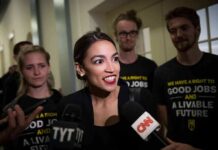


Governor Ron DeSantis warned that a rising slate of Democratic Socialists of America–backed candidates shows Democrats are shifting left as 2026 primaries reshape key races.
Story Highlights
- DeSantis says Democrats “can’t be trusted with power,” citing DSA gains in 2026 primaries.
- Major outlets report DSA is influential but still a minority faction inside the party.
- DSA chapters list active 2026 endorsements across federal, state, and local races.
- Polling shows many Democratic voters are open to democratic-socialist ideas.
What DeSantis Claimed And Why It Matters
Governor Ron DeSantis said the 2026 midterms are “different” because democratic-socialist candidates are gaining ground inside Democratic primaries. He argued the party has become “militant” and “can’t be trusted with power,” tying that view to the Democratic Socialists of America’s growing role. His claim speaks to a wider fear on the right and the left: small factions may be steering big-party agendas while many Americans struggle with high costs and distrust in Washington.
DeSantis’s warning comes as many voters believe elites protect their own power. People across the spectrum worry that leaders chase headlines instead of solving inflation, energy costs, or border enforcement. The governor’s message taps into that anger. But the key question for readers is not the rhetoric. It is whether facts show a wholesale party takeover or a faction gaining leverage in primaries.
What The Record Shows About DSA’s Reach
Reuters reported that the Democratic Socialists of America, a left-wing political group, is now playing an influential role in the Democratic Party, but it remains a faction, not the party itself. Time said DSA is ascendant because it brings volunteers, energy, and a message that connects with young voters, yet any congressional footprint would still be small if nominees win. These accounts describe growing leverage, not full control of the party’s platform or leadership.
DSA’s influence is visible in endorsements and candidate slates. A DSA chapter endorsement page lists named contenders across the 2026 cycle, covering the United States House, state legislatures, and local offices. That spread shows coordination and ambition beyond city councils. Still, most wins so far come through Democratic primaries, which often feature lower turnout and organized activists. That is where smaller groups can punch above their weight when the broader party is divided.
Inside The Platform Fights And Why Voters Care
Coverage of DSA’s platform and program highlights sharp institutional ideas that would change how the nation is governed. Reports say DSA documents call for replacing the presidency and the Supreme Court with bodies chosen by and subordinate to Congress, and for scrapping the Senate as currently structured. These proposals alarm many Americans who fear leaders on either side would rewrite rules to lock in power rather than fix daily problems.
Polling complicates the picture. Time cited a poll showing about one-third of Democrats and Democratic-leaning voters identify as democratic socialists. Data for Progress reported that a majority of these voters think DSA should be allowed inside the Democratic Party. For many Democrats, this is not a takeover; it is a coalition debate about health care, housing, and the economy. For many conservatives, it signals a push to the far left that would raise taxes, grow government, and weaken core checks and balances.
How To Read The 2026 Midterms From The Middle
Evidence supports a real DSA surge inside primaries and an expanding bench of endorsed candidates. Evidence does not show DSA running the national party or holding large blocs in Congress today. Both things can be true at once. Small, focused factions often gain leverage when big parties lack trust and direction. That is what many Americans see now: elites fighting over labels while groceries, rent, and power bills climb.
For voters who feel the system is rigged, the stakes are simple. Ask which candidates, from any party, will lower costs, protect free speech, secure the border humanely, and keep energy reliable and affordable. Ask who will defend the Constitution’s checks and balances rather than bend the rules. The 2026 map will test whether a motivated faction can steer a larger party, or whether most voters will demand practical results over ideology.
Governor Ron DeSantis Says 2026 Midterms Are Different Because DSA Radicals Show Democrats 'Can't be Trusted With Power' (VIDEO) https://t.co/JsrkJ5PBMN
— Terry Sater (@sater_terry) September 16, 2026
Sources:
political.org, washingtonexaminer.com, usatoday.com, cityandstateny.com, thegatewaypundit.com, cnn.com, twincitiesdsa.org