
A UC Berkeley math professor stopped grading homework for correctness after seeing artificial intelligence boost scores in ways he says do not reflect real learning.
Story Snapshot
- UC Berkeley mathematician Richard Borcherds now gives homework credit for completion, not correctness.
- He says artificial intelligence made correctness grades a poor signal of what students actually know.
- He shifted assessment weight to in-person, no-device exams to measure individual skills.
- He argues paying graders to check answers makes little sense under current conditions.
What Changed In Borcherds’s Classes
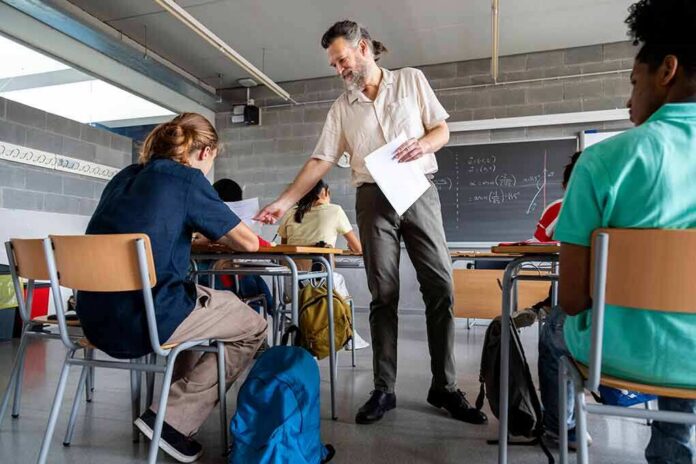
Richard Borcherds, a mathematics professor at the University of California, Berkeley, changed how he grades homework this fall. He now gives credit for turning work in, rather than for getting answers right. He told reporters that many students used artificial intelligence tools on problem sets, which led to high homework scores that did not match in-person performance. He said this broke the link between homework grades and real skill. Student paper coverage first reported the shift.
Borcherds said grading for correctness now rewards students who rely on artificial intelligence and punishes those who do not. He called that outcome unfair, especially to students who try to learn by doing the work themselves. Several outlets quoted him saying there is “no point” paying readers to check correctness when artificial intelligence can produce polished answers at scale. He kept homework as practice but changed how it counts toward a final grade.
How He Now Measures Learning
The professor moved emphasis to supervised, in-person exams with no electronic devices. He said these tests better reflect each student’s knowledge and reduce the chance that tools can mask gaps. Reports describe a simple model: do the homework to build habits and get completion credit, then show mastery on closed-book exams. He also criticized online exams that allow devices, saying they do not show true ability under current technology conditions.
Coverage from multiple outlets aligns on the core steps: completion-based homework, stronger weight on proctored tests, and reduced reliance on paid homework graders. Reports differ on the exact course and grading mix, and no syllabus or formal campus statement was shared in the articles. The Daily Californian and national outlets repeated his rationale but did not publish detailed policy language, which limits outside review of percentages and course numbers.
Why This Matters Beyond Berkeley
The move tracks a wider shift as artificial intelligence spreads on campus. Surveys show students use generative tools for many tasks, though not always for graded work. One study using an indirect method estimated about one in five students admitted using artificial intelligence to cheat on assessments in the past year. That gap between allowed help and banned use makes unsupervised homework less reliable for judging what a student knows alone.
Education researchers argue that process-based checks can help. They point to oral exams, multi-step projects, and device-free tests as ways to match grades to actual skill. Those methods ask students to explain steps, not just post an answer. A recent review said classic unsupervised tasks are now vulnerable and urged mixing formats to protect integrity while keeping learning strong. Borcherds’s approach fits that guidance by shifting weight to in-person proof of understanding.
Fairness, Cost, and The Trust Gap
Borcherds framed his shift as a fairness fix when artificial intelligence is easy and detection is hard. He also flagged a cost point: paying readers to check correctness may not be worth it if tools can generate top scores with little effort. He called his system “not very good,” but said he saw no better option right now. That candor shows a tradeoff: protect fairness and signal value, even if the homework grade says less than before.
AI use leads UC Berkeley math professor to see ‘no point’ in grading homework | The Daily Californian https://t.co/KaVG0IxWKF
— Egan J Chernoff (@MatthewMaddux) October 26, 2026
Parents and taxpayers wonder what they get for rising tuition when basic guardrails seem weak. Students on both the left and right say institutions talk tough but move slowly when technology changes the rules. This episode highlights a core concern many Americans share: large systems adjust only after trust erodes. A simple fix—credit for effort, proof on exams—tries to restore that trust by making grades track real, personal work again, without blaming honest students for others’ shortcuts.
Sources:
yahoo.com, news.slashdot.org, insidehighered.com, tandfonline.com