
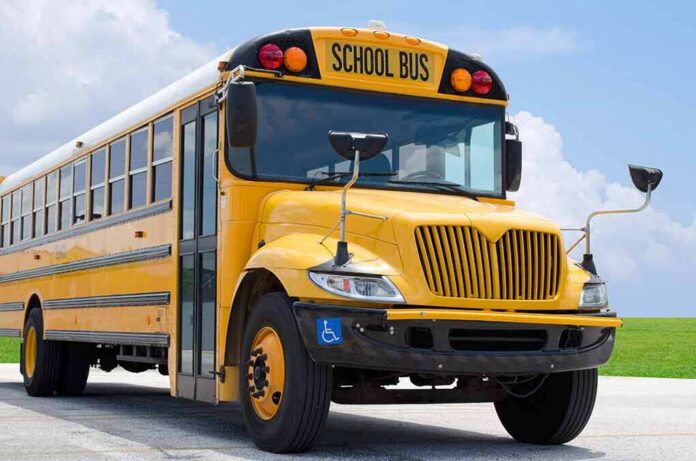
A 7-year-old special needs student died from positional asphyxiation on a Cincinnati school bus after her body slipped and her neck was compressed by the restraint system, raising hard questions about training, monitoring, and accountability across public and private hands.
Story Snapshot
- The coroner said the child died from positional asphyxiation linked to the bus restraint.
- District emails say the driver and monitor failed to strap her properly, citing the bus contractor’s chief.
- The bus company disputes that account and says facts were unknown at the time.
- The autopsy also noted a delay in care before 911 contact.
What the Autopsy Found About the Mechanism of Death
The Hamilton County Coroner reported that the child’s body shifted in her wheelchair during the ride. Her buttocks slipped from the seat, her torso rotated, and the restraint pressed on her neck and chin. That compression caused rapid asphyxiation and loss of consciousness. The manner of death was ruled accidental. The report described a five-point restraint and detailed how the posture change led to airway blockage. These medical findings explain what physically happened inside the bus.
The autopsy also documented a “delay in care” before emergency services were contacted. That entry does not, by itself, show who was responsible or how much the delay changed the outcome. But it points to a second safety layer: monitoring and response during the route. Together, the posture shift and the delay raise concerns about procedures, training, and staffing for students who need extra support during transport, not just at loading.
What School District Emails and the Bus Company Say
Internal emails from Cincinnati Public Schools show that Superintendent Shauna Murphy told the school board that the driver and bus monitor “did not strap her on appropriately, causing her death.” Murphy attributed this information to First Student Chief Executive John Kenning during a call on the evening of the incident, making it the district’s early understanding of what went wrong.
First Student disputes that description. The company says that when Kenning spoke with Murphy, no investigation had yet occurred and many facts were still unknown. The company also says the superintendent’s characterization did not reflect the circumstances or the coroner’s later findings. First Student states it preserved the bus video and provided it to police, and that it has cooperated with authorities as they gather facts about the case.
Why This Fits a Wider School Bus Safety Gap
Federal transportation guidance treats wheelchair transport as two separate tasks: secure the wheelchair to the vehicle at four points and secure the rider with a separate three-point restraint. It also stresses following the manufacturer’s instructions. Failures can occur at any step: equipment fit, securement technique, occupant restraint, or en route monitoring. When something goes wrong, it can look like “a buckle issue,” but the root problem may be training, process, or hardware limits.
Similar disputes around the country show how hard it is to assign fault, even when the injury cause seems clear. Courts sometimes dismiss claims on legal grounds despite allegations of improper securement. That is why video, timelines, and training records matter so much. They help show whether staff followed required steps, whether equipment was compatible and maintained, and whether someone noticed warning signs in time to act. Those records often decide both accountability and prevention steps.
What Is Known, What Is Disputed, and What Comes Next
Three facts stand out. First, the child died from positional asphyxiation caused by restraint pressure after her posture shifted in the wheelchair. Second, internal district emails say staff did not secure her properly, citing the bus contractor’s leader as the original source. Third, the contractor rejects that account and says conclusions were premature. The police investigation continues. No criminal charges were reported in the coverage cited at the time of the autopsy stories.
Families on the left and right share the same worry here: a system with many layers failed a child who depended on adults to get her safely to school. People wonder if public officials and private vendors protect themselves first and explain later. The path forward is specific and practical: release the bus video to investigators, map the timeline, review training and equipment files, and publish corrective steps. Clear answers—and visible fixes—are how trust is rebuilt.
Sources:
nypost.com, wcpo.com, cincinnati.com, local12.com, static.nhtsa.gov