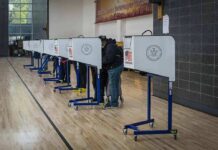

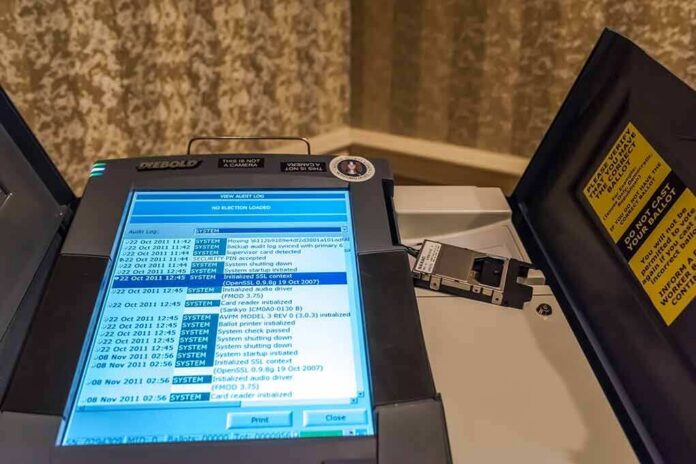
A late-found memory card in Georgia flipped a close state House race after officials flagged a 388-vote mismatch between check-ins and reported ballots.
Story Snapshot
- Georgia’s post-election checks found 388 more voter check-ins than ballots reported in Seminole County.
- Officials located and uploaded a missing memory card, shifting the House District 154 lead to Republican Gerald Greene by 262 votes.
- The Secretary of State opened an investigation into how the card was missed and whether rules were followed.
- Local reports said Democrats could still hold a one-seat majority in the Georgia House if results stand.
How the Discrepancy Was Found
Georgia’s elections team ran routine reconciliation after polls closed. Staff compared the number of voters who checked in on Election Day to the number of ballots counties reported. In Seminole County, the state found about 388 more check-ins than ballots. The Secretary of State’s office alerted the county board. County officials then searched for missing results and found a memory card that was not uploaded with the rest of the returns. The card held votes from Election Day that were not in the first report.
After the card was uploaded, the state updated its unofficial totals. In House District 154, Republican Gerald Greene moved from 58 votes behind Democrat Harry James to a lead of 262 votes. The Secretary of State’s office said the added results came from the memory card that had been overlooked on election night. The office also said the state had begun a formal review into the mistake and whether standard procedures were followed in handling, logging, and uploading results.
What Changes and What Does Not
The upload changed the apparent leader in one close race, but it did not end the normal canvass. Georgia law allows officials to recanvass results, probe mismatches, correct returns, and recertify if needed when the original count was wrong. Those steps exist for exactly this type of issue: when voter records and reported ballots do not line up. Counties and the state can use machine tapes, poll books, and logs to confirm correct totals before certification.
Local coverage reported that, even with the shift in District 154, Democrats could still have a one-seat majority in the Georgia House if these results hold through certification. That margin would be thin and could change with recounts or contests, but the current reporting points to Democratic control by a single seat at this stage. Control of one chamber can swing how budgets, energy rules, and local priorities move in the state.
Why This Episode Hits a Nerve
Voters across party lines worry when basic election tasks go wrong. A missed memory card sounds simple, but it can decide who writes laws. Here, the system’s checks caught the mismatch and led to the fix. That is good process, even if late. Still, people want clear answers on chain of custody, upload logs, and staff training. The state has opened that review, which can show whether rules worked as written or need stronger guardrails.
🚨 BREAKING: A missing memory card has FLIPPED the apparent outcome of a Georgia House race.
Republican Gerald Greene went from trailing Democrat Harry James by 58 votes to LEADING by 262 after uncounted votes were discovered in Seminole County.
Officials found a 388-vote… pic.twitter.com/Qbq3bihjRf
— JohnTitor17 (@JTitor17) November 7, 2026
The practical takeaway is direct. Election offices must reconcile check-ins, ballots, and machine totals every time. Publishing clear canvass reports, with precinct-level numbers, helps the public see how errors are found and corrected. Georgia’s code permits recanvass and corrections before certification, which is a safety net. Using it well—and documenting it—can reduce doubt the next time a late upload shifts a race by hundreds of votes.
Sources:
townhall.com, thecentersquare.com, law.justia.com