
A powerful Thanksgiving Day storm grounded flights at Washington’s Reagan National Airport and knocked out power to nearly one million homes and businesses up and down the East Coast.
Story Snapshot
- The Federal Aviation Administration (FAA) issued a temporary ground stop at Ronald Reagan Washington National Airport because of thunderstorms.
- More than 961,000 utility customers lost power as of Thanksgiving evening, according to Reuters.
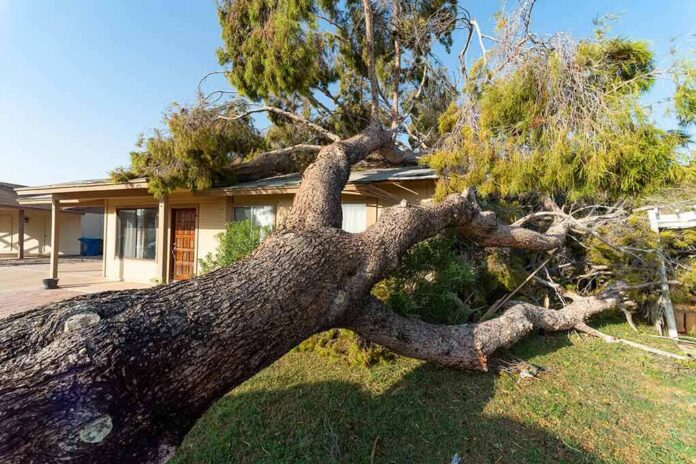
- Wind gusts up to 70 mph knocked down trees and power lines across several states.
- Flight-tracking data showed hundreds of cancellations and thousands of delays nationwide on the holiday.
- Forecasters had warned days earlier that a strong coastal storm would hit travel during the busiest week of the year.
Thunderstorms Force Flights To Pause In Washington
The FAA ordered a temporary ground stop at Reagan National Airport on Thanksgiving Day as thunderstorms rolled through the region. The move paused departures and arrivals at one of the country’s busiest airports during peak holiday travel. The Hill reported the stop was tied directly to the storm system moving up the East Coast.
The disruption at Reagan National was part of a much wider pattern. Flight-tracking service FlightAware recorded 440 cancellations and more than 2,200 delays tied to U.S. flights on Thanksgiving Day, according to Reuters. The Hill separately counted more than 420 cancellations and nearly 2,000 delays by late afternoon, showing the numbers kept climbing as the storm pushed north.
Nearly One Million Lose Power As Winds Topple Lines
Power outages piled up as fast as flight delays. Reuters reported more than 961,000 utility customers had no power as of 7:30 p.m. Thanksgiving night, blaming wind gusts up to 70 mph that toppled trees onto power lines. The Weather Channel put the count at more than 900,000 homes and businesses, citing outage tracker PowerOutage.us.
The outages were not limited to one state. The Weather Channel reported more than 200,000 outages in Pennsylvania, over 172,000 in Maryland, and more than 150,000 in Virginia. That spread matches a storm system moving through the whole Mid-Atlantic region rather than a single local breakdown. Different outlets reported slightly different totals at different hours, which is normal as crews work to restore power and counts shift throughout the day.
Forecasters Warned Of Holiday Travel Trouble Days Earlier
None of this caught forecasters off guard. The National Oceanic and Atmospheric Administration (NOAA) warned two days before Thanksgiving that a “potent” coastal storm would bring heavy rain, high winds, and flooding from the Ohio Valley to the Eastern Seaboard. The agency specifically flagged that morning travel and parades from the Carolinas to southern New England could be affected.
The National Weather Service echoed that warning in its own forecast discussion, saying the same storm responsible for heavy rain and coastal flooding would push into the Northeast by Friday. The advance warnings gave travelers and utility crews some lead time, even though the scale of outages and flight disruptions still ran into the hundreds of thousands by Thanksgiving night.
🚨 BREAKING 🇺🇸 THANKSGIVING SUPERSTORM: 900,000+ Without Power as Floods and Fierce Winds Pound the East Coast and Midwest!
A powerful Thanksgiving storm left more than 900,000 customers in the dark Thursday evening across the Midwest and Northeast, according to tracking site…
— Eyeworldnewsdigital (@eyeworldnews444) November 27, 2026
A Familiar Pattern For Holiday Air Travel
Weather-driven ground stops are not new for the Washington-to-New York air corridor. A National Weather Service study found that every one of 30 strong cold fronts that crossed the corridor between 2014 and 2018 triggered wind-related ground stops or ground-delay programs at two or more major airports. That history shows Thanksgiving’s disruption fits a known weather pattern rather than a one-time failure.
For travelers and families without power on a holiday meant for gathering, the storm was a blunt reminder that aging infrastructure and packed holiday schedules leave little room for error when severe weather hits. Millions of Americans spent Thanksgiving night either stuck at airports or sitting in dark houses, waiting for utility crews and air traffic controllers to catch up with a storm that forecasters saw coming days in advance.
Sources:
thegatewaypundit.com, axios.com, weather.com, freep.com, noaa.gov