
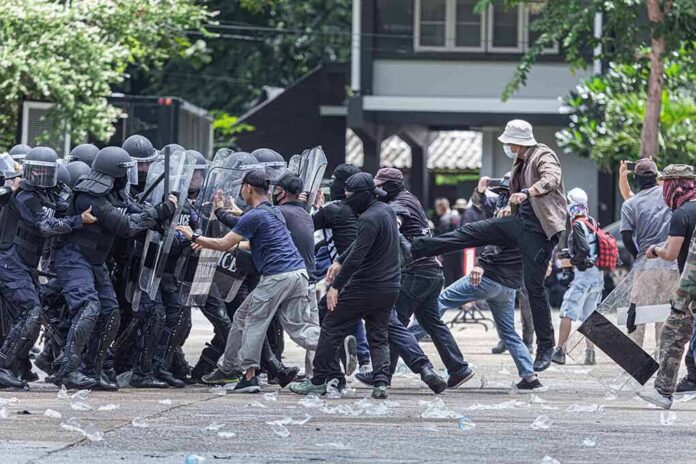
Hundreds of demonstrators forced their way into Rome’s Colosseum and clashed with police nearby, signaling unrest that also flared in Barcelona.
Story Highlights
- Associated Press reported several hundred protesters briefly occupied the Colosseum in Rome.
- Reports from Italy described bottle-throwing, water cannons, and tear gas around the Colosseum area.
- Barcelona saw vandalism, fires, and looting, with about 100 arrests reported, including minors.
- Events were covered by multiple outlets, but coordination across countries was not established.
What happened in Rome
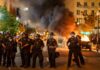
Associated Press video reported that several hundred students and young protesters entered and briefly occupied the Colosseum on October 25. The group waved Palestinian flags and protested the Gaza war and the Italian government. Around the amphitheater, clashes broke out between demonstrators and police. Reports said protesters threw bottles. Police used water cannons and tear gas to push crowds back from sensitive sites. The breach ended quickly, and the crowd moved on.
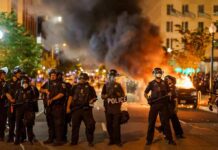
Italian media accounts described a larger day of unrest in the capital. Demonstrators marched without full authorization and pressed toward tourist areas. Police blocked paths and formed lines, trying to keep people away from ancient monuments and government buildings. Tensions rose as splinter groups tested barriers and threw objects. Officers responded with riot shields and crowd-control tools. No official national tally of detentions in Rome appeared in the reports cited.
Barcelona disorder and arrests
In Barcelona, local reports described a separate wave of nighttime disorder. Masked youths vandalized shops, looted some businesses, and set fires in rubbish containers near Plaça de Catalunya. Stones and other objects were thrown at Catalan police as lines shifted in the city center. One outlet cited figures of around 100 arrests, including about 30 minors, following the clashes and damage. Officials did not appear in the reporting with a named release tied to that figure.
The Barcelona incidents followed days of protests over varied local issues. Complaints included costs of living, housing, and education pressures. Crowds were mixed, with many peaceful marchers and some groups involved in street fights and property damage. Police moved to protect shops and transit hubs as fires burned in the streets. The reports did not document an organized link between the Barcelona events and the Rome protests the same weekend.
How to read these events
Cross-border coverage showed multiple outlets reporting unrest in Italy and Spain, with similar language about clashes and damage. At the same time, the reports did not establish a single leader, a shared network, or one cause tying the cities together. Research on protest patterns shows that most demonstrations are peaceful, while a smaller share see violence. That helps explain why large marches can include both calm rallies and limited but intense flashpoints on the same night.
Large-scale protests are taking place in several Italian cities, including Turin, Rome, Bologna, Milan and Florence, as well as Barcelona in Spain, where clashes have erupted between police and demonstrators. Protesters threw bottles, stones and fireworks at police, while… pic.twitter.com/xFBB530O8M
— TAM (@Awakeningmedia1) October 25, 2026
For citizens, the images strike a nerve that cuts across politics. People on the right and left worry that leaders are not listening, costs are rising, and public order feels shaky. The Rome breach hit a world treasure that stands for Western history and law. The Barcelona scenes showed frustration spilling into the streets. These events remind us that when pressure builds and trust drops, even iconic places and city centers can become stages for deeper social strain.
Sources:
facebook.com, ground.news, redstate.com, apnews.com, emakedonia.gr