
For the first time in recorded history, a sea turtle dug a nest and laid eggs on a California beach, a sign the ocean along the West Coast is changing fast.
Quick Take
- Two olive ridley sea turtles nested near Seal Beach and Huntington Beach.
- Federal wildlife agencies call it the first confirmed sea turtle nesting ever recorded on the U.S. West Coast.
- Biologists moved more than 200 eggs to the Aquarium of the Pacific to protect them from storm swells.
- Hammerhead sharks, whale sharks, and other tropical species have also pushed north into Southern California waters.
- Scientists link the shift to warm water from marine heat waves and a developing El Niño.
Historic Nests Found on Two Orange County Beaches
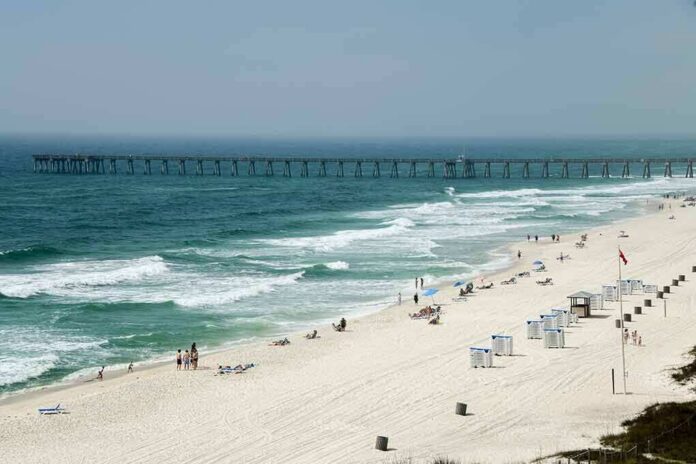
An olive ridley sea turtle dug a nest and laid eggs on a beach near Seal Beach in Orange County. Three days later, a second olive ridley nested near the Huntington Beach Pier. NOAA Fisheries called these the first confirmed nests for any sea turtle species ever recorded on the U.S. West Coast. The species normally nests closer to Mexico and Central America.
The U.S. Fish and Wildlife Service worked with NOAA to document the nests, which appeared near the Seal Beach National Wildlife Refuge and a nearby public beach. Lifeguards and beachgoers first spotted the turtles digging in the sand. Biologists say the discovery raises new questions about how marine animals respond as ocean temperatures along the coast continue to shift year after year.
Biologists Race to Save the Eggs
Biologists dug up more than 200 olive ridley eggs from the two nesting sites. Large ocean swells threatened to wash the nests away, so crews moved the eggs to the Aquarium of the Pacific in Long Beach for safekeeping. Officials said relocating the eggs gave them the best shot at hatching safely, away from pounding waves and rising tides hitting the Southern California shoreline.
Wildlife managers note this is uncharted territory. No agency had ever planned for sea turtle nests on California beaches before, so staff had to build a protection plan on short notice. The eggs are now being monitored closely, and biologists hope to learn whether the hatchlings can survive in water far cooler than their usual tropical range.
Hammerheads and Other Tropical Visitors Head North
Sea turtles are not the only unusual guests showing up along the coast. Warm water pushing north has also brought hammerhead sharks, whale sharks, and giant manta rays into Southern California, according to the conservation group Oceana. These animals normally stay in warmer tropical and subtropical seas far south of the state, but sightings climb sharply whenever El Niño warms the Pacific’s surface waters.
Scientists Tie the Shift to a Warming Pacific
Researchers say a developing El Niño, layered on top of ongoing marine heat waves, helped push warm water and tropical species farther north than usual this year. One expert called it “very likely” that El Niño drove the turtles to Southern California, adding that their nesting range has now stretched roughly 700 miles beyond its previously known limit.
Past warm-water events have reshaped ocean life along the California coast before. During the 2014-2016 marine heat wave, scientists tracked southern warm-water fish and squid moving into new territory as waters warmed. Even so, researchers caution that warm currents only open a path north. They do not fully explain why these two turtles chose Orange County beaches specifically, a question marine biologists are still studying.
Sources:
youtube.com, fisheries.noaa.gov, fws.gov, upi.com, smithsonianmag.com, onlinelibrary.wiley.com