

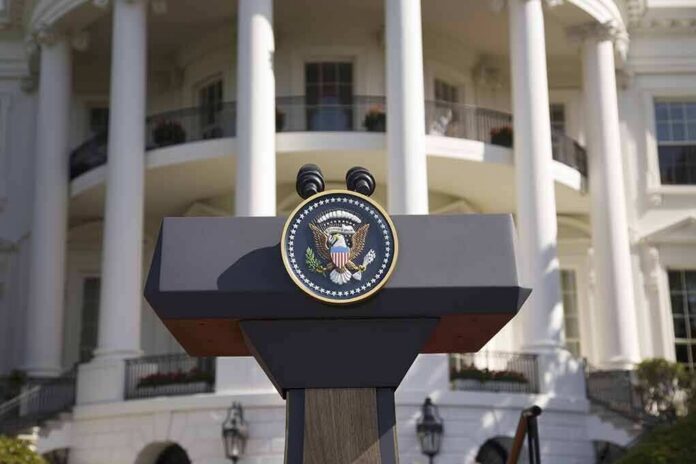
After only five days on the job, the White House press secretary is out, marking the shortest modern tenure for the role and a jarring sign of a shaky communications shop.
Story Snapshot
- A White House official said Katie Zacharia was transitioning out five days after starting.
- President Trump publicly urged Zacharia to reconsider the job shortly before her exit.
- Reports described the move as a firing or ouster, though wording varied.
- Questions over her legal credentials and a rocky first briefing fueled scrutiny.
What Happened and Why It Matters
On October 16, a White House official said press secretary Katie Zacharia was transitioning out, only five days after starting the job. The move landed amid heavy media attention on her first briefing and her stated legal background. The press secretary speaks for the president and sets the daily message. A sudden change at the podium can disrupt policy rollouts and public trust, especially in a charged national climate with major debates over spending, energy, and immigration.
President Trump told reporters that he urged Zacharia to think twice about the role, saying, “If I were you, I’d reconsider,” and that she did not have to do the job if she did not want to. Outlets differed on the nature of the exit. Advisers told one outlet that Trump fired her, while a White House official used softer language like “transitioning out,” and another report said she was “let go”. No detailed personnel memo was released at the time.
The Credential Dispute That Drove Scrutiny
Coverage focused on whether Zacharia was a licensed lawyer, a credential she cited in public remarks. Popular Information said it found no record of bar admission in any state or in Washington, D.C., and the Associated Press reported that neither Zacharia nor the White House provided proof she passed any bar exam in the United States or in China. The dispute added pressure after a rocky first briefing, where stumbles drew fast criticism and intensified questions about her resume.
The record does not show which single factor led to the decision. Reports link the exit to both the briefing and the credential issue, but they do not present a named official tying the move to one cause. Still, the timing made the link hard to ignore. The episode shows how fast a credentials question can swamp a communications plan. When the top spokesperson faces basic doubt, every policy line risks being drowned out by a resume fight.
Why Five Days Stands Out in History
The five-day tenure appears to be the shortest for a White House press secretary in the modern era, far below a typical tenure measured in years rather than days. The role has long been tough and high turnover is not new. Yet most press secretaries still serve at least a year. That comparison makes this episode exceptional and ensures it will shape how allies, critics, and foreign watchers read the administration’s message discipline during a politically sensitive period.
Katie Zacharia is 'transitioning out' as White House press secretary after days on the job, per ABC News. Trump says he told her 'I'd reconsider.'
Source: ABC News https://t.co/YKH9dcudVR pic.twitter.com/xeCJccDTIO
— The Trend Ledger (@TheTrendLedger) October 17, 2026
The impact reaches beyond inside baseball. Americans across the spectrum see a federal government that struggles to deliver. When the top spokesperson changes in a week, people read it as more proof that the system serves insiders first. Supporters worry that key policies will be sold poorly. Opponents say the rush to fill posts breeds mistakes. Both groups see chaos where there should be clarity. A stable, credible podium matters when families face high costs, crime fears, and deep divides.
What to Watch Next
Watch for the White House to name an acting or permanent replacement and to set clear lines on credentials for senior roles. Look for changes to briefing prep and vetting to avoid repeats. Expect more press focus on who manages message across agencies. The next press secretary will inherit a hot seat. Success will require steady facts, tight coordination, and fast corrections when errors happen. Quick wins could reset the narrative; more stumbles would deepen concern about basic competence.
Sources:
popular.info, cnbc.com, apnews.com, usatoday.com, thehill.com, newsweek.com