
After a Mayday call off Baja California, the U.S. Coast Guard rescued 16 people from the Pacific as crews raced to find others still missing and one survivor showed injuries consistent with shark bites.
Story Snapshot
- Coast Guard aircrews rescued 16 people after a predawn distress call near Baja.
- Authorities searched for additional people believed missing far offshore.
- Rescued survivors were flown to San Diego for treatment; one had suspected shark-bite wounds.
- U.S. and Mexican forces deployed ships and aircraft across a wide ocean area.
Rescue Triggered By Mayday And Rapid Offshore Response
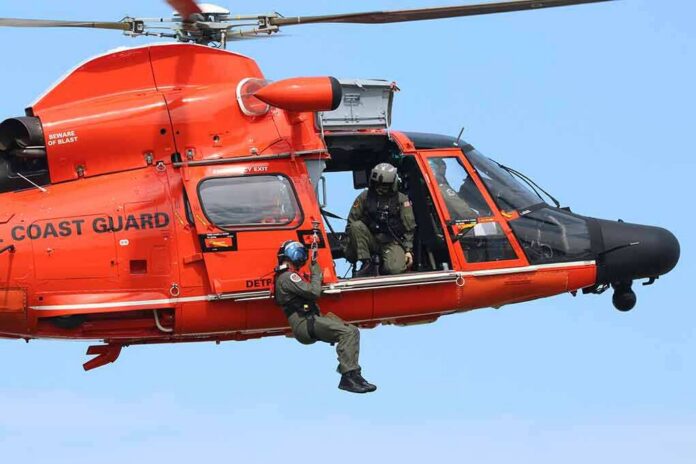
Coast Guard watchstanders received a distress call around 1:00 a.m. reporting a sinking boat west of Ensenada, Mexico. Air and surface crews moved to the location and found people in the water about 140 miles offshore. Two helicopters hoisted survivors and flew them to hospitals in San Diego. A fixed-wing aircraft and cutters helped guide the operation over the large search area. The initial rescue focused on pulling people from the water fast in darkness and rough distance from shore.
Officials said the response drew on multiple assets from both the United States and Mexico. The Coast Guard and U.S. Navy used helicopters, a fixed-wing aircraft, and a cutter, while a Navy combat ship increased on-scene capability. The Mexican Navy in Ensenada started its own search-and-rescue mission to widen coverage. The cross-border deployment aimed to find anyone still afloat or adrift before currents or exposure made survival less likely.
Sixteen Rescued; Others Believed Missing In Wide Search Box
Rescuers pulled 16 Mexican nationals from the water and transported them for medical care. Authorities continued searching for others believed to be missing based on survivor reports. Crews expanded the grid to match winds and currents at that distance from land. The far-offshore location complicated the search because aircraft needed to refuel and ships faced long transits. Officials stressed speed and endurance as they tracked likely drift paths through the day.
News reports early on referenced a total of 27 people, which implied 11 missing. Later statements cautioned that the full passenger count was not confirmed. Without a recovered vessel or a passenger list, teams relied on survivor accounts and debris fields to size the mission. That provisional count guided search planning but could change as investigators matched interviews, hospital intakes, and any new sightings from ships transiting the area.
Shark-Bite Concern Highlights Dangers Of Time In Open Water
Doctors in San Diego treated injuries tied to time in the ocean, including exposure and trauma. One survivor had wounds consistent with shark bites, according to reporting based on official statements. Two people were described as in critical condition in early accounts. The mix of injuries shows the layered risk after a capsize far from shore. Hypothermia, dehydration, and marine life hazards can turn minutes into life-or-death stakes when rescue windows are tight.
Multiple survivors were treated for suspected shark bites after a boat, departing from Mexico, capsized off the coast of Baja California, according to the U.S. Coast Guard. 16 Mexican nationals had already been rescued on Friday, and authorities continue the search for 11 people… pic.twitter.com/rq0RKLc0oF
— The Manila Times (@TheManilaTimes) October 18, 2026
Investigators have not recovered the sunken boat or confirmed its type. That gap limits what is known about why the vessel capsized. Weather, overloading, mechanical failure, navigation errors, or collision all remain possible. The lack of a hull, serial numbers, or logs also makes it harder to confirm ownership and capacity. Officials often piece together these cases using debris analysis, survivor timelines, and drift modeling to map what happened over the hours before the Mayday.
Why This Matters: A Deadly Pattern On A Busy Maritime Corridor
This incident fits a broader pattern of risky sea crossings along the California–Baja corridor. Local reporting shows maritime smuggling attempts surged in recent years, and deaths also rose, though the true toll is unclear. Many boats used on this route are overloaded or poorly maintained, which raises the odds of disaster at sea. That history explains the large response here, even as officials avoid firm labels without a completed investigation of this specific vessel.
Policy debates often center on border control, crime, and rescue readiness. People on the right see cartels and smugglers exploiting weak enforcement. People on the left see poverty and lack of legal paths pushing migrants into danger. Both sides can agree on this point: late-night calls from the open ocean should not be the last line of defense for human life. Faster detection, smarter patrols, and steady cooperation with Mexico can shrink these deadly search boxes.
What To Watch Next: Accountability And Transparency
Officials will work to verify the total number aboard, identify the boat, and confirm the cause of the capsize. Expect requests for dispatch logs, search timelines, and drift modeling that show how crews chose their grids and assets. Medical reviews will clarify the reported shark-bite injury. If evidence supports a smuggling case, agencies may release charging documents and name the organizers. Until then, the focus remains on finding the missing and supporting the rescued.
Sources:
military.com, nbcsandiego.com, yahoo.com