

The Supreme Court put New Hampshire’s student ID voting rule back in place for this election, citing the need to avoid last-minute changes that confuse voters and poll workers.
Story Snapshot
- The Court paused a lower ruling that reopened student IDs as backup identification.
- Justices relied on the Purcell principle to keep rules stable near elections.
- New Hampshire had accepted student IDs from 2012 until a 2026 law ended that practice.
- The order is temporary and does not decide the full legal fight.
What The Supreme Court Did And Why It Matters
The Supreme Court issued a brief, unsigned order that let New Hampshire block the use of student IDs for the upcoming vote. The justices said the lower court did not justify changing rules so close to Election Day. That reflects the Purcell principle, which warns courts not to alter election rules right before voting because that can cause confusion for voters and officials. The ruling affects this election but does not settle the full case on the merits.
New Hampshire officials and the Republican National Committee backed the emergency request to restore the state’s guidance. Justice Ketanji Brown Jackson publicly dissented from the order, arguing the lower court sought to ensure voters got accurate information, not to rewrite the rules. The state had removed student IDs from its accepted list earlier this year, and the lawsuit asked if they could still count as backup evidence when someone lacked another ID.
How New Hampshire’s Rule Changed In 2026
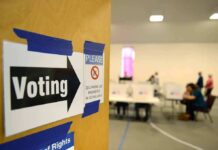
For years, student IDs worked to register and to get a ballot in New Hampshire. The federal court record shows they were accepted from 2012 until June 2026, if they showed a name, a photo, and were issued or expired within five years. A new law, House Bill 323, ended that approach and led the secretary of state to tell local officials not to accept student IDs for registration, absentee voting, or check-in on Election Day. That shift prompted the legal challenge.
The district judge later said student IDs could still be considered as part of “other evidence” when a voter had no approved ID, but not as a primary ID by themselves. That ruling rested on a safety-valve idea in state practice that allows election officials to weigh proof that makes it more likely than not the person is who they say they are. The Supreme Court’s order paused that clarification for this election, returning to the state’s stricter guidance for now.
Competing Claims: Security, Access, And What Is Proven
State officials and Republican supporters claim tighter rules protect clear, stable procedures and guard against fraud or confusion. The Court’s order, however, focused on timing and stability, not proof that student IDs are insecure. Reporting and court records identify no verified New Hampshire voter-fraud cases linked to student IDs, and critics say the rule will hit young voters the most. The absence of documented fraud evidence weakens the security case, at least in public view.
Voting-rights advocates argue the rule burdens lawful voters who lack other IDs, especially on or near campuses. They point out student IDs were long accepted with basic safeguards and that strict identification rules respond to rare fraud while risking lawful ballots. Local officials reportedly say few voters show up with only a student ID, which suggests any fraud-prevention impact may be limited even if the rule stands for now. These points will likely return in court after the election.
Big Picture: Emergency Rulings And Voter Trust
This case fits a common pattern. Courts have leaned on the Purcell principle many times to avoid last-minute shifts in election rules. That approach can reduce chaos, but it also means big questions get decided fast and with thin public records. Voters on both left and right worry that powerful actors make rules without clear proof or open debate. Sudden changes or sudden freezes both feed that distrust when daily life and the right to vote are at stake.
falsely claims the Supreme Court has mandated voter ID requirements in all 50 states, accompanied by a graphic depicting a red US map and a yes/no poll on the topic.The X post by@ppkty_112
In reality, the recent Supreme Court order from October 22, 2026, only allowed New…— KBK (@KBK104574) October 28, 2026
For this election, the message is simple: in New Hampshire, a student ID will not get you a ballot, even as backup evidence, unless courts change course again after votes are cast. The legal battle is not over. Lawmakers and officials could also revisit the rule with fuller data. Clear standards, transparent evidence, and steady timelines would help rebuild trust. Voters deserve rules that are both stable and fair, and proof to back why those rules exist.
Sources:
news.bloomberglaw.com, wjla.com, usatoday.com, thehill.com, nhpr.org, indepthnh.org, apnews.com, wmur.com