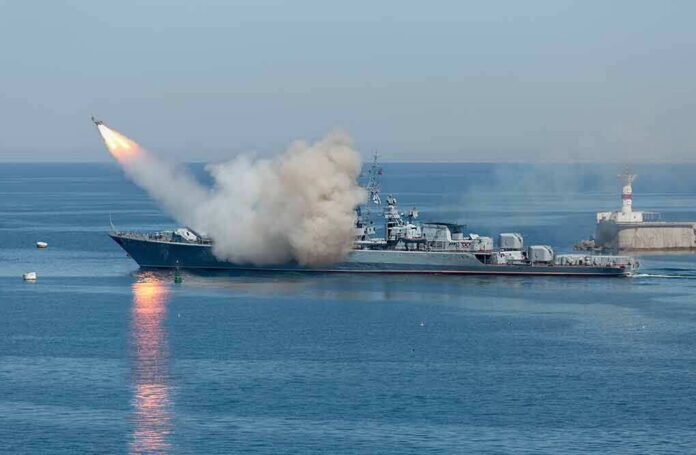
The Iran war has quietly burned through more than half of some of America’s most important missiles, raising hard questions about whether the United States could really handle a crisis with China over Taiwan in the next few years.
Story Snapshot
- U.S. forces have used roughly half of several key missile types in the Iran war, including major air defense interceptors.
- Think tank estimates say it will take three to four years to rebuild many of these stocks, creating a near-term “window of vulnerability.”
- Analysts warn that this drawdown could weaken U.S. deterrence against China, especially in a conflict over Taiwan.
- Both conservatives and liberals see the episode as another sign that Washington plans for long wars but fails to protect core U.S. security.
How the Iran War Drained Key U.S. Missile Stockpiles
Analysts say the United States has fired huge numbers of advanced missiles and interceptors during the Iran war that began in late February, hitting more than 13,000 targets in just over a month. The Center for Strategic and International Studies (CSIS), a Washington-based think tank, estimates the U.S. has used about half of at least four of its most critical munitions, including Patriot and Terminal High Altitude Area Defense interceptors that protect bases and allies from missile attacks. A separate CSIS analysis found that by the ceasefire, U.S. forces had fired at least half of their Terminal High Altitude Area Defense interceptors, nearly half of Patriot interceptors, and around 30 percent of Tomahawk land-attack missiles.
These weapons are not cheap or easy to replace. A New York Times report says the Pentagon has used more than 1,200 interceptor missiles in the conflict, each costing over four million dollars, along with thousands of ground-based precision missiles designed for high-value targets. CSIS and media summaries note that long-range missiles such as the Tomahawk and the Joint Air-to-Surface Standoff Missile were already intended for a possible war with a major power like China, not just regional fights. Using so many of them in Iran means the United States is burning through years’ worth of planned stockpiles in a single campaign, forcing emergency orders and new spending to refill the arsenal.
How Long It Will Take to Rebuild – And Why China Matters
Experts agree that the United States still has enough missiles to keep fighting Iran, but they warn that the real risk lies in the next war. CSIS estimates that rebuilding inventories of seven key munitions back to pre-Iran war levels will take between one and four years, even with missiles already in the production pipeline. A public television report summarizing CSIS data says it will take at least three years to restore advanced weapons stockpiles drained by the Iran conflict, including over 1,000 Tomahawk missiles and hundreds of Terminal High Altitude Area Defense interceptors. During that time, America’s ability to fight a major war in the Western Pacific, especially against China, would be weaker than planners expected.
This is where Taiwan comes into focus. CSIS briefed Congress on a war-game showing that in a high-intensity conflict with China over Taiwan, U.S. forces could run out of some crucial munitions within about a month. That warning came even before the Iran war used up large shares of the same missiles. Now, with more than half of certain stocks gone and years needed to rebuild, analysts say there is a “window of vulnerability” in which China might see an opening. The concern is not that the United States has no missiles, but that it lacks the deep reserves needed to fight and sustain a Pacific war while also defending allies and bases around the world.
What This Reveals About U.S. Planning and the ‘Elites’ in Washington
The numbers feed a broader frustration that many Americans on both the right and left already feel: the federal government spends staggering amounts on defense, yet still leaves the country exposed. CSIS estimates that Patriot interceptor inventories fell from roughly 2,300 before the war to fewer than 827 afterward, while Terminal High Altitude Area Defense stocks dropped from 452 to under 278. Reports describe the United States “burning through years’ worth” of advanced weapons in Iran even as production lines struggle to keep up. For citizens watching from home, this looks like a system that can always find billions for foreign wars but cannot manage basic readiness planning.
CNN: US Missile Defense Stockpiles Heavily Depleted After Iran Conflict
According to a CNN report, the United States has significantly depleted its missile defense stockpiles following months of military operations related to the conflict with Iran.
The report says around 80%… pic.twitter.com/iSqHTbTG8X
— LAFZ DIGITAL (@LafzDigital) August 5, 2026
Conservatives see this as proof that decades of globalist foreign policy and sloppy procurement decisions have hollowed out America’s real strength while enriching defense contractors and entrenched officials. Liberals see another example of Washington treating war as the default tool, spending on missiles while ordinary people face rising costs and shrinking support at home. Both groups share a core worry: powerful elites in the Pentagon, Congress, and industry planned for endless commitments but failed to ensure that the United States could deter a serious opponent like China when it counts. If more than half of key missile stocks can vanish in a single regional war, many ask whether anyone in charge is truly safeguarding the American people.
Limits of What We Know – And Why the Debate Still Matters
Exact U.S. ammunition numbers remain classified, and officials insist the country is not “running out” of missiles. The figures used by CSIS come from budget documents, procurement histories, and battlefield reports, which means they are estimates, not official disclosures. Some military leaders push back on the more alarming media headlines, saying stocks are “extremely strong” and warning against panic. But even they do not deny that large shares of advanced missiles have been fired and that rebuilding will take years. The open debate over stockpiles highlights a deeper problem: Americans must rely on think tanks and leaks to judge if their own government can defend them.
For many citizens, that secrecy fuels the belief that a “deep state” of insiders runs national security with little accountability. People on the right worry that Washington pours weapons into distant conflicts while leaving U.S. forces stretched thin. People on the left worry that war spending crowds out investment in the economy and society, only to reveal that even the military is not fully prepared. The Iran war missile story fits that pattern. It shows a government that can mobilize massive firepower on short notice, yet may struggle to sustain it and protect the country from the next big threat. That gap between image and reality is exactly what keeps public trust low.
Sources:
foxnews.com, smallwarsjournal.com, cnn.com, livemint.com, csis.org, aljazeera.com, khq.com, abcnews.com, youtube.com, newyorker.com, instagram.com, nytimes.com