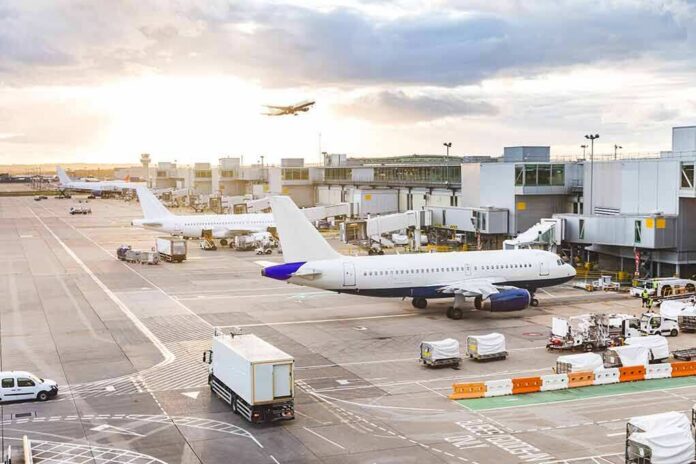
The U.S. Treasury says every remaining Iranian airline will be effectively grounded worldwide starting September 23 under a sweeping sanctions push.
Story Snapshot
- Treasury sanctioned 27 Iranian airlines and dozens of enablers under a new campaign.
- Officials warned foreign partners they risk losing access to the dollar system if they help those airlines.
- Treasury says Iran’s aviation moves weapons and personnel; Iran calls the action illegal and harmful to civilians.
- Secretary Scott Bessent signaled a global shutdown of Iranian airline operations from September 23.
What Washington Did and Why It Matters
The U.S. Department of the Treasury sanctioned 36 targets tied to Iran’s aviation sector, including all 27 remaining Iranian airlines. Officials said the sector helps Iran move weapons, personnel, and illicit cargo. The action is part of Operation Economic Outcast and follows a recent move to apply Executive Order 13902 to aviation. The goal is to isolate carriers and those who supply them with parts, fuel, financing, and services, and to cut off global lifelines that keep planes flying.
Reuters reported that the push expands earlier efforts focused on Mahan Air to include every other Iranian carrier. That signals a broader blockade on civilian and cargo flights that rely on foreign airports, vendors, and banks. Treasury paired the designations with warnings to service providers worldwide. Those who keep doing business with the listed firms could lose access to the U.S. financial system. That risk often drives rapid overcompliance abroad.
How Secondary Sanctions Force a Global Response
Secondary sanctions work by raising costs for non‑U.S. companies. Banks, fuelers, airports, and ticketing platforms usually choose not to risk the dollar system. Past cases show that this pressure can bite even without formal bans by other governments. Legal advisers now note a “presumption of denial” for Iran-related licenses, which further chills trade in parts and services for sanctioned airlines. This mix often leads to canceled routes and stranded aircraft on short notice.
Analysts and researchers have long tracked this pattern. Iran’s aviation sector has faced recurring sanctions across different U.S. administrations since at least the 1990s. Studies link those measures to reduced access to spare parts, training, and safety upgrades. International bodies have also warned about overcompliance that cuts after‑sales support and can impact flight safety. Those effects tend to widen when entire sectors, not just single firms, get targeted.
Iran’s Pushback and Civilian Impact Concerns
Iran’s Foreign Ministry condemned the sanctions as unlawful and called them “economic terrorism.” Officials argued the measures threaten civil aviation safety by blocking parts, maintenance, and inspections. They claimed the moves restrict the movement of millions of civilians and clash with the goals of the Chicago Convention on international civil aviation. The ministry urged the United States to end what it called unilateral coercive actions against civilian airlines.
Treasury Secretary Scott Bessent said the real test starts September 23, when secondary sanctions aim to shut Iranian carriers out of international operations. That date will show how many airports, suppliers, and banks fall in line. If they do, flights could halt, ticketing could stop, and aircraft could sit idle abroad. For Americans who distrust entrenched elites, this episode highlights how a few officials can freeze global services through financial leverage, with real effects on everyday travelers.
What to Watch Next: Routes, Safety, and Energy Prices
Airports and service providers will decide if they will turn away Iranian carriers to protect their access to the U.S. market. If that happens, Iranian travelers could face sudden route cuts, longer connections, and higher costs. Safety watchers will track whether lack of parts and support increases risks. Energy markets may also react. Wider sanctions on Iran often tighten regional supply lines and can nudge oil prices higher, which feeds into airfare and inflation pressures worldwide.
Sources:
insiderpaper.com, home.treasury.gov, iranintl.com, english.news.cn, ch-aviation.com, apnews.com, sanctionssearch.ofac.treas.gov, cnn.com, millerchevalier.com