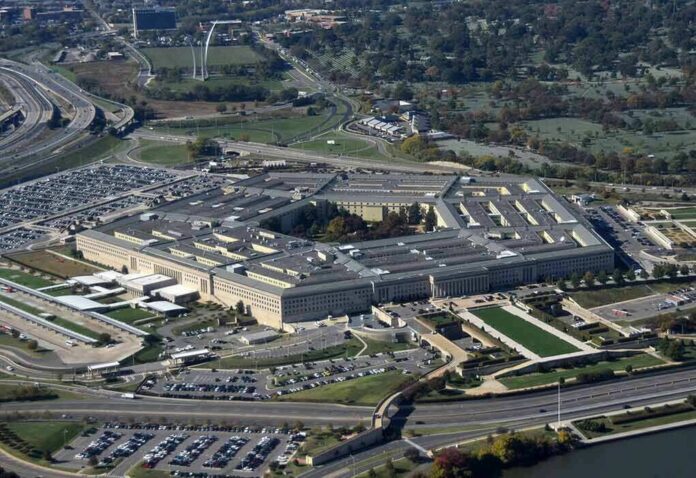
The Pentagon says President Trump has approved a firing squad to carry out the death sentence for Fort Hood shooter Nidal Malik Hasan, marking the first U.S. military execution in more than six decades.
Story Highlights
- The Pentagon says President Trump approved a firing squad for Nidal Hasan’s execution.
- Hasan was convicted for the 2009 Fort Hood shooting that killed 13 people.
- This would be the first U.S. military execution in more than 60 years.
- The move comes amid wider debates over execution methods in America.
Pentagon Announcement and Decision Path
Pentagon spokesman Sean Parnell said Secretary of Defense Pete Hegseth recommended death by United States Army firing squad for Nidal Hasan, and President Trump approved the plan, according to multiple reports dated October 5 and 6, 2026. The coverage names both the recommender and the final decision maker. Reports do not list a public memo or signed order, but they align on the core point: the Pentagon attributes approval to the President for this method.
Hasan’s conviction stems from the 2009 mass shooting at Fort Hood, Texas, where he killed 13 people and wounded others on a United States military base. A military court sentenced him to death. The Pentagon’s statement addresses how the government plans to carry out that sentence, not whether he is guilty. The reported method, a firing squad, would involve United States Army personnel under military rules, rather than a state prison system.
Historical Significance in Military Justice
If carried out, this would be the first U.S. military execution in more than 60 years, underscoring a major shift in practice since the mid-20th century. Military executions have been rare since 1961, when the services last executed a U.S. service member, and the firing squad has been even less common in modern American practice. That rarity helps explain why the Pentagon’s statement drew wide national attention across outlets.
Military capital punishment follows a legal track that is separate from most state death penalty cases. Uniform Code of Military Justice procedures and chain-of-command approvals govern final steps. The reports cite a Pentagon statement but do not include the underlying legal packet for this specific method choice. Even so, the shared reporting points to an internal review that led to Hegseth’s recommendation and the President’s approval to proceed with a firing squad.
Why Firing Squad Is Back in the Conversation
Across the country, officials have struggled to carry out lethal injections due to drug shortages, court fights, and failed attempts. Those problems have pushed some governments to consider or revive alternatives, including firing squads. Death Penalty Information Center analysis notes that firing squads represent a small share of executions in the modern era, far below lethal injection. Idaho even made firing squad its primary method in 2026, reflecting this broader turn when other methods stall.
News of a military firing squad order lands in this wider debate. Supporters argue a trained team can deliver a swift, certain death with fewer mishaps than drugs. Critics see the method as harsh and symbolic of state force. The Pentagon’s step sits apart from state policies, but it follows the same logic: leaders want a method that courts will allow and that officials can actually carry out when a death sentence is final.
What This Means for Institutions and the Public
This decision signals that top federal leaders are willing to use rarely used tools to enforce sentences, especially in terrorism-linked cases. Some Americans will view this as long-delayed justice for victims and families. Others will worry about what it says about government power and the line between justice and spectacle. Both reactions reflect a common frustration: people expect clear, competent action, not endless delay or confusion, from institutions that often feel distant and unaccountable.
For conservatives who stress order and deterrence, the move may look like the system finally working. For liberals who focus on due process and humane standards, the method choice will raise fresh concerns. Yet both sides share a core demand: a government that is transparent, follows the rules, and delivers on what it decides. The Pentagon’s attribution to named officials provides clarity on who chose what and why it matters, in a moment when trust is hard to earn.
What Comes Next
Next steps likely include operational planning by the Army, confirmation of location and protocol, and final legal checks before any date is set. The reports do not detail the number of shooters, the facility, or the exact timeline, and those items will be set by military procedures. As those details emerge, they will test whether the government can match a historic decision with careful execution, both in the literal sense and in the duty to act within clear rules.
The bottom line is simple and stark: the Pentagon says the President approved a firing squad for Nidal Hasan’s death sentence. That choice breaks decades of military practice and drops a hard marker in the nation’s debate over capital punishment. However people feel about the method, the decision shows the federal system moving with intention on a case that has been on hold for years.
Sources:
idahostatesman.com, idahonews.com, washingtonexaminer.com, nypost.com, deathpenaltyinfo.org, nst.com.my, legislature.idaho.gov, idoc.idaho.gov