
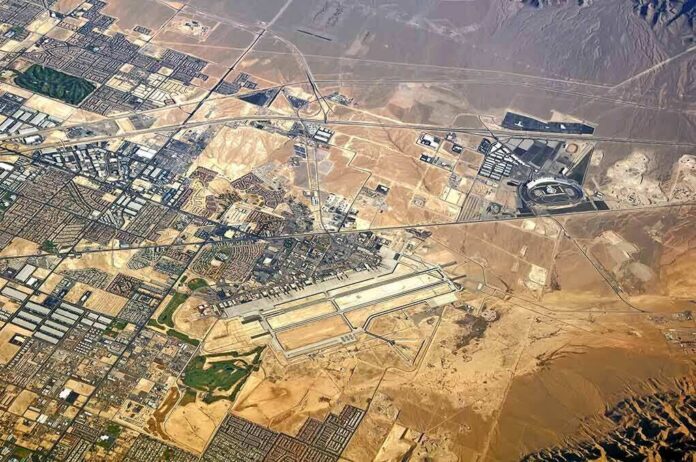
Yemen’s Houthi movement said it fired a ballistic missile at Riyadh’s King Khalid International Airport, and Saudi officials confirmed a missile was launched toward the city with debris falling near the airport area.
Story Highlights
- Houthis claimed a ballistic missile strike aimed at King Khalid International Airport.
- Saudi officials said a missile was launched from Yemen and debris fell near the airport, with no reported damage.
- Reports identified the missile as a Scud-derived Burkan-2H, showing long-range capability.
- Human Rights Watch said targeting a civilian airport likely amounts to a war crime.
What Both Sides Confirmed Happened
Houthi-controlled authorities said their forces launched a ballistic missile at King Khalid International Airport in Riyadh. Saudi officials said a missile was fired from Yemen toward the capital around the evening and that fragments fell in the airport vicinity. Saudi aviation officials reported no airport damage and no flight disruptions. This core timeline, including the intended target, was reported across major outlets at the time and in later analysis.
Saudi and coalition spokesmen stated air defenses intercepted the missile near the airport. Later technical analysis summarized by regional monitors raised doubts about the intercept’s success, suggesting the warhead may have separated as designed. That disputed point remains part of how the event is remembered, but it does not change the shared facts of a launch aimed at the airport area on that date.
The Missile’s Range and Why It Matters
Houthi-controlled media described the weapon as a Burkan-2H, which analysts link to Scud designs. Independent research cataloged the November 2017 launch as a long-range strike capable of reaching Riyadh from Yemen. That capability signaled an organized operation, not a small, local attack. Analysts also noted limits to missile accuracy, which often reduced battlefield effect even when the political impact was large for both sides.
Targeting a busy civilian airport crosses a line that alarms people across the political spectrum. Human Rights Watch said the strike on a civilian airport was most likely a war crime due to its indiscriminate nature. Saudi statements also framed the attack as hitting civilian areas. The legal and moral stakes are clear: firing at civilian air traffic risks mass casualties and rattles global travel and trade that everyday people depend on.
Why This Fits a Broader Wartime Pattern
The incident follows a pattern seen in the Saudi-Yemeni conflict. One side claims a high-value hit; the other confirms a launch but reports an intercept, limited debris, or no real damage. That pattern keeps the public in the dark about exact impact points or intercept performance. It also lets powerful actors control key data, like radar tracks and debris analysis, which could resolve debates but often stays classified or undisclosed.
A reported Houthi attack on King Khalid International Airport in Riyadh has left one Pakistani citizen martyred and 11 people injured, according to the supplied report. A fire broke out at Terminal 4, disrupting flight operations, while Saudi authorities reportedly extended the… pic.twitter.com/dDVmnHsZzZ
— Fourth Pillar Post (@Post4th) October 12, 2026
The stakes reach well beyond the battlefield. Civil aviation depends on predictable skies. A single missile near a major hub can force diversions, shake investor confidence, and raise insurance costs that hit consumers. Americans on both the right and the left know how this goes: leaders talk, costs rise, and families feel it. When wars risk civilian airports, it tests core values about protecting noncombatants and keeping vital systems safe from political games.
Sources:
cbsnews.com, cnn.com, abcnews.com, bbc.co.uk, hrw.org, sanaacenter.org