
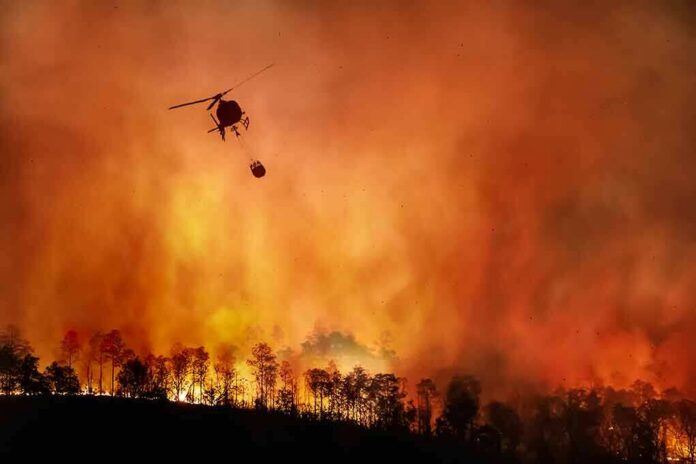
Federal prosecutors say a 70-year-old Santa Clarita man sparked a wildfire that scorched more than 1,000 acres of federal forest land.
Story Snapshot
- U.S. Attorney files a federal arson complaint tied to the Bouquet Fire.
- Complaint cites an alleged admission about a cigarette landing on fireworks.
- Investigators say fireworks probably caused the blaze after ruling out other sources.
- The fire burned about 1,048 acres in the Angeles National Forest.
Federal Charge Filed After 1,000-Acre Wildfire
Federal prosecutors charged Rodney Ameile Saba, age 70, with arson involving federal property in connection with the Bouquet Fire in Los Angeles County. The U.S. Attorney’s Office announced the complaint on October 10, 2026. The fire burned through parts of the Angeles National Forest and triggered evacuations. The charge follows a weeklong investigation into where and how the fire began. Prosecutors say the case will proceed in federal court because national forest land was damaged.
The complaint links the fire’s start to an area behind Saba’s home on Bouquet Canyon Road. Investigators say the ignition happened at about 2:13 p.m. on October 3. That timing tracks with early reports of smoke and rapid spread in dry brush. Fire crews fought steep terrain and gusty winds as the blaze moved toward homes. Officials later measured about 1,048 acres burned on federally managed land inside the forest boundary, a key factor for federal jurisdiction.
Alleged Admission and Fireworks Finding
The government’s filing cites an alleged statement from Saba about how the fire started. According to the complaint, Saba said he tossed a cigarette from his porch, which landed on fireworks and set them off. Investigators with the United States Forest Service reportedly ruled out other common causes, including lightning, campfires, debris burning, and equipment sparks. They concluded the fire was probably caused by fireworks based on the scene review. These points form the backbone of the federal arson charge.
Published reports do not include the full complaint text, the case number, or the verbatim wording of the alleged admission. The coverage also does not identify the specific investigators or detail their test methods. Those gaps are common in the early phase of a federal case and may be filled as filings become public. The charge is an allegation, and Saba is presumed innocent unless prosecutors prove the offense in court.
What Investigators Must Prove Under Federal Law
Federal arson tied to national forest land requires proof of an ignition that damaged federal property and the needed intent or mental state under the statute. Identifying fireworks as the likely spark addresses the “what” but not the “why.” Prosecutors will need to show how Saba’s actions meet the legal standard for arson. That can include intent or other required elements defined in the charging law, which separates accidents from crimes.
Wildfire investigations often move in two steps. First, they find the ignition source. Second, they assess intent and responsibility. Human activity causes most wildfires nationwide, but only a portion are arson under the law. National research shows people start the vast majority of fires in the United States, across causes like equipment, debris burning, smoking, and fireworks. That pattern shapes how agencies examine scenes and rule out alternatives.
Community Impact and Public Frustration
Residents faced evacuation orders and tense hours as fire lines shifted with wind and heat. Local agencies and federal crews worked together to protect homes near the canyon. Many people see a system that talks tough after disasters but struggles to prevent them. Homeowners pay rising insurance rates and still face yearly fire threats. Taxpayers fund suppression costs while land agencies fight old equipment, worker shortages, and thick fuels that make fires burn hotter and faster.
The Bouquet Fire reportedly burned 1,048 acres of California’s Angeles National Forest. Federal prosecutors have charged a 70-year-old Santa Clarita man with arson, alleging that he ignited fireworks with a cigarette, sparking the blaze. If convicted, he faces up to 20 years in…
— Master Thought (@MasterThousmg) October 10, 2026
People on the right and left share a basic worry here. They want simple rules followed and real consequences when carelessness or crime puts lives at risk. They also want competent prevention, not just press releases after the fact. This case will test how well federal and local systems work. If the government proves its claim, it signals accountability for reckless ignition near public lands. If not, it highlights the need for clearer standards and better prevention in fire zones.
What Comes Next in the Case
The next steps likely include an initial court appearance, a decision on detention, and filings that outline evidence. Defense counsel may challenge statements and the origin-and-cause findings. Prosecutors may add details through lab reports, photos, and investigator declarations. The court will sort facts that meet the legal bar from claims that do not. Meanwhile, crews and communities will prepare for more fall wind events that can turn small sparks into major fires.
Sources:
nypost.com, abc7.com, ground.news