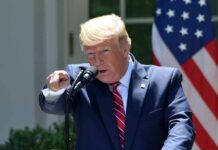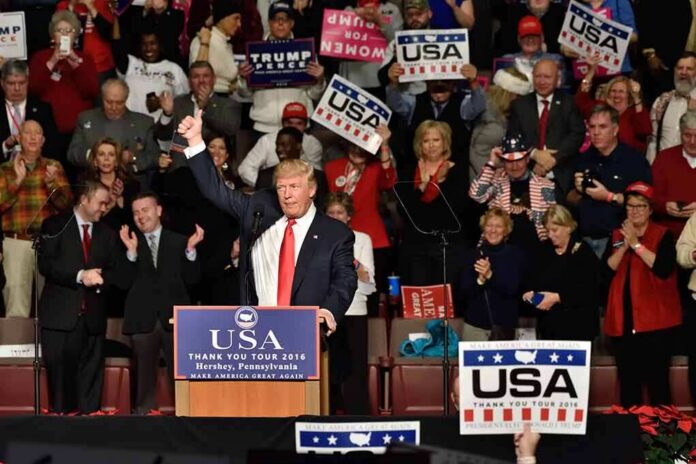
President Trump announced a 32-day campaign sprint that puts the White House squarely on the ballot for control of Congress.
Story Snapshot
- Trump said he will campaign for 32 straight days ahead of the midterms.
- The push aims to help Republicans defend House and Senate majorities.
- Early stops include Texas and Ohio, with more states to follow.
- Presidents often campaign in midterms, but history shows mixed payoffs.
What Trump Announced And Why It Matters
President Trump said he will travel and hold rallies for 32 days before the November midterm elections. He framed the tour as central to helping Republicans keep control of Congress. He described it as “literally a 32-day tour,” signaling a near-constant road schedule in the final stretch. The plan puts his record and message at the center of the fight. That choice raises the stakes for both parties, since every stop will draw national attention and define the closing month.
Trump said the blitz begins with a Thursday trip to Texas, followed by Ohio and “all different places,” with more stops to be named as races evolve. Texas brings big media markets and donor energy. Ohio has tight contests and a large pool of base voters who have backed him before. These choices match a common tactic late in a cycle: go where the party can boost turnout, grab headlines, and shore up shaky ground before early voting peaks.
How This Fits The Pattern Of Midterm Politics
Since World War II, most midterms have cost the president’s party seats in the House. That pattern is why presidential travel often aims more at lifting turnout than changing minds. Research on presidential travel shows leaders focus visits where contests are close or where they must defend friendly turf. Trump’s team appears to be following that playbook. The tour concentrates the power of the presidency on places where a rally can move donors, volunteers, and local press.
Campaign veterans also note that a president’s presence can cut both ways. Supporters feel energized and show up. Opponents do, too. That is why itineraries usually balance swing areas with safe states that can finance and fuel the effort. In past cycles, presidents mixed rallies with fundraisers and local news hits to stretch each trip’s impact. Expect that here as well. Every stop can lift down-ballot names, unify talking points, and test messages that will repeat across television and radio.
What Each Side Hopes To Gain—And What Voters Want Addressed
Republicans want the president’s star power to firm up turnout where races are tight and defend districts that have grown competitive. Democrats want to cast the election as a check on one-party rule in Washington. Both sides know many voters feel Washington has not delivered on core needs like affordable energy, secure borders, safe streets, and a fair economy. The tour will likely spotlight those concerns, because they cut across left and right frustration with a system seen as serving elites over workers.
Trump launches midterm campaign push in Texas and Oklahoma as Republicans face tough races – Reutershttps://t.co/Hn7eP78y6A
— Open Outcrier (@OpenOutcrier) October 1, 2026
For readers who feel the federal government talks more than it delivers, this sprint is a test. Do leaders spend time listening to families who face high prices, job uncertainty, and rising bills, or do they only stage rallies? The answer will show in the stops, the messages, and the follow-through. Presidents often campaign hard in midterms; results vary. What does not vary is what voters measure: whose plans help their paychecks, their kids, and their communities the most.
Sources:
facebook.com, aljazeera.com, theepochtimes.com