

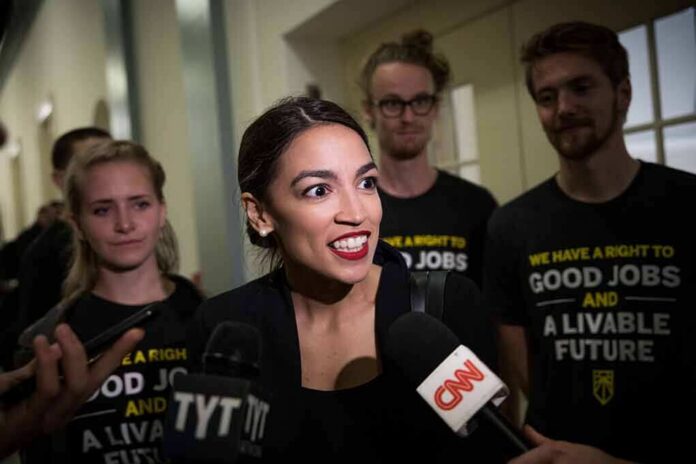
Alexandria Ocasio-Cortez says she has not ruled out a 2028 run for president or a Senate challenge, keeping Democrats on edge and donors guessing.
Story Snapshot
- Ocasio-Cortez says she will decide after the midterm elections, leaving both paths open.
- Media interest surged after her interview outlined options for the White House or a Senate run.
- Supporters and critics read the same signals very differently, fueling a month-long speculation cycle.
- The moment highlights how political brands can move money and attention before any formal step.
What Ocasio-Cortez Actually Said About 2028
New York Representative Alexandria Ocasio-Cortez said she has not ruled out a 2028 presidential campaign or a Senate run. She told The New York Times that she will weigh the decision after the midterm elections. Her answers kept every option open, including staying in the House. The reporting shows no formal exploratory move yet. The core fact is simple: she is publicly keeping both doors open while she tests support and timing.
She also discussed how voters may judge her age, gender, and ethnicity. She said she thinks about “identity” as one factor because it shapes how people see candidates. Those points reflect a wider debate inside the party over electability. They also speak to how campaigns are built in the media era, where personal story and policy brand can be as decisive as a resume line or a committee post.
How One Interview Became a National Speculation Cycle
The Times interview set off a chain reaction across outlets and social feeds. Headlines jumped from “weighing options” to “sounds like she is running,” even as she stopped short of any commitment. This is common for high-profile figures. A small set of quotes can fuel weeks of chatter. That feedback loop then shapes donors, activists, and rivals, who begin to act as if a choice has already been made, long before any filing.
Coverage also focused on a Senate path. Senate Majority Leader Chuck Schumer is on the ballot in 2028, which creates a clear target if she chooses that route. Several outlets framed a Schumer challenge as a live option based on her own words. That possibility gives her leverage. It also pressures national Democrats, who must plan around two very different maps: a national primary or a high-stakes New York primary.
Why This Matters Beyond Party Drama
For many voters, this is not only about one politician. It is about how power moves before the public gets a vote. Media buzz can shift money, shape polls, and crowd out other voices. That leaves many Americans on both the right and the left feeling that insiders and elites set the table first, and everyone else eats last. The Ocasio-Cortez moment shows how early-stage signals can become a de facto campaign test without any formal step.
I live in New York and I would vote for @AOC for Senate but not for president in 2028
— emily (@emnode) September 28, 2026
The stakes for 2028 are large. Democrats are searching for a standard-bearer in a tough national climate. Republicans hold the White House and both chambers of Congress. Activists on both sides see costs rising, trust falling, and Washington locked in trench warfare. Whether Ocasio-Cortez runs or not, the path she picks will shape donor flows, candidate fields, and how both parties talk about class, immigration, energy, and government competence.
Sources:
nytimes.com, nypost.com, washingtonexaminer.com, wxyz.com