The U.S. Coast Guard suspended its search after finding debris from a Boston-bound medical jet that vanished south of Nantucket with six people aboard.
Story Snapshot
- Federal Aviation Administration alert triggered a major search after radio contact was lost.
- Officials confirmed debris from the Gulfstream G100 medical transport south of Nantucket.
- Six people were aboard the flight from Bermuda to Boston, according to reported counts.
- The Coast Guard later suspended active search operations after extensive efforts.
What Officials Confirmed About the Flight
Federal Aviation Administration air traffic controllers reported losing contact with a medical transport jet in the early morning hours, which triggered search and rescue protocols, according to Coast Guard and media reports. The aircraft was identified as a Gulfstream G100 air ambulance flying from Bermuda to Boston with six people on board, based on consistent reporting from multiple outlets. Officials did not release a cause for the loss of contact. Authorities stressed that investigations take time and depend on debris recovery.
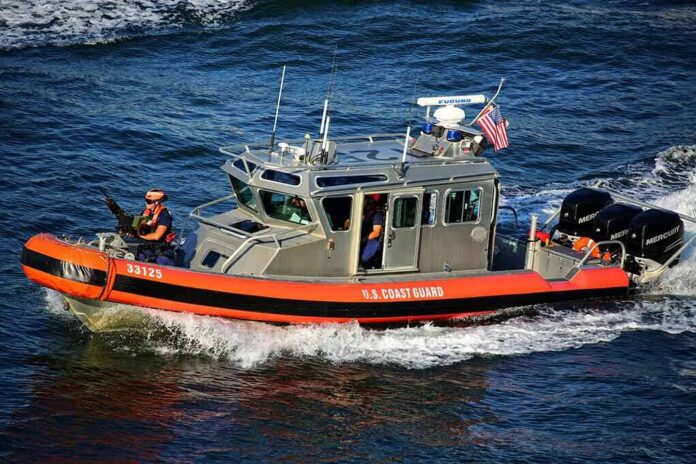
U.S. Coast Guard teams launched aircraft and boats to search waters south of Nantucket shortly after the alert. Crews focused on the last known track and likely path, a standard approach under national search and rescue guidance that starts with incomplete data and refines the grid as new details arrive. The operation drew on air and sea assets and coordinated updates from the Coast Guard’s Northeast District until debris was confirmed tied to the missing jet the same day.
Debris Discovery and Search Suspension
Search crews located a debris field south of Nantucket and confirmed it was from the missing medical plane that left Bermuda for Boston Logan International Airport. The find narrowed the target area for recovery teams working in challenging offshore conditions. After extensive searching, the Coast Guard announced that it suspended active search efforts. Officials often make this decision when the likelihood of finding survivors falls and conditions reduce effectiveness. The investigation phase now becomes the priority for safety agencies.
Authorities did not release the identities of those aboard in the reporting set, and outlets did not publish a full manifest. Reports differ slightly on the exact time contact was lost, placing it around 1:20 a.m. to 2:00 a.m., which is common in fast-moving cases that rely on multiple facilities and logs. Such differences do not change the core facts: contact was lost, debris was found, and six people were aboard a medical transport headed to Boston.
Why This Matters Beyond One Flight
Medical transport flights are lifelines. Families trust that the system—from dispatch to air traffic control to rescue crews—works when every minute counts. This case shows how the National Search and Rescue Plan activates when a plane goes missing, and how the public mainly sees the visible moments: the search launch, the debris discovery, and the suspension of operations. The hard work after that point is quieter and slower, but it is how investigators learn what failed and how to prevent it.
US Coast Guard ends search for 6 missing plane passengers | https://t.co/hiyaSilDRF#BritainHerald #PlaneCrash #MedicalFlight #Nantucket #Bermuda #Boston #CoastGuard #Aviation pic.twitter.com/y8gemAlHxn
— Britain Herald (@BritainHerald) October 5, 2026
Both conservatives and liberals share a basic concern here: large systems often do not feel accountable when lives are on the line. People want clear answers about equipment, training, and response times—and they want them fast. Yet official reviews take weeks or months. That lag fuels frustration with government and contractors alike. Straight facts and timely updates can ease that gap. For now, officials have confirmed debris, a suspended search, and no stated cause. The deeper answers must follow.
Sources:
abcnews.com, boston.com, noticias.foxnews.com, aopa.org