President Trump’s latest “not sure” on Ukraine’s Patriot missile license turns a high‑stakes war promise into yet another Washington maybe.
Story Snapshot
- President Trump told the Financial Times he is “not sure” about letting Ukraine manufacture Patriot missiles, after earlier saying yes.
- His hesitation casts doubt on one of Kyiv’s top defense goals as Russia keeps hitting Ukrainian cities with missiles.
- Trump has repeatedly promised Patriots for Ukraine, but experts say licenses and production could take years even if approved.
- The back‑and‑forth highlights why many Americans see foreign policy decisions as ad‑hoc, political, and driven by elites instead of clear strategy.
Trump’s shifting words on Ukraine’s Patriot license
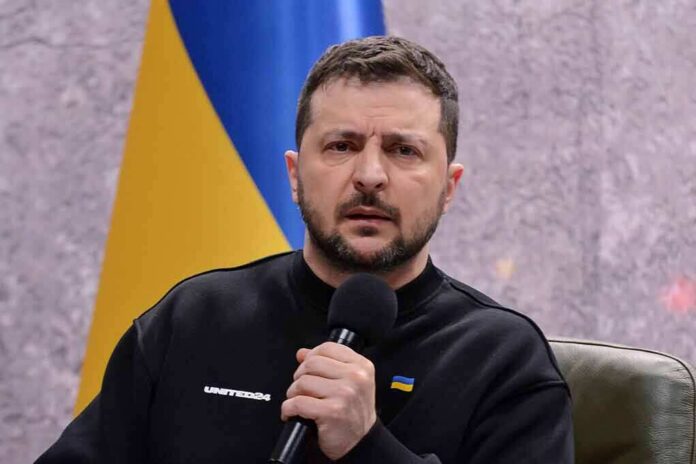
President Trump now says he has not decided whether the United States will let Ukraine produce Patriot interceptor missiles. In a phone interview with the Financial Times, he said he was “not sure” about granting a production license and added that Washington has to be “a little bit careful” about who gets access to such weapons. These comments come just weeks after he publicly told Ukrainian President Volodymyr Zelenskyy that Ukraine would get “the right to make Patriots” at a NATO summit in Turkey.
At that summit, Trump’s words sounded like a clear green light. He joked that giving Ukraine a license to build Patriots would mean Zelenskyy “can’t complain” the United States is not sending enough missiles. Media outlets in the United States and Europe reported the pledge as a major win for Kyiv, saying Trump intended to give Ukraine a license to produce Patriot air defense missiles on its own soil. Ukrainian leaders and many Western analysts framed the promise as a breakthrough in Ukraine’s struggle to protect its cities from Russian strikes.
Why Patriots matter so much to Ukraine’s survival
Ukrainian officials have pushed hard for Patriots because Russian ballistic and cruise missiles keep hitting power plants, factories, and homes. Patriot systems are high‑end air defense batteries designed to shoot down fast, high‑flying missiles and aircraft. Ukraine already uses some Patriots supplied by the United States and European allies, but it is running low on interceptor missiles, which must be replaced after each launch. Zelenskyy has warned that Ukraine needs “as quick as possible, as much as possible” missiles for these systems to avoid new waves of blackouts and destruction.
Allowing Ukraine to build its own Patriot interceptors could, in theory, help solve this shortage. A local license would let Ukrainian factories produce missiles on Ukrainian soil, closer to the front lines and not dependent on each new Western shipment. Defense experts say such a license would also signal long‑term support for Ukraine’s defense industry, making the country less reliant on outside powers. But they warn that setting up advanced missile production in a war zone is extremely hard and would require complex technology transfers, security safeguards, and a stable work environment.
Promises, delays, and expert doubts about feasibility
Even before Trump’s latest “not sure,” specialists were clear that a Patriot production license would not solve Ukraine’s short‑term problems. Experts told ABC News that Trump’s plan to license Patriot missiles for Ukraine could take years to turn into real missiles. They noted that the president had not yet notified the American companies that make Patriot interceptors, such as Lockheed Martin and Raytheon, about any final decision. Without detailed agreements, factories, and trained workers, a promise on paper does not stop incoming Russian missile attacks.
Reporting from Reuters and others has stressed that Trump’s earlier pledge was vague and made before export rules, contracts, and production timelines were worked out. This pattern fits a broader trend in his Ukraine policy, where big public statements come first and the details often lag or change later. For Ukrainians under fire, that gap between words and action fuels both cautious hope and deep frustration. For many Americans, it looks like another example of leaders making grand announcements abroad while ordinary people see little clear strategy at home or overseas.
Political tensions and fears about elite decision‑making
Trump’s “not sure” also lands in a divided American political climate where many on both the right and left believe the federal government is failing them. Conservatives who back strong borders and an “America First” focus worry that open‑ended military promises drain money while inflation, debt, and illegal immigration remain unsolved. Liberals who support human rights and social programs fear that sudden reversals weaken alliances and leave civilians in war zones exposed to more violence.
Ukrainian President Volodymyr Zelensky said US President Donald Trump agreed during White House talks on July 28 to grant Ukraine licenses to produce Patriot interceptors, a step that would make Ukraine only the third country authorized to build the missiles after Japan and…
— Jim Manzon (@manzonjj) July 31, 2026
Both sides share a deeper concern: decisions about war, weapons, and huge contracts seem to be made by a small circle of elites, far from public oversight. The Patriot license debate fits that fear. One week, cameras capture a handshake and a pledge in front of NATO leaders. Weeks later, a private phone call becomes a careful “we’re looking at it” with no firm plan. Whether people support or oppose sending advanced weapons abroad, many see this back‑and‑forth as proof that Washington often runs on improvisation, not steady principles.
Sources:
insiderpaper.com, theguardian.com, youtube.com, cnn.com, dw.com