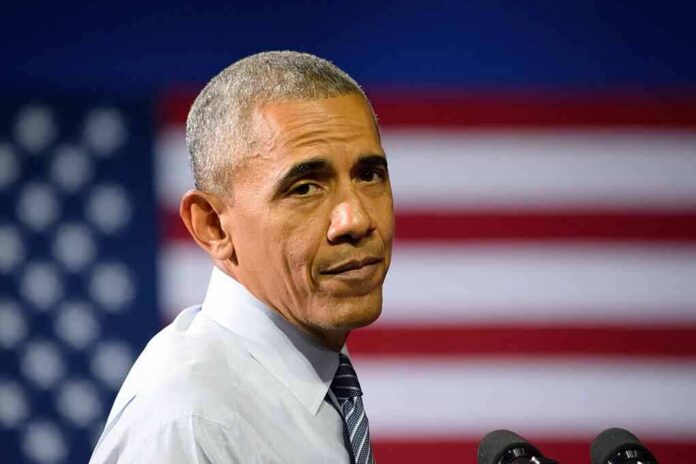
The Obama “illegals can vote” clip that keeps resurfacing is a textbook case of how a heavily edited, out-of-context video can invert the meaning of a politician’s words: in the full 2016 exchange, Obama is clearly telling eligible citizens to vote and explicitly grounding that in the fact that only citizens can legally cast a ballot.
Key Points
- The viral clip comes from a November 2016 interview with Gina Rodriguez, in which Obama was asked about fears that voting could expose undocumented family members to deportation.
- Editors cut away much of Obama’s answer, leaving sound bites that, when isolated, can be spun as him telling “illegals” they can vote without fear.
- In context, Obama’s core point is that when you vote, “you are a citizen yourself,” and you are speaking on behalf of community members “who can’t legally vote.”
- Independent fact-checkers and legal experts have repeatedly found no basis for the claim that Obama encouraged noncitizens to vote; noncitizen voting in federal elections remains illegal and vanishingly rare.
The 2016 Obama–Rodriguez Interview: What Was Actually Asked and Answered
The clip at the center of this controversy comes from a sit-down between President Barack Obama and actress Gina Rodriguez released on 3 November 2016, aimed at young Latino viewers in the closing days of the election. Rodriguez frames her question around a very specific fear she says she hears from “millennials, DREAMers, undocumented citizens”—her term for undocumented people who nonetheless contribute to the country—that voting could put their families at risk of deportation. She is not asking whether undocumented immigrants may legally vote; she is asking whether citizens with undocumented relatives will trigger immigration enforcement merely by showing up at the polls.
Obama’s answer begins by directly rejecting the notion that voting exposes someone’s undocumented family member to investigative scrutiny. He explains that voter rolls are not transferred to immigration enforcement databases and that the “sanctity of the vote is strictly confidential” with respect to how a person votes. He follows with the line that, when chopped out of his fuller answer, fuels the later misinterpretation: “If you have a family member who maybe is undocumented, then you have an even greater reason to vote.” In the complete exchange, this is plainly about motivating eligible citizens—particularly Latinos—to participate on behalf of their communities, not about granting undocumented relatives permission to vote themselves.
How Editing Turned a Civic Message into a Voter-Fraud Meme
Within days of the interview, partisan outlets and YouTube channels began circulating shortened versions of the exchange, often under blunt titles like “Obama encouraged ILLEGALS to vote on live TV!” These edits typically keep Obama’s reassurance that “the sanctity of the vote is strictly confidential” and his comment about having “an even greater reason to vote” if you have undocumented family, but strip away the sentences that anchor those remarks in citizenship and legal voting.
One prominent version opens with Obama saying, “If you want to vote and you show up at your polling place, they can’t stop you,” which in the full video is his response to a different part of Rodriguez’s question about claims the election is “rigged.” In context, he is telling eligible voters that partisan rhetoric about rigging is meant to suppress turnout; out of context, it can be made to sound like a blanket assurance that “anyone in the country” can vote. This is the core mechanism of the misrepresentation: remove the legal qualifier, leave the emotional reassurance, and let viewers fill in the rest with whatever fears or suspicions they already hold.
What Obama Said About Citizenship and Legal Voting
To understand why the “Obama told illegals to vote” narrative collapses under scrutiny, you have to look at the rest of his answer, the part most viral clips omit. Early in that exchange, Obama underscores a foundational point: “when you vote, you are a citizen yourself.” In other words, the very act of voting presupposes legal eligibility. Later, he describes voting as a way citizens speak both for themselves and for those in their communities “who may not have a voice. Who can’t legally vote.” It is hard to square those phrases with any claim that he was inviting noncitizens to cast ballots.
This framing is consistent with Obama’s broader public comments on voting and immigration. In a 2014 address announcing his executive action to shield certain undocumented parents from deportation, he paired protection with requirements: years of residence, U.S. citizen or lawful permanent resident children, background checks, and tax compliance—hardly the posture of a president casual about legal status. And in later remarks about voter fraud and restrictive voting laws, he repeatedly described the idea of widespread illegal voting as “fake news” and emphasized that the real problem is eligible citizens not voting, not ineligible people voting.
Independent Fact-Checks: Why the Claim Is Rated False
Once the edited clip started circulating again in the 2020s, major fact-checking organizations revisited the original interview and the legal backdrop. USA Today’s fact-check team examined the full video, the transcript, and subsequent commentary, and concluded flatly: “Obama did not encourage non-citizens to vote. The original video was edited, and his remarks were taken out of context.” Reuters reached the same conclusion in a June 2024 analysis, noting that Obama “did not advocate for illegal immigrants to participate in elections” during the interview and that social media posts distorted his statements to imply otherwise.
Snopes likewise tracked the claim back to the Gina Rodriguez clip and highlighted how outrage posts used a shortened version that removed Obama’s discussion of citizenship and legal voting. In the full exchange, Snopes notes, Obama is “urging Latino citizens to vote in order to give voice to members of their community who are precluded from doing so by lack of citizenship, not urging non-citizens to vote illegally.” That distinction—citizens voting on behalf of noncitizens—is the spine of his argument, and its removal is what makes the reposted clips misleading.
The Legal Reality: Noncitizen Voting Is Illegal and Rare
Under U.S. law, noncitizens cannot vote in federal elections, and state elections follow the same rule; only a handful of local jurisdictions have ever experimented with allowing noncitizen voting in purely municipal contests. The Migration Policy Institute’s overview of noncitizen voting laws underscores that it is illegal for unauthorized immigrants, green-card holders, or temporary visa holders to vote in federal or state elections. That legal baseline matters because any suggestion that a president was openly telling undocumented immigrants to vote would run headlong into statutory prohibitions and basic election administration practices.
Beyond legality, the empirical record shows noncitizen voting is exceedingly rare. Investigations by state election boards, academic studies, and federal reviews have consistently failed to uncover evidence of significant numbers of noncitizens casting ballots in U.S. elections. That does not mean isolated errors never occur—registration glitches like New Jersey’s motor vehicle system issue, where a small number of noncitizens were mistakenly added to the rolls, show that administrative mistakes can happen—but those episodes have not been shown to affect election outcomes, and they are typically caught and corrected through audits and cross-checks. Taken together, the legal and empirical context makes the claim that Obama was casually greenlighting illegal voting not just rhetorically strained but practically implausible.
Why This Clip Keeps Coming Back in the Voter-Fraud Narrative
The persistence of the “Obama told illegals to vote” story is less about what was said in 2016 and more about the way certain narratives resonate in the current political environment. Allegations of mass noncitizen voting fit neatly into a broader storyline some actors have advanced for years: that elections are systematically compromised, that “millions” of illegal votes decide outcomes, and that only radical changes to voting rules can restore integrity. In that ecosystem, a short video in which a Democratic president seems to be telling anxious Latinos to vote “without fear” is a powerful visual cue—even if the underlying policy and law say something entirely different.
Fact-checkers have described this pattern in detail. The Brennan Center, for example, calls the notion of millions of noncitizen voters “the most widespread rumor in our politics,” pointing out that it is a conspiracy theory increasingly pushed by leading political figures despite repeated empirical debunking. Claims about Obama’s interview slot neatly alongside assertions about “3 million undocumented immigrants voting,” “4 million illegal votes,” and other large, round numbers that emerge in partisan media and social posts without evidentiary support. The Gina Rodriguez clip serves as a kind of evergreen prop in that drama—ready to be recirculated whenever a new debate about election integrity flares.
What the Episode Shows About Media Literacy and Civic Discourse
This episode is instructive beyond its immediate facts because it illustrates how easily a nuanced, context-dependent answer can be weaponized once stripped down to its most emotionally charged fragments. Obama was addressing a genuine fear among lawful voters with undocumented relatives: the fear that participating in democracy might endanger their family. His response tried to thread a needle—reassuring them that voting records are not immigration tools while urging them to vote precisely to protect vulnerable community members. The edit collapses that nuance into a simpler—and false—story: that “illegals can vote without fear.”
For citizens trying to make sense of election-related claims today, the lesson is straightforward but demanding: clips, especially those built to outrage, are starting points, not evidence. The first question should always be, “What got cut?” The second should be, “What does the law actually allow?” When you apply those questions to the Obama interview, the story resolves quickly: he was telling citizens to vote, anchoring that in the law that only citizens can do so, and asking them to speak for neighbors “who can’t legally vote.” The controversy that grew up around that exchange says more about the power of editing than it does about the state of American election law.
Sources:
twitchy.com, reuters.com, politifact.com, washingtonexaminer.com, youtube.com, finance.yahoo.com, usatoday.com, fairelectionscenter.org, pbs.org