
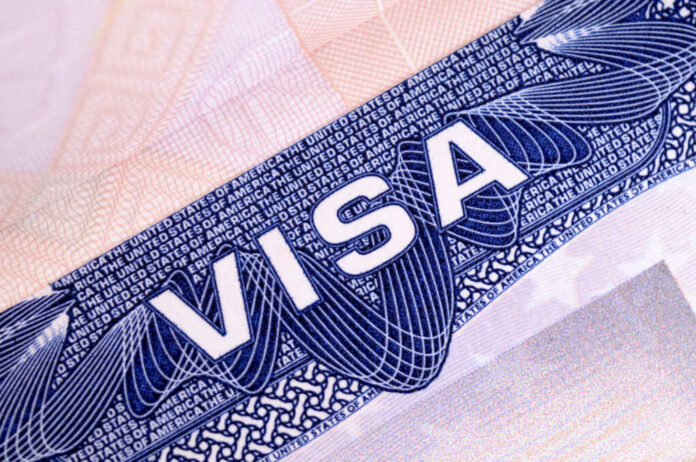
Visa “crackdowns” meant to stop overstays and asylum abuse are now sweeping up legitimate African students—and the West is quietly rewriting who gets access to its universities.
Quick Take
- The UK activated a new “emergency brake” to suspend student visas for Cameroon and Sudan (plus Afghanistan and Myanmar), effective March 26, 2026.
- The U.S. expanded visa suspensions under Presidential Proclamation 10998, fully suspending visas for 19 countries and partially suspending categories for 19 others, citing security and data-sharing gaps.
- Officials point to rising asylum claims and overstay risks; critics argue the policies function as broad barriers that hit students who followed the rules.
- Pending UK applications can still be processed under older rules, while the U.S. policy reportedly does not revoke visas issued before 2026.
What’s Actually Changing for African Students in the UK and U.S.
UK policy shifted in March 2026 when the Home Office announced a suspension of new student visas for nationals of Afghanistan, Cameroon, Myanmar, and Sudan, with the change taking effect March 26. The mechanism is described as an “emergency brake,” and the UK framed it around surging asylum claims tied to the student route. Hitouch Global reports pending applications may still be handled under prior rules, but new filings are blocked once the suspension is active.
U.S. restrictions are broader in scope and tied to presidential proclamations expanding earlier Trump-era travel restrictions. Under Presidential Proclamation 10998, the State Department describes a suspension of visa issuance to certain foreign nationals as a national security and public safety measure. It indicate full suspension for 19 countries, with partial suspensions for another 19 affecting student and exchange categories (F, M, J) along with visitor and some immigrant categories for certain countries.
Officials’ Stated Reasons: Asylum Claims, Overstays, and Data Sharing
UK officials publicly argued the student visa system “must not be abused,” pointing to steep increases in asylum claims from certain nationalities. It describes dramatic growth rates—ranging from several hundred percent increases in claims—used as a policy justification for the “emergency brake.” In the U.S., the stated justification is more technical: the State Department points to security screening concerns that can include incomplete identity documentation, insufficient information-sharing, and other vetting gaps that officials say make visa issuance riskier.
The background context also ties U.S. policy to earlier travel-ban architecture and updated compliance expectations, such as biometric passports and the ability to share criminal and identity data. African Elements frames the new restrictions around countries facing tighter rules due to documentation and governance issues, while acknowledging uncertainty in how totals are counted across full versus partial suspensions. On the UK side, the “emergency brake” is notable because it is described as a tool that can be applied to any nationality, making today’s list a precedent for tomorrow’s expansions.
What This Means for Students Who “Did Everything Right”
The practical effect is immediate: fewer legal pathways for students to enter, renew, or plan multi-year education routes—especially when categories like F, M, and J are partially suspended for certain countries. The Hilltop reports that the extended U.S. ban threatens African students’ access to U.S. education, and the families can also be affected through visitor visa limits. For conservative readers, the tension is real: enforcing borders is legitimate, but blunt restrictions can punish lawful applicants while failing to deter bad actors who simply shift tactics.
Some institutions have attempted to give students clarity amid fast-moving federal policy. UC Davis, for example, published federal update guidance for international students and scholars. That kind of campus communication matters because students make expensive, long-term decisions based on stable rules. When policies change midstream—especially with “pauses,” partial suspensions, and evolving vetting—students and universities both face uncertainty about travel, re-entry, and future eligibility, even if current status remains valid.
Political Fallout: Security-First Policy Meets Public Fatigue With Endless Conflict
In 2026, many conservatives are watching Washington tighten immigration and vetting while also living through another major Middle East conflict. That combination changes how the base processes these stories. A security-first visa posture resonates with voters burned by illegal immigration and bureaucratic negligence, but it also lands in a moment when MAGA voters are divided on overseas entanglements and wary of institutions using “emergency” logic to expand government power. The information does not show constitutional changes here, but it does show a larger pattern: executive-branch tools can sharply reshape who enters the country with limited transparency.
Why Visas are Being Cancelled for African Students
READ: https://t.co/R2JESGbqxq pic.twitter.com/VbiLFpFUuY
— The Gateway Pundit (@gatewaypundit) March 26, 2026
For African students, the message is unmistakable: Western governments are prioritizing compliance metrics—overstay rates, asylum spikes, and data-sharing—over the traditional assumption that student mobility is broadly beneficial. For Americans, the bigger question is whether targeted enforcement can be made precise and accountable, rather than becoming a rolling, open-ended system of bans that expands whenever agencies or politicians see a political need. The sources provided show the policy case; they also show why critics call it discriminatory in effect, even when framed as neutral security screening.
Sources:
Why are 30 African Nations Facing Strict New US Visa Bans?
Suspension of Visa Issuance to Foreign Nationals to Protect the Security of the United States
UK Suspends Student Visas for 4 Countries: What African Students Need to Know (March 2026)
Federal Government Updates: International Students and Scholars
Extended ban threatens African students’ access to U.S. education