
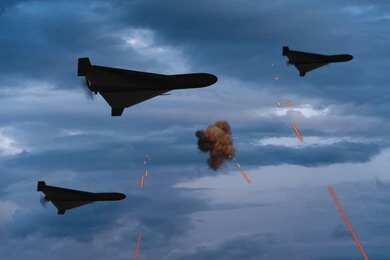
A massive overnight drone wave once again shut down Moscow’s skies, raising hard questions about Russia’s defenses and what this kind of modern warfare means for global security and energy prices.
Story Snapshot
- Russian officials say nearly 60 drones were shot down as Moscow’s four airports briefly closed.[4][6]
- The shutdown came just days after Ukrainian drones hit a major Moscow oil refinery, sending flames and smoke into the sky.[11][14][16]
- Russia’s defense ministry claims hundreds of drones were intercepted nationwide, but outside proof is thin.[3][5][18]
- Growing drone warfare deep inside Russia highlights how weak air defenses and chaos can threaten energy markets and civilian travel.[6][11][13]
Nearly 60 drones downed as Moscow closes its skies
Russian aviation officials briefly shut all four Moscow airports on a Monday morning after air defenses reported a wave of drones heading for the capital.[4][6] Moscow mayor Sergei Sobyanin said 59 drones were destroyed before they could reach the city, calling it a major interception success.[4][6] Russia’s aviation watchdog closed Sheremetyevo, Domodedovo, Vnukovo, and Zhukovsky airports for safety, then reopened them a few hours later once the immediate threat passed.[4][6] Officials did not report major damage inside Moscow itself.
Russian media framed the operation as proof that its air defenses can protect the capital from growing Ukrainian drone raids.[3][5] The Russian defense ministry claimed that, beyond the 59 drones near Moscow, it had intercepted more than 500 drones overnight across different regions, painting a picture of nonstop air battles over Russian territory.[3][5][18] But these large numbers came only from official statements, with no independent data, radar logs, or outside observers to confirm how many drones were actually launched or shot down.[1][20]
Airports, refinery, and the real cost of drone warfare
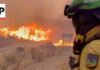
The brief closure of Moscow’s airports came just days after one of the most serious drone strikes inside Russia since the war began, when Ukrainian drones hit the Moscow oil refinery at Kapotnya.[11][13][14] Reports from Western outlets say the refinery was struck at least twice in a week, causing explosions, huge plumes of black smoke, and injuries to civilians, including children.[11][14][17] Video footage showed a fuel storage lid blasted into the air and flames pouring from key fuel units, undercutting Moscow’s claim that most drones are easily stopped.[16][17]
When drones force airport closures, the impact is not just military—it hits ordinary travelers and the wider economy.[1][3][5] Earlier waves of Ukrainian drones have already caused over a thousand flight delays and cancellations at Moscow airports over long weekends, stranding more than 200,000 passengers and shutting down airspace again and again.[5][9] Russian tour operators say each major airport has lost more than a full day of operating time to drone alerts since 2025, with Domodedovo suffering more than 60 hours of downtime.[5][9] Every shutdown is a reminder that war is reaching deep into what is supposed to be safe civilian space.
Competing stories, murky numbers, and what Americans should watch
Coverage of these attacks shows how both Russia and Ukraine use drone numbers as weapons in the information war.[1][4][20] Russian ministries talk about intercepting 300, 500, or even 900 drones in a single day, while Western outlets stress the dramatic images of burning refineries and shut airports.[3][6][11] Independent analysts say there is almost no way for the public to verify either side’s totals, because real air-defense logs and detailed radar data are kept secret.[1][22] That means big claims about “all drones destroyed” or “record strikes” should be treated with caution.
Moscow shoots down nearly 60 drones, airports reopen, authorities say @sightmagazine #Ukraineconflict #Ukraine #Russia #Moscow #Moscowairports https://t.co/Yi6aRM5Vay
— Sight Magazine (@sightmagazine) June 22, 2026
For Americans, these Moscow drone battles are a warning about the future of warfare and the risks to our own infrastructure and freedoms. Cheap, long-range drones are now hitting refineries, airports, and power sites hundreds of miles from the front lines.[6][11][13] The same kind of attacks on our soil could slam energy supplies, spike gas prices, and ground travel, all while unelected global bodies push for more control in the name of “security.” A strong national defense, secure borders, and reliable domestic energy are not talking points—they are shields against the kind of chaos now playing out over Moscow’s skies.
Sources:
[1] Web – Moscow airports briefly closed after nearly 60 drones destroyed: …
[3] Web – Hundreds of drones were shot down as Ukraine launched one of its …
[4] Web – Russian Defence Ministry data indicates Ukraine launched record …
[5] Web – Ukraine has launched a large-scale drone assault on Russia’s …
[6] Web – Russian Defence Ministry data indicates Ukraine launched record …
[9] Web – Ukraine did this to Russian Oil facilities, yesterday Thursday 18th …
[11] Web – Russia announces new drone attack, which was “successfully …
[13] Web – 2026 Moscow Oil Refinery Drone Attacks | KÜRE Encyclopedia
[14] Web – Ukraine hits a Moscow oil refinery and other sites in a large-scale …
[16] Web – Waves of Ukrainian drones hit a major oil refinery in Moscow for the …
[17] Web – Ukraine Launches One of the Largest Drone Attacks on Moscow …
[18] Web – A Ukrainian drone attack targeted a major oil refinery in Moscow …
[20] Web – Thick plumes of smoke with flames rise from an oil refinery following …
[22] Web – Russia Tests NATO With Poland Drone Breach