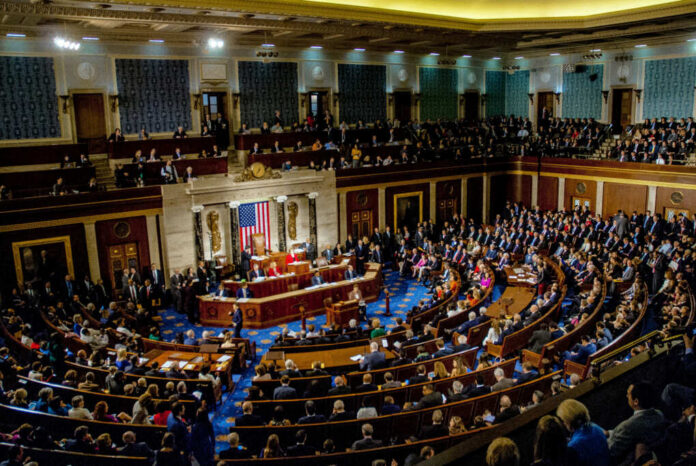
A rare bipartisan housing bill to lower housing costs just became law without President Trump ever signing it, after he tried to use it as leverage for his stalled voter ID plan.
Story Snapshot
- Congress passed the 21st Century ROAD to Housing Act by huge bipartisan margins, but Trump refused to sign it.
- The bill still became law automatically, exposing how Washington games life-or-death issues like housing to score political points.
- The new law targets corporate ownership of single-family homes, cuts red tape on building, and boosts help for low-income families and veterans.
- Trump tied his refusal to sign to the SAVE America Act voter ID bill, deepening public distrust of both parties and the federal government.
How a major housing bill became law without Trump’s signature
Members of Congress from both parties passed the 21st Century ROAD to Housing Act with veto‑proof margins in the House and Senate, calling it one of the most significant housing affordability efforts in decades. President Donald Trump then canceled a planned bill‑signing ceremony and announced he would not sign the measure until lawmakers approved his preferred voter ID bill, the SAVE America Act. Under the Constitution, a president who neither signs nor vetoes a bill within ten days still allows it to become law, which is what happened here. Supporters say this unusual path highlights how even popular reforms can get dragged into power games between the branches of government.
Trump publicly described the housing legislation as “so unimportant” compared with his voting bill, even while his own party’s leaders celebrated its passage. He framed his refusal to sign as a protest against Senate inaction on the SAVE America Act, which has repeatedly stalled despite Republican control of Congress. By letting the housing bill take effect without his signature, Trump avoided the backlash of a direct veto on a widely supported affordability package, yet still signaled that his main priority lay elsewhere. Many Americans watching the standoff saw it as another example of leaders treating everyday economic pain as a bargaining chip instead of a crisis to solve.
What the 21st Century ROAD to Housing Act actually does
The new law is a sweeping package with more than forty separate housing provisions that touch supply, financing, zoning, homelessness, disaster recovery, and veteran housing. One headline feature is a ban on large institutional investors that already control at least 350 single‑family homes from buying more, with limited exceptions for certain build‑to‑rent or rent‑to‑own projects that must be sold to individual buyers within seven years. The law also allows cities and counties to use a bigger share of Community Development Block Grant funding to build new affordable housing, ties some funding to housing growth, and creates innovation grants to reward local governments that increase supply. Supporters argue these steps directly push back on Wall Street ownership of starter homes and on local red tape that drives up costs for working families.
Several titles in the act focus on cutting federal red tape that slows construction and raises prices. The bill streamlines environmental reviews for many low‑impact housing projects, expands categorical exclusions under the National Environmental Policy Act, and lets the Department of Housing and Urban Development delegate more review authority to states and localities. It modernizes rules for manufactured and modular housing by dropping a permanent‑chassis requirement, which backers say will make factory‑built homes cheaper and more flexible for buyers in rural and urban areas. Other sections aim to reduce inspection delays by letting units that recently passed other federal inspections count automatically for Housing Choice Voucher standards, saving time and money for landlords and tenants.
Help for renters, low‑income families, and veterans
The act expands tools for communities to support low‑income renters and first‑time buyers, without creating a massive new spending program. It raises caps on certain public‑welfare investments by community banks so more local money can flow into affordable housing developments. It makes community land trusts eligible for key federal housing funds, helping cities keep some homes permanently affordable for regular families instead of investors. The law also creates pilot programs for home repair and for converting vacant commercial buildings into housing, with priority for distressed areas and communities that have lost jobs. Advocates say these changes answer a basic public demand: use existing dollars smarter rather than simply grow bureaucracy.
Veterans’ groups backed several provisions that directly target housing insecurity among those who served. The act permanently excludes disability payments from the income calculations used to judge whether veterans qualify for housing assistance under the joint Department of Housing and Urban Development–Department of Veterans Affairs Supportive Housing program. This change means wounded veterans are less likely to be penalized for benefits they earned, and more likely to qualify for stable housing support. The bill also improves access to mortgage information so borrowers can compare Veterans Affairs loans alongside Federal Housing Administration options, helping service members and veterans see all their choices before signing long‑term debt. For many readers who feel the system forgets ordinary people, these small fixes may matter most.
Why Trump’s refusal to sign fuels distrust on both left and right
Trump’s decision to hold the housing bill hostage to the SAVE America Act fits a long pattern of presidents using must‑pass or popular bills to pressure Congress on unrelated priorities. This time, the pressure tool was a rare bipartisan answer to a national crisis most families feel every month when they pay rent or their mortgage. Lawmakers who negotiated the deal, including conservatives worried about overregulation and liberals focused on tenants’ rights, accused the White House of treating their work as disposable. For many Americans, the episode reinforces a bitter view: both parties can agree when it helps their image, but real action still gets tangled in fights about power, not people.
Senator Elizabeth Warren announces the 21st Century ROAD to Housing Act became law automatically after President Trump refused to sign it within the 10-day window, despite its strong bipartisan passage in Congress with veto-proof margins.
The bill, the largest housing… https://t.co/Hzj5gGiIwK
— Ignatius van Zyl (@naasvzyl) July 11, 2026
Yet the housing law’s automatic passage without a presidential signature also shows that the system can sometimes move despite the political theater. Congress used its constitutional strength—veto‑proof votes in both chambers—to make sure years of policy work did not die over one unrelated voter ID fight. The final act bans some of the corporate practices that frustrate both older conservatives and liberals, streamlines rules that slow building, and boosts support for vulnerable groups without exploding federal spending. At the same time, the way it became law is a warning: when leaders treat basic needs like shelter as bargaining chips, they deepen the sense that Washington serves the powerful first and everyone else second.
Sources:
youtube.com, cnbc.com, facebook.com, virginiamercury.com, thetexan.news, bipartisanpolicy.org, congress.gov