

Federal judges have now cleared the way for jurors to weigh a killer’s racist motives when deciding whether the government should take his life too.
Story Snapshot
- A federal appeals court restored death penalty charges in the Buffalo supermarket mass shooting case.
- Jurors will be allowed to consider Payton Gendron’s racist motives and writings as part of sentencing.
- The case is the first newly authorized federal death penalty prosecution of the Biden-era Justice Department.
- The fight over motive, speech, and punishment exposes deep worries on both left and right about how power is used.
Appeals court puts death penalty back on the table
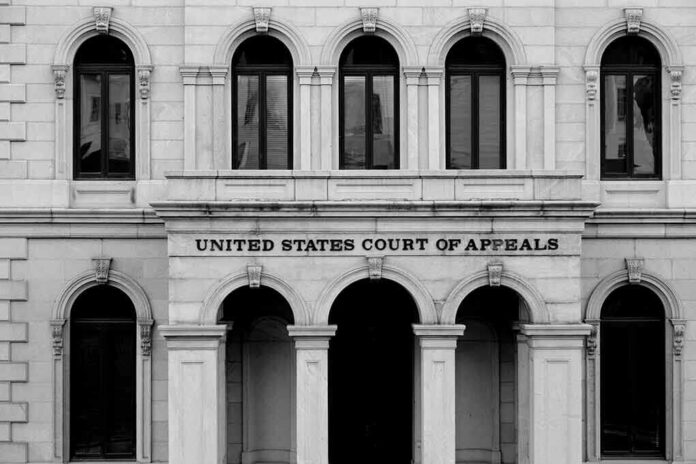
The United States Court of Appeals for the Second Circuit has reinstated federal death penalty charges in the Buffalo supermarket mass shooting case, reversing a lower court that had stripped away key sentencing factors. The case centers on Payton Gendron, who killed ten Black people at a Tops Friendly Markets store in Buffalo in May 2022, in an attack he filmed and framed as part of a broader racial war. Jury selection in the federal trial is expected to begin later this year.
The appeals panel ruled that federal prosecutors may again present three “non-statutory aggravating factors” to jurors in the penalty phase: the severe harm to surviving victims, Gendron’s racist motive, and his stated desire to inspire future violence. A federal district judge had blocked those factors, saying the law bars considering race and that some of Gendron’s writings were protected speech. The Second Circuit disagreed and said the government can rely on motive and impact when arguing for death.
How the Justice Department is building its death penalty case
The United States Department of Justice first announced in January 2024 that it would seek the death penalty for Gendron, making this the Biden administration’s first newly authorized capital case. In its filing, the department said “the circumstances” of several counts are such that, if Gendron is convicted, “a sentence of death is justified,” and pointed to his “bias, hatred, and contempt toward Black persons” as part of the basis for that decision. The government also stressed the careful planning, target choice, and intent to inflict maximum harm.
Federal charges include hate crimes resulting in death and gun offenses tied to the racially motivated attack. In the notice seeking the death penalty, prosecutors listed multiple aggravating factors such as multiple killings, substantial planning, grave risk to others in the store, and offenses against vulnerable victims. The newly reinstated factors go further, tying Gendron’s own words and ideology to the punishment decision. For many Americans, that raises hard questions about when the government is punishing evil beliefs and when it is punishing violent acts.
Defense arguments and wider worries about power and punishment
Gendron’s lawyers have attacked the death penalty push from several directions, including his age at the time of the shooting. They argue that because he was 18, his brain was still developing, so he should fall under the same protections that keep people under 18 from being executed. Other motions have argued that using his racist writings and desire to spur copycat attacks risks punishing protected speech rather than criminal conduct, though those arguments have now lost at the appeals court.
This clash hits a nerve that many conservatives and liberals share: fear that federal power can expand in ways that threaten basic rights, even in horrible cases. On one side, victims’ families and tough-on-crime advocates see the death penalty, especially in a racially motivated mass killing, as a rare example of the system taking evil seriously. On the other side, civil rights groups and death penalty opponents warn that once Washington starts using ideology and speech as formal reasons to execute, those tools will not always stay focused on white supremacists.
What this case says about a strained justice system
The Buffalo case comes at a time when many Americans feel the justice system serves the powerful first and ordinary people last. The federal government kept a moratorium on executions even as it authorized this new death case, a split that can look confusing or hypocritical to citizens trying to understand the rules. New York state ended capital punishment years ago, yet the federal government can still step in and seek death for crimes on New York soil. These moves deepen a sense that different sets of rules apply depending on politics and headlines.
An appeals court on Monday reversed a decision made by Western New York federal judge Lawrence Vilardo that had barred federal prosecutors from using three non-statutory aggravating factors in seeking the death penalty against Tops mass shooter Payton Gendron.…
— News 4 Buffalo (@news4buffalo) July 27, 2026
For people on the right, the racially charged attack and the fight over punishment fit into wider worries about crime, public safety, and a culture that seems to excuse violence until it explodes. For people on the left, the same case shows how government can use extreme events to grow its reach and revive tools, like the death penalty, that many thought were fading. In both views, the Buffalo trial is more than one man’s fate. It is a test of whether the system can punish real evil without turning motive and speech into another weapon for the deep state against anyone who steps out of line.
Sources:
reason.com, wivb.com, abcnews.go.com, pbs.org, deathpenaltyinfo.org, nysenate.gov, apnews.com, pressley.house.gov, npr.org, cbc.ca