Spain’s rush to deploy troops to its tiny African enclave of Ceuta shows how fast a border crisis can spin beyond local control when thousands of desperate people and distant governments collide.
Story Snapshot
- Spain is sending military units to Ceuta after thousands of migrants from Morocco overwhelmed border police and local services.
- At least nine people died during the crossings, and officials say the border “totally collapsed” under the surge.
- Troops are being sent to support the Civil Guard, not replace it, with platoons, divers, and a naval vessel added to the response.
- Ceuta’s leaders asked Madrid to declare a national emergency, highlighting fears that Europe’s border system cannot handle repeated shocks.
Mass Crossing Turns Ceuta Into a Border Emergency
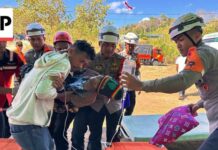
Spanish and international reports say thousands of migrants crossed from Morocco into Ceuta over a short period, many by swimming around breakwaters or pushing through border fences. Local police and the Civil Guard described the situation as “absolute chaos,” with officers saying the frontier had “totally collapsed” as crowds surged past barricades. Reception centers filled quickly, leaving hundreds sleeping in the streets and forcing authorities to treat the event as a border emergency rather than a routine inflow.
Officials and broadcasters give slightly different counts, but they all describe an unusually large and sudden wave. One public broadcaster reported between two thousand and three thousand arrivals, while other outlets and social posts cited much higher figures in the tens of thousands. The exact number matters less than the clear reality on the ground: Ceuta, a small city of about eighty thousand residents, does not have the police, housing, or health capacity to absorb such an influx all at once.
Spain Deploys Troops to Support Overwhelmed Police
After Ceuta’s authorities asked Madrid for reinforcements, Spain’s government announced it would deploy the Armed Forces to help restore order at the border with Morocco. The Interior Ministry said soldiers would reinforce the Civil Guard in “maintaining security in the city of Ceuta,” not take over control from civilian forces. Reports describe plans to send around sixty army personnel at first, with three military platoons, a diving unit, and a naval ship added to patrol the coast and support operations by the end of July.
Interior Minister Fernando Grande-Marlaska said extra police would also be moved in, including up to ninety additional Civil Guard officers, a helicopter, and more specialized units. This mix of police and military support fits a pattern seen in earlier Mediterranean border crises, including a major Ceuta incident in 2021, where troops were used to guard beaches and back up officers rather than run the border on their own. For many citizens on both the left and the right, though, seeing soldiers at a border fence inside Europe reinforces the sense that governments are reacting late instead of managing migration flows in a steady, planned way.
Deaths, Deportations, and Wider European Tensions
News outlets and officials report at least nine deaths tied to the crossings, with police sources saying bodies were found in the water near Ceuta after the mass movement began. These deaths highlight the human cost of policies that leave people feeling they must risk their lives at sea or through fortified fences to seek work or safety. At the same time, Spanish authorities speak bluntly about “swift deportations of illegal entrants,” signaling that many who crossed will be sent back to Morocco rather than allowed to stay in Europe.
Thousands of migrants crossed from Morocco into Spain’s Ceuta enclave, triggering border chaos, military deployment, and a growing humanitarian emergency. The latest surge is drawing attention across Europe as authorities work to restore order.#Spain #Ceuta #BorderCrisis pic.twitter.com/iVRngY4m7H
— Trending Time Story (@thehypecurret) July 31, 2026
The crisis is already rippling beyond Spain. Italian officials have floated temporarily tightening travel rules for people coming from Spain, and the European Union border agency has offered help to process asylum claims. For Europeans frustrated with what they see as elite mismanagement, this looks like another example of distant leaders scrambling after the fact, instead of fixing known pressures at the external border. For many Americans watching from afar, the scenes in Ceuta echo their own worries about overwhelmed border towns, sudden migrant surges, and federal governments that seem more focused on political blame than lasting solutions.
Ceuta’s Unique Position and Growing Strain
Ceuta is a small Spanish territory on the North African coast, surrounded by Morocco and cut off from mainland Europe by both sea and law. It has permanent Spanish military bases and a heavily fortified border fence, built to control migration and protect what Madrid calls “border integrity.” Yet the recent wave shows how even strong fences and large security budgets can fail when thousands move at once, or when neighboring states shift their own border patrols and diplomatic stance.
Moroccan media and analysts note that military presence in Ceuta and nearby Melilla has grown over time, with armored units and special groups deployed under the label of “surveillance and deterrence.” Grassroots movements in Morocco continue to question Spanish control over these enclaves, adding another layer of tension to every crisis. When big crossings happen, many citizens in both countries suspect that power games and pressure tactics are at work behind the scenes, feeding the wider belief that ordinary people are paying the price for decisions made by a small circle of elites far from the border.
Sources:
youtube.com, aljazeera.com, g1.globo.com, dw.com, foxnews.com, washingtonpost.com, moroccoworldnews.com, france24.com, indiatoday.in, facebook.com