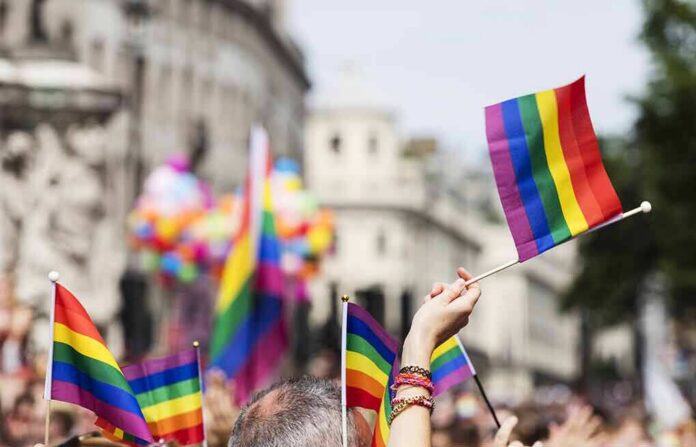
The central issue in Berlin is not whether the Pride attack was real or whether it shocked the city; it was both. The deeper question is how quickly a public tragedy becomes a political test case, with grieving communities insisting on solidarity while activists try to stop a massacre from being converted into a referendum on immigrants, Muslims, or multiculturalism.
Key Points
- The Berlin Pride attack killed at least one person and injured many others, and authorities identified the suspect as a 21-year-old man with alleged Islamist ties.
- Berlin’s LGBTQ community answered with vigil politics: mourning the victims, supporting survivors, and rejecting collective blame.
- That response also reflected a broader European pattern, in which symbolic attacks trigger immediate struggles over interpretation as much as over facts.
- The phrase “defend Islamic migrants” is too blunt for what the reporting shows; the more accurate picture is resistance to guilt-by-association and exploitation by the far right.
What Happened, and Why the Reaction Mattered
Authorities said a vehicle was driven into a crowd near Berlin’s Christopher Street Day celebrations, killing a woman and injuring dozens, and police later identified the suspect as Abdul B., a 21-year-old man they described as part of Berlin’s Islamist circles. That factual core explains why the public response landed with such force. A Pride march is not just another event on the civic calendar; it is a highly visible symbol of liberal democracy, minority presence, and urban pluralism. An assault there is read immediately as an attack on more than the people physically present.
That is why the vigil became as important as the original attack. Reuters reported that members of Berlin’s LGBTQ community and allies gathered in grief and solidarity, while one speaker captured the emotional logic of the moment by asking how anyone could attack “a festival of tolerance and love.” The memorial frame mattered because it refused the oldest trap in political crisis management: turning victims into props for ideological argument before they have even been mourned. In Berlin, the first instinct of the affected community was not abstraction. It was to name the human cost and defend the dignity of the people harmed.
Why Activists Moved Fast to Block Collective Blame
The reporting does not show activists defending the attack or denying the suspect’s alleged Islamist background. It shows them trying to prevent that background from being generalized onto an entire population. Yahoo/AFP reported that rainbow-flagged mourners gathered at the Brandenburg Gate specifically to oppose attempts by the far right to “exploit the tragedy.” That distinction is crucial. In European politics, an individual perpetrator’s identity is often rapidly converted into a wider claim about immigration or religion itself; activist communities understand that move instantly, because they have seen it before.
Berlin’s LGBTQ response therefore had two layers that are easy to miss if the story is reduced to a culture-war headline. First, there was sympathy for victims and fear for survivors. Second, there was a deliberate refusal to let one suspect define millions of people by association. That is not sentimentalism; it is political discipline. It also reflects an older civic logic in Germany, where public memory of state violence and ethnic scapegoating has made collective blame a particularly charged tactic. The activists were defending a boundary between accountability and stigma.
The Broader European Pattern Beneath the Berlin Story
Berlin fits a recurring European pattern: after an attack on a symbolic liberal event, two narratives begin competing immediately. One narrative is mournful and local, centered on the dead, the injured, and the people who now have to return to the site. The other is instrumental, treating the event as evidence in a larger argument about borders, integration, religion, or political correctness. Reuters and AFP-style coverage of the vigil showed the first frame clearly, while the warning about far-right “exploitation” showed that the second frame was already arriving almost before the candles were lit.
This dynamic tends to intensify when the target is identity-linked, the suspect can be placed into an existing political script, and the wider environment rewards instant moral sorting. Pride events are especially exposed because they sit at the intersection of public celebration, minority visibility, and ideological symbolism. An attack on such a gathering is therefore never interpreted only as a criminal act. It is read as an argument about social order. That does not mean every political reaction is equal in merit; it means the battlefield is interpretation itself, and that battlefield opens within hours.
What the Evidence Does and Does Not Support
The evidence supports a straightforward reading: Berlin’s left-leaning activists and LGBTQ organizers responded to the Pride attack by mourning the victims, emphasizing solidarity, and resisting efforts to weaponize the atrocity against migrants or Muslims as a class. It does not support the stronger claim that they were rushing to “defend” the suspect or excuse Islamist violence. The available reporting points in the opposite direction. The vigil language was about grief, fear, and civic unity; the political warning was about collective punishment and opportunistic scapegoating.
That distinction is what makes the story durable beyond the headline cycle. In liberal democracies, the immediate aftermath of terror is a test of whether public sympathy can remain specific. Berlin’s activists answered yes: specific victims deserve specific mourning, and a specific suspect deserves specific accountability. What they rejected was the slippage from one person’s alleged violence to a broader indictment of everyone who shares a faith, origin, or immigrant background. That line is narrow, but it is the difference between justice and reflex.
At a vigil for the Berlin Pride terror attack, a singer took the mic and said she'd HOPED the attacker was white and Christian.
He wasn't. He was a 21-year-old who'd already served time for trying to join ISIS.
This is MADNESS. Europe is doing this to itself. pic.twitter.com/VFL4mDEjyT
— The Moderate Case (@TheModerateCase) July 27, 2026
Sources:
zerohedge.com, uk.news.yahoo.com, youtube.com