
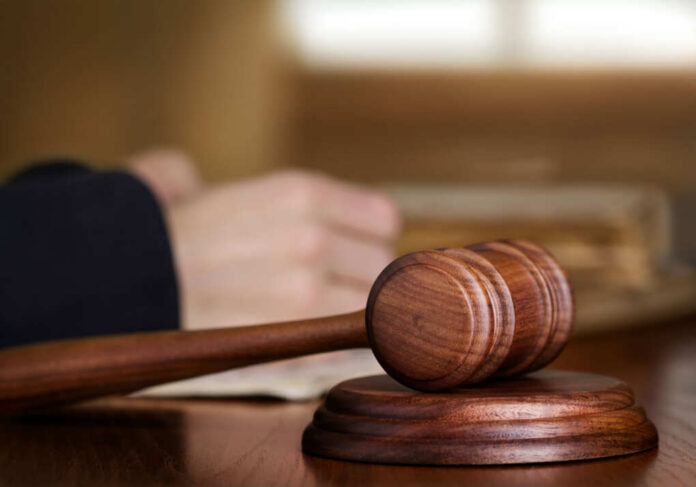
A Texas teen convicted of murder raised over $630,000 from the public — and is now asking taxpayers to pay for his appeal lawyer.
Story Snapshot
- Karmelo Anthony’s family raised roughly $630,000 on GiveSendGo before the platform shut down the campaign after his murder conviction.
- Anthony has since filed for indigent status, declaring himself “penniless, destitute, and indigent” and seeking a court-appointed attorney for his appeal.
- The fundraiser was written to cover not just legal fees but also relocation, living costs, security, and counseling — leaving no public accounting of what remains.
- Viral claims about luxury purchases have been debunked, but no financial records have been released to show where the money actually went.
A Conviction, a Fundraiser, and a Request for Public Aid
Karmelo Anthony was convicted of murder in the stabbing death of 17-year-old Austin Metcalf at a Texas track meet. After his conviction, the fundraising platform GiveSendGo shut down his family’s campaign, which had collected roughly $630,000. [1] Shortly after, Anthony filed court papers declaring himself unable to pay for an attorney on appeal. The gap between those two facts has sparked outrage across the political spectrum.
GiveSendGo executive Jacob Wells told Fox News that “the vast bulk” of the money was intended for legal defense. [2] The fundraiser text, however, listed a wide range of other uses — including “safe relocation,” “basic living costs,” “transportation,” “counseling,” and “other security measures.” That broad language gave the family wide discretion over how to spend the money, and no public ledger has been released to show the breakdown.
What the Family Says the Money Was For
Anthony’s father, Andrew Anthony, told CBS Texas that the family faced serious threats after the case went public. “People want us dead,” he said, adding that those threats were ongoing. [4] The family says relocation and security costs were real and necessary. GiveSendGo also stated that the funds had been allocated over the prior year to meet pre-trial needs, and that the campaign had fulfilled its purpose before being shut down.
Reports also confirmed that Anthony was placed in isolation at Collin County Jail near Frisco due to safety concerns tied to his high-profile case. [10] Supporters of the family argue these ongoing costs — security, housing, and legal prep — could have consumed much of the donated money. But without bank records or expense reports, that claim remains unverified. The public simply has no way to know how much, if anything, is left.
Rumors, Facts, and What Remains Unknown
Social media lit up with claims that the family bought a $900,000 home and a luxury SUV with donation money. Those claims were investigated and found to have no supporting evidence. [3] GiveSendGo’s co-founder confirmed the family had not withdrawn any funds at the time those rumors spread. Fact-checkers at Snopes also found no proof of luxury purchases. The viral stories were false — but they spread fast and stuck.
What remains unresolved is the central question: did the family spend the money on legitimate, documented needs before Anthony’s conviction — or does a meaningful sum remain that should cover his appeal costs? No court filing, bank statement, or expense ledger has been made public. [9] Until that accounting exists, the public is left to argue over a number — roughly $630,000 raised — without knowing what came next. That lack of transparency is the real problem, and it’s one that serves no one well, least of all the donors who gave in good faith.
A System With No Clear Rules
Legal crowdfunding is a growing and largely unregulated practice. Campaigns like this one sit in a gray zone — donors give money for stated purposes, but platforms rarely require proof of how funds are spent. When a convicted defendant later claims poverty, courts apply their own legal standard for indigency, which may have nothing to do with how much money was raised online. The law and public perception often pull in opposite directions, and this case is a sharp example of that tension.
For Americans already frustrated with a system that seems to have different rules for different people, this story hits a nerve. Whether you lean left or right, it raises a fair question: if the system allowed $630,000 to be collected for one purpose, shouldn’t there be some accountability for where it went before taxpayers are asked to step in? That’s not a partisan question. It’s a basic one about transparency — and right now, there are no good answers.
Sources:
[1] Web – Convicted Murderer Karmelo Anthony Begs for Taxpayer Assistance After …
[2] Web – Karmelo Anthony’s $625K crowd funding page yanked by …
[3] Web – GiveSendGo exec reveals how Karmelo Anthony family … – Fox News
[4] Web – Did Karmelo Anthony’s family buy a house with GiveSendGo money …
[9] Web – Fundraiser Unavailable – GiveSendGo
[10] Web – Family of Convicted Killer Karmelo Anthony Pocketed $630k in …