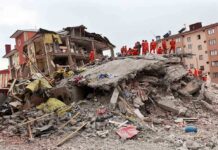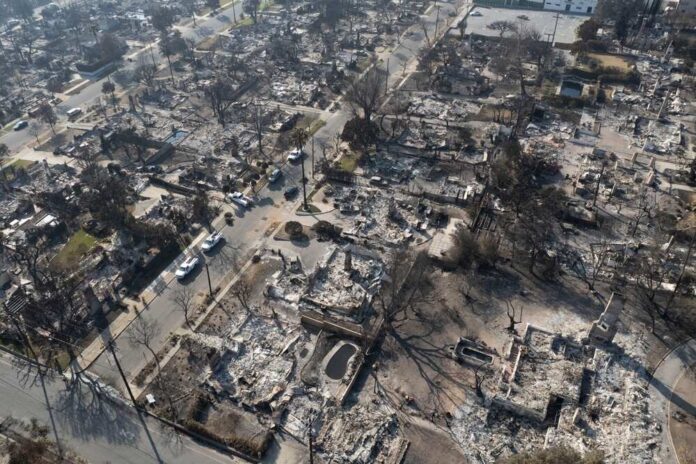
Russia’s latest mass missile and drone strike turned Kyiv’s apartment blocks into rubble, underscoring how civilians keep paying the price while world leaders argue from a safe distance.
Story Snapshot
- Russian forces launched one of the war’s largest air attacks on Kyiv, hitting homes and civilian sites with missiles and drones.
- Death and injury counts vary by source, but all reports confirm multiple civilian deaths and dozens to more than 100 wounded.
- Ukrainian and United Nations officials say the strike fits a wider pattern of Russian attacks on residential and civilian infrastructure.
- Russia claims it was targeting energy and military-related sites, raising hard questions about civilian protection and accountability.
What Happened In Kyiv During The Overnight Barrage
Overnight, Russian forces fired a huge wave of missiles and drones at Kyiv and other Ukrainian cities, making this one of the largest air attacks since the full-scale war began. Ukrainian officials say dozens of sites were hit, including multi-story apartment buildings, private homes, a dormitory, and other civilian infrastructure across several districts of the capital. Emergency crews spent hours pulling victims from collapsed buildings and burning rubble while air raid sirens and explosions echoed through the city.
Reports from Ukrainian authorities and international media differ on exact casualty numbers, but all agree that civilians were killed. One widely cited update from Kyiv’s city administration mentioned at least 27 dead and more than 100 injured nationwide after the barrage, with six deaths in Kyiv itself and others in cities like Dnipro. Another report from Ukraine’s State Emergency Service noted at least 17 dead and 86 injured, including children, as rescue work continued. These changing figures show how hard it is to count victims while search operations are still under way.
Civilian Neighborhoods And Everyday Life Under Fire
Kyiv’s mayor, Vitali Klitschko, described the strike as one of the most massive attacks on the capital, stressing that many of the damaged locations were ordinary residential buildings where people were asleep in their homes. In one district, a nine-story apartment block reportedly collapsed after being hit, trapping families under concrete and twisted metal. Elsewhere, drone debris set upper floors of a five-story building on fire, killing two people and injuring several, including children. An ambulance station, a research institute, a hotel, and businesses were also reported damaged, putting more strain on basic city services.
Ukraine’s State Emergency Service reported that residential buildings and energy infrastructure were both hit, with fires and power disruptions following the strikes. United Nations officials say this attack fits a broader pattern in which Russian forces have repeatedly hit homes, schools, medical centers, and other civilian facilities across Ukraine. One conflict data group found that over three quarters of recorded strikes on civilian infrastructure in recent years have damaged residential buildings, from small houses to large apartment blocks. For people living in these areas, this means that simple daily acts like sleeping, cooking, or sending kids to school now carry real physical danger.
Russia’s Stated Targets And The Disputed Narrative Of Intent
Russia’s Ministry of Defense claims the strike was aimed at energy facilities, defense industry sites, and places tied to Ukraine’s military, including drone production and troop locations. Russian officials frame these attacks as retaliation for what they call Ukrainian “terrorist” strikes on civilian targets inside Russia. So far, there is no public primary-source evidence in the record provided that proves those Ukrainian strikes on civilians or shows Russian planners meant to avoid residential areas in Kyiv. Instead, the strike’s real effects are seen in damaged homes, dead civilians, and injured children in the capital.
At least 10 people were killed and dozens injured after Russia launched a large-scale missile and drone attack on Kyiv in the early hours of Monday. Residential buildings across the Ukrainian capital were struck, trapping civilians under the rubble and forcing emergency… pic.twitter.com/6YWP3iM4Ry
— Digital Debate (@digdebate) July 6, 2026
No independent forensic teams or international courts have yet released detailed case files on each victim from this specific attack, so outside experts cannot fully verify every claim on either side. Still, the pattern documented by United Nations missions, human rights groups, and conflict researchers shows repeated Russian hits on residential and civilian infrastructure across Ukraine over several years. This pattern makes many people, both in Ukraine and abroad, doubt Moscow’s claim that it is only striking military targets. It also feeds a growing belief that ordinary citizens are being treated as tools in a larger war of pressure and fear.
Why Americans Across The Political Spectrum Should Care
For many Americans, this story lands on top of deep frustration with how global conflicts seem endless while problems at home keep piling up. Conservatives who already worry about globalism, soaring costs, and weak borders look at Kyiv’s shattered apartments and see another example of elites making decisions while regular families take the hits. Liberals who fear widening inequality and harsh treatment of minorities see a powerful state using advanced weapons against crowded urban neighborhoods, raising alarms about unchecked force and human rights.
Both sides increasingly share a belief that government leaders, in Washington and abroad, talk about values but act to protect their own power first. In this Kyiv attack, Russia claims high-tech “precision” strikes on energy and military sites, yet the visible outcome is dead civilians, ruined homes, and children hiding for hours in subway tunnels. The United Nations has warned that such attacks on energy and civilian infrastructure push millions toward cold, darkness, and poverty, not just soldiers on the front lines. For Americans who feel their own leaders ignore everyday struggles, this raises a stark question: if powerful governments can shrug off civilian suffering over there, what stops them from ignoring it here?
What This Says About The Direction Of Modern Warfare
This attack on Kyiv also fits a wider shift in modern war, where energy grids, water systems, apartment blocks, and hospitals become regular targets rather than protected spaces. Analysts note that Russia has launched thousands of missiles and drones at Ukraine’s energy infrastructure, often during winter or heat waves, times when cutting power or water hurts civilians most. Human rights groups argue that this pattern shows a clear strategy to break public morale and force political concessions by making daily life unbearable. That approach clashes directly with long-standing rules of war designed to shield civilians from front-line violence.
For a country founded on ideas of limited government, rule of law, and basic rights, these stories should matter beyond party lines. When powerful states can strike dense cities with hundreds of drones and ballistic missiles, then explain away the civilian deaths as “necessary,” the very idea of protected non-combatants is at risk. Whether a reader leans right or left, the Kyiv barrage is a warning sign: if the world accepts this as normal, it becomes easier for any government to treat ordinary people as expendable in the name of security or national pride.
Sources:
youtube.com, abcnews.com, bbc.com, ukraine.un.org, facebook.com, dw.com, news.un.org