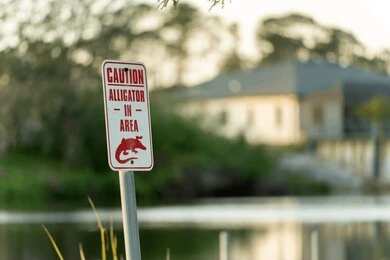
As deadly alligator attacks spike in Florida, officials say most are preventable — yet the risk keeps rising anyway.
Story Snapshot
- Florida has logged about 500 unprovoked alligator bites and 33 deaths since 1948, with recent years showing clear spikes.
- Investigators link the latest fatal Seminole County attack to drought, low water levels, and highly territorial behavior after mating season.
- University of Florida research finds about 96% of alligator attacks involve risky human behavior, not random gator aggression.
- State nuisance programs now kill or remove “problem” alligators, while telling people to change their habits around the water.
Deadly Seminole County Attack Puts Florida On Edge
A 31-year-old Orlando woman, Brittany Clark, died after a large alligator bit both of her arms while she cooled off in the Econlockhatchee River in Seminole County. Officials say she had been hiking with her boyfriend and friend, then knelt in about three feet of water when the animal struck around 1:30 p.m. Trappers later captured two big alligators near the site, one about 13 feet long and another over 12 feet, and sent samples to a lab to confirm which one attacked. The case was the third reported alligator attack in Central Florida in just seven days, and the second within 24 hours, raising fears that something has changed in the water.
Florida Fish and Wildlife Conservation Commission (FWC) investigator Lieutenant Grant Eller says he cannot pinpoint the exact cause of the alligator’s aggression, but he highlighted two major natural factors. He noted that mating season was ending, a time when alligators become very territorial, especially larger males guarding prime spots. He also pointed to a statewide drought and low water levels, which can crowd more alligators and people into the same shrinking pools and river stretches. That mix of big territorial predators and stressed habitats is exactly what many residents worry government is failing to manage.
Are The Gators The Problem, Or Are We?
While the Seminole case has an obvious natural side — big gators, drought, mating season — a growing body of research says the main driver of attacks is human behavior. A University of Florida study looking at decades of bite records found roughly 96% of incidents involved people taking risks or not paying attention, like swimming in known alligator waters or wading at the edge. The same analysis showed alligator attacks are still rare compared with other accidental deaths, and that serious injury or death usually involves larger animals over eight to ten feet long. In other words, the science says most people who get hurt were in the wrong place, at the wrong time, doing the wrong thing — and that is a tough message in a country already angry at officials who seem better at blaming citizens than fixing problems.
State data backs up the idea that attacks are uncommon but rising enough to get attention. Since Florida started keeping official records in 1948, there have been about 500 unprovoked alligator bites on people and 33 confirmed deaths. For years, the state averaged seven to ten unprovoked attacks annually, but 2023 saw 23 bites, the highest total in more than a decade. Researchers found bite frequency has grown gradually over time, even though each individual’s risk of being bitten has not sharply increased. FWC insists “serious injuries caused by alligators are rare,” yet it repeatedly urges caution, telling people that every freshwater body in all 67 counties can hold alligators and that swimming in rivers or lakes always carries risk.
Florida’s “Mutual Avoidance” System And The Deep State Feeling
To manage this risk, FWC runs the Statewide Nuisance Alligator Program, which sends contracted trappers to remove or kill alligators thought to threaten people, pets, or property. Thousands of nuisance calls come in each year, and officials say about 95% of complaints end in relocation or euthanasia of the animal. Feeding alligators is a crime in Florida, because once a gator learns to connect people with food, it loses its natural fear and becomes far more dangerous. The official safety playbook is simple but strict: do not feed alligators, keep pets leashed and away from the water’s edge, swim only in marked areas during daylight, and stay alert when boating or fishing, especially at dawn and dusk.
Father of Florida woman killed in alligator attack honors daughter: She loved people, nature, adventure https://t.co/XhAvuluy4p
— FOX 35 Orlando (@fox35orlando) July 3, 2026
This “mutual avoidance” strategy fits a wider pattern many Americans now recognize with other problems. When something goes wrong, agencies tell regular citizens to change their behavior, while big systems — water management, land use, enforcement staffing — stay largely the same. Experts say dangerous encounters cluster when more people choose to swim, wade, or play in places alligators naturally live, especially during warm months and mating season. That explanation may be accurate, but to someone already frustrated with rising costs, shaky public safety, and a sense that the “deep state” protects itself first, it can sound like one more lecture from people who are supposed to be in charge.
Shared Concerns On Both Left And Right
Conservatives who worry about weak border control, crime, and government waste see the alligator issue as another sign that officials react after tragedy instead of planning ahead. Liberals who worry about environmental damage and inequality see poor land planning, crowded growth, and stressed ecosystems that push wildlife and people into conflict. Both groups hear that almost every attack is “avoidable” if ordinary people behave better, while the state quietly expands programs that kill more animals and post more warning signs. The data is clear: most alligator attacks happen in or near water, often when people choose to enter habitats that experts have flagged as risky. The deeper question is whether a government that struggles to manage far bigger crises can really give citizens the trust and tools they need to stay safe in their own backyards.
Sources:
youtube.com, foxnews.com, wsvn.com, palmbeachpost.com, clickorlando.com, wifitalents.com, cbs12.com, nbcnews.com, facebook.com, wildlife.onlinelibrary.wiley.com