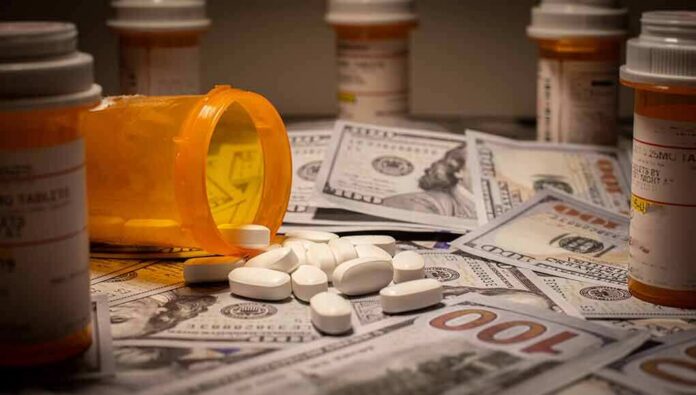
A busy New York City neighborhood has reportedly turned into a half‑mile street pharmacy where illegal prescription pills are sold in broad daylight while agencies built to protect the public mostly look the other way.
Story Snapshot
- A New York Post investigation says at least 20 vendors are openly selling prescription pills across 10 blocks in Washington Heights.
- These pills include painkillers, antibiotics, and erectile dysfunction drugs that by law require a prescription and licensed pharmacy.
- Selling prescription drugs without a license is a felony in New York, yet city enforcement mainly falls to the Sanitation Department with modest fines.
- Past cases show Washington Heights and other NYC areas have hosted “open‑air drug markets” before, raising doubts about leaders’ commitment to fix the problem.
Washington Heights’ New “Street Pharmacy”
New York Post reporters say a half‑mile stretch of St. Nicholas Avenue from West 179th to West 183rd Street now looks like a prescription pill flea market. They describe at least 20 folding tables covered with loose blister packs and boxes of drugs, including painkillers, antibiotics like Amoxicillin, and erectile dysfunction pills. A video report and social posts echo the same scene, with vendors offering dosing advice as if they were doctors, but without any license or medical training.
The Post report says some sellers claimed the medicines came from the Dominican Republic and were brought in over the counter, then resold on the street at marked‑up prices. That suggests a cross‑border supply chain, but there are no public customs records tying these particular tables to specific smuggling routes. So far, there are no named vendors, arrest records, or court filings tied to this July 2026 bazaar, which means the claims rely on journalism and eyewitness accounts, not official case documents.
What the Law Says Versus What Agencies Do
Under New York State law, selling prescription drugs without a valid license is a Class D felony that can bring up to seven years in prison. Federal and state rules also make it a crime to import and peddle prescription drugs from abroad, with penalties that can reach $250,000 in fines and as long as 20 years behind bars. On paper, this is serious crime, not a minor street hustle or harmless side gig.
Yet in New York City, the lead agency for dealing with street vendors is not the New York Police Department but the Department of Sanitation. Unlicensed vendors can be fined $250 for a first violation and $1,000 for later ones, plus $250 for each day they stay out of compliance. Those numbers are tiny compared with felony drug penalties, and they look more like parking tickets than a real response to an illegal drug market. That gap feeds the feeling on both left and right that agencies talk tough but act weak when powerful systems benefit from the status quo.
A Long Pattern of Open‑Air Drug Markets
This alleged pill bazaar in Washington Heights does not appear out of nowhere. Washington Heights has already been called the “heart of illegal HIV drug traffic” by local reporting that noticed street sales of HIV medicine near uptown subway stations for years. In 2016, the Special Narcotics Prosecutor announced the arrest of 13 members of the “Six Block” gang for running an open‑air drug market in Washington Heights, with sales of controlled substances and marijuana. That case proved that organized crews can turn regular city blocks into round‑the‑clock drug markets.
Other parts of New York City show the same pattern. In Canarsie, Brooklyn, city officials described drug traffickers selling illegal narcotics and prescription drugs near a tire shop and housing complex, with thousands of dollars in sales made openly. Bronx leaders recently begged city and state officials to shut down what they called “open‑air drug markets” in their business districts, saying cleanup teams came and went but the dealing continued. Taken together, these stories suggest that open‑air drug markets are becoming a normal feature of life in some neighborhoods, not a rare emergency that leaders rush to stop.
Public Health Risks and Systemic Incentives
Health experts warn that buying medicine from unlicensed sellers can be dangerous because the products may be counterfeit, expired, or poorly stored. In one federal case, the Drug Enforcement Administration reported finding about 100,000 counterfeit pills in a Bronx mail‑based distribution center, with tests showing fentanyl and methamphetamine in the drugs. If pills on a folding table in Washington Heights were similarly tainted, buyers would have no way to know before swallowing them, turning a search for cheaper medicine into a life‑threatening gamble.
🇺🇸 #NewYork. A half-mile stretch of Washington Heights has become an open-air market for illegal prescription drugs, with vendors openly selling painkillers and erectile dysfunction pills. While pharmacies face shutdowns and severe penalties for doing this, these sellers zero acc pic.twitter.com/wnnEPN4SDy
— Cinderella (@Cindere19971852) July 20, 2026
City Limits has reported that crooked pharmacies sometimes buy street pills for less than half price and then bill Medicaid for the full amount, pocketing the difference. In that scheme, pharmacies pay around $800 for medicine worth $2,000 and charge the public program the full $2,000. That kind of profit gives parts of the health system a quiet reason not to ask hard questions about where the drugs come from. For many Americans, stories like this feed the belief that “elites” and insiders profit from chaos while regular people shoulder the risk.
Silence, Skepticism, and Shared Frustration
So far, neither the New York Police Department, the Drug Enforcement Administration, nor New York City health agencies have issued public statements confirming the scale of the July 2026 Washington Heights pill market or detailing enforcement actions. There are no freedom‑of‑information releases with arrest numbers or seizure data tied to these particular vendors. Major national outlets have not yet run their own investigations, leaving a tabloid report and local clips to carry the story.
For conservatives, this looks like another example of a government that shrugs at lawbreaking and border issues while ordinary neighborhoods absorb the fallout. For liberals, it reinforces worries about a health system that lets poor and sick people turn to street tables because regular care is too expensive or slow. For both sides, the common thread is distrust: institutions that promise safety allow illegal markets to grow for years, act only after pressure mounts, and rarely face real accountability when their inaction puts lives at risk.
Sources:
zerohedge.com, nypost.com, news.grabien.com, news.com.au, snpnyc.org, ntd.com, secretservice.gov, citylimits.org, justice.gov, nyc.gov, city-journal.org