
A single executive order has put the Supreme Court on the spot over a basic constitutional question: who counts as an American at birth—and can a president change that with a pen?
Story Snapshot
- President Trump’s second-term executive order seeks to deny automatic U.S. citizenship to certain babies born in the U.S. after February 19, 2025, based on their parents’ legal status.
- Lower federal courts have repeatedly blocked the order, and the Supreme Court heard arguments on April 1, 2026.
- ACLU-backed plaintiffs argue the order conflicts with the 14th Amendment’s citizenship clause and long-standing precedent.
- The administration argues the 14th Amendment was never meant to cover all U.S.-born children regardless of parental status.
What Happened at the Supreme Court on April 1
President Trump attended Supreme Court oral arguments on April 1, 2026, in the challenge to his birthright-citizenship executive order, then departed during the proceedings as ACLU counsel argued the policy could strip citizenship from “thousands” of U.S.-born babies covered by the lawsuit. The order, signed on January 20, 2025, aims to deny automatic citizenship to children born after February 19, 2025, when the parents lack permanent legal status.
The immediate legal reality is straightforward: the policy has not taken effect because lower courts have blocked it. Those injunctions have forced the administration to defend not only a high-profile immigration move, but also a sweeping claim of executive authority in an area traditionally governed by the Constitution’s text and Supreme Court precedent. The justices are expected to issue a decision later in 2026, with no date set at argument time.
The Core Constitutional Question: 14th Amendment Text vs. Executive Power
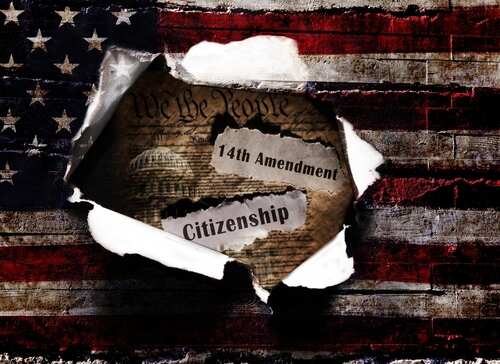
The dispute turns on the 14th Amendment’s citizenship clause—“All persons born or naturalized in the United States, and subject to the jurisdiction thereof, are citizens.” For roughly 125 to 150 years, birthright citizenship has been broadly recognized regardless of the parents’ immigration status, reinforced by long-standing legal interpretation and the Supreme Court’s 1898 decision in United States v. Wong Kim Ark involving children of non-citizens.
The administration’s position is that the 14th Amendment’s original purpose was narrower and tied to the post-Civil War context, with President Trump publicly arguing it was meant for former slaves rather than a blanket rule. The plaintiffs’ position is equally direct: an executive order cannot override constitutional language and entrenched precedent. The justices’ ruling will determine whether this is a settled constitutional rule or a policy lever future presidents can attempt to pull.
Why This Case Is Fueling Right-Wing Frustrations Alongside Immigration Anger
Many conservative voters want stronger border enforcement and an end to incentives that encourage illegal immigration, and the administration’s order speaks to that political demand. At the same time, this case spotlights a problem the Right has complained about for years: government by executive action, followed by nationwide injunctions and institutional trench warfare. Conservatives who value limited government and separation of powers are now watching whether a president can attempt a constitutional rewrite without Congress.
Practical Stakes: Families, Hospitals, and Legal Uncertainty
Advocacy groups argue the order would create immediate confusion for families with U.S.-born children and could push babies into a second-class legal status if citizenship is denied at birth. Reporting and plaintiff statements also describe fears that families could face aggressive enforcement scenarios around the time of a hospital birth. Even if those fears prove overstated, the broader issue is real: uncertainty over citizenship would ripple into passports, benefits eligibility, and basic identity documentation.
What to Watch Next: A Ruling That Could Reshape Immigration Politics
The Supreme Court’s ruling—expected by early summer 2026—will either validate the lower courts’ blocks or open the door to a major change in how citizenship is recognized for certain U.S.-born children. If the court sides with the administration, the decision could invite more aggressive executive-led immigration policy. If it sides with the challengers, it will reinforce the idea that citizenship rules are constitutional bedrock, not an executive-branch program.
For conservative readers, the takeaway is less about cable-news theatrics and more about constitutional guardrails. Immigration enforcement is a legitimate policy debate, but the mechanism matters: if citizenship can be narrowed by executive order, then the next administration can expand or redefine other core rights the same way. This case forces the country to decide whether that’s the kind of “policy by pen” precedent Americans want to normalize.
Sources:
Trump seeks new birthright citizenship restrictions as case goes to Supreme Court
Supreme Court to hear birthright citizenship arguments as advocates hold rally