
At Iran’s most important funeral in decades, the new supreme leader stayed hidden while his wounded, silent regime asked the world to believe everything was fine.
Story Snapshot
- Three sons of Ali Khamenei appeared beside his coffin, but successor Mojtaba stayed away from all public events.
- Iranian officials blame “very serious” security threats, while foreign reports say Mojtaba was badly burned and disfigured in the strike that killed his father.
- Months after becoming supreme leader, Mojtaba has not appeared in a single confirmed photo, video, or audio recording.
- The secrecy around his health and safety raises questions about regime stability and how authoritarian systems hide the truth from ordinary people.
Three sons in public, one missing leader
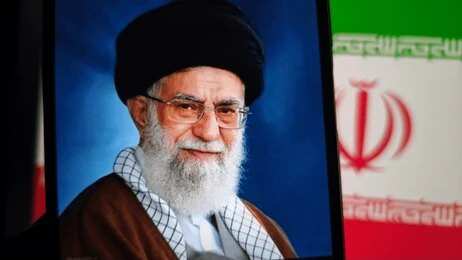
Funeral prayers for former supreme leader Ayatollah Ali Khamenei drew Iran’s top officials and three of his sons into public view in Tehran, where they stood and prayed beside his coffin. Video from the ceremony shows Masoud, Mostafa, and Meysam Khamenei taking part as the military and clerical elite tried to project unity in the middle of a war with the United States and Israel. Yet Iran’s new supreme leader, Mojtaba Khamenei, was nowhere to be seen, even though he is both the son and the official successor of the man being buried.
Reporters on the ground described a large, tightly controlled event at Tehran’s Grand Mosalla prayer complex, with hundreds of thousands of mourners and heavy security. Under Islamic custom, burials usually happen within one day, but authorities delayed the funeral for months while airstrikes continued and then again for several days to prepare for crowds and to secure the capital’s airspace. That delay already hinted at a worried leadership, but Mojtaba’s absence turned a show of strength into a fresh sign of uncertainty about who truly rules Iran.
Official line: security threats, not a hidden body
Iranian officials say Mojtaba wanted to attend and even lead the special funeral prayer but was overruled by security chiefs who warned the risk was too high. A representative of the supreme leader in India said security services told Mojtaba they could not protect him because foreign enemies “have very, very advanced technology” that could track and target him if he appeared in public, especially since Israel’s defense minister had openly said Mojtaba remained on a hit list. Iran’s Civil Aviation Organization even closed Tehran’s airspace on the main funeral day, underlining fears of another strike.
This security explanation fits the broader war context. Ali Khamenei and several family members were killed in a joint United States–Israeli airstrike that opened the conflict, and senior commanders warned that any mass gathering could become a target. Iranian officials now frame Mojtaba as active behind the scenes, “safe and sound,” and merely staying out of sight to avoid giving Washington or Jerusalem a clear shot. For many Iranians and outside observers, though, a top leader who cannot appear for his own father’s funeral looks less like a protected commander and more like someone the system is afraid to expose.
Outside reports: severe burns, disfigurement, and a mystery
Foreign and independent reporting paints a very different picture of why Mojtaba stayed away. Several international outlets, citing Western defense officials and people close to his inner circle, say he was severely injured in the same strike that killed his father, suffering major burns to his face and upper body and serious damage to one of his legs. One report describes him as “alive, wounded, and disfigured,” with burns so bad they may have permanently altered his appearance and required multiple surgeries.
Television coverage and commentaries, including from Cable News Network (CNN) cited in funeral-day transcripts, say Mojtaba’s face is disfigured and that one or both legs were badly hurt, possibly leaving him unable to stand for long public ceremonies. The New York Times reported earlier in the war that his legs were injured, though it did not detail the exact severity. At the same time, an Iranian Health Ministry spokesman claimed his wounds were only “superficial” cuts needing one or two stitches, directly clashing with reports of serious burns and leg damage. No medical records, hospital images, or independent examination have been released, so the public is stuck between two stories and no proof.
A leader no one sees: why that secrecy matters
Since his appointment as Iran’s third supreme leader, Mojtaba has not appeared in any confirmed video, photo, or audio message. State television has aired only written statements read aloud by announcers, and even foreign officials quoted in media say they have not met him in person. One Iranian source told a Western paper that “no one knows anything about Mojtaba, whether he is alive or dead or how badly injured,” adding that he has no direct control over the war because “he is not here.” For ordinary Iranians, this looks like rule by a ghost: decisions made in his name, but no visible leader to answer for them.
Political scientists who study authoritarian systems note that this kind of “seen but unseen” leadership is common in personal dictatorships facing a succession crisis. Rulers or heirs are often described as wounded but recovering, while the real condition stays hidden to avoid panicking elites or inviting a coup. The same pattern has appeared in North Korea, Syria, and past Iranian transitions, where rumors about health were tightly managed to keep rival factions in line. When a government depends on one man at the top, admitting that he is badly hurt or unable to rule can shake the whole system, so secrecy becomes a survival tool—even if it leaves the public in the dark.
Funeral optics and regime weakness
The funeral itself undercut the image of a strong, united Islamic Republic. Analysts pointed out that few major foreign dignitaries attended, and that crowds, while large, were less overwhelming than the regime hoped for given Ali Khamenei’s four-decade rule. Some Western think tank experts framed Mojtaba’s absence as a “failed attempt to project strength,” arguing that the leadership wanted a royal-style handoff but ended up showing the world a divided, nervous elite instead.
🇮🇷 Three sons of former Iranian supreme leader Ali Khamenei made a rare public appearance at his funeral on Sunday, but there was still no sign of their brother and his successor, Mojtaba Khamenei ➡️ https://t.co/lmDAFijoLg pic.twitter.com/Task1JkieU
— Alex kennedy (@Alexkennedy213) July 5, 2026
This story taps into a wider frustration that leaders—whether in Tehran, Washington, or anywhere else—play games with the truth while ordinary families pay the price. In Iran, citizens live through air raids and economic pain without even seeing the man officially making life-or-death decisions. In the United States, people across the political spectrum see “deep state” behavior and spin in foreign policy that feels far removed from their daily struggles with inflation, energy costs, and a shrinking middle class. The hidden nature of Mojtaba’s rule is a harsh reminder of what happens when power becomes more about protecting elites than about serving people.
Sources:
youtube.com, reddit.com, instagram.com, facebook.com, iranintl.com, timesofindia.indiatimes.com, nbcnews.com, polisci.ucsd.edu