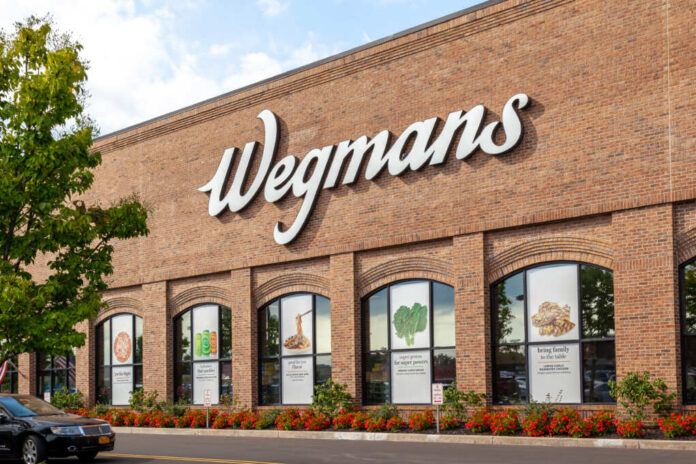
A trusted family grocery chain quietly turned into a biometric checkpoint, where walking in the door can mean handing over your face, eyes, and even your voice.
Story Highlights
- Wegmans now uses biometric surveillance in select stores, including both NYC locations, to scan shoppers as they enter.
- Door signs warn that faces, eye scans, and voiceprints may be collected, while the company publicly insists it only uses facial recognition.
- Customers have no real opt-out except avoiding the store entirely, raising serious civil-liberties and privacy concerns.
- Advocates warn these systems could normalize corporate surveillance and lay groundwork for broader tracking and government data access.
Biometric Surveillance Comes to the Neighborhood Grocery Store
For decades, Wegmans built its reputation as a family-friendly, customer-first grocery chain. Now, reports confirm the company has deployed biometric surveillance systems in a “small fraction” of its stores, including both New York City locations, to scan shoppers’ faces as they walk in. Storefront signs in Manhattan and Brooklyn state that Wegmans may “collect, retain, convert, store or share” biometric identifiers, explicitly listing facial images, eye scans, and voiceprints as data points that could be captured from ordinary customers doing their weekly shopping.
Company officials say the technology is aimed at identifying individuals “previously flagged for misconduct” and keeping stores safe. They frame it as a loss-prevention and security tool targeted at a narrow group, not a mass-surveillance system. Yet every law-abiding customer still has to pass under the same cameras, with no separate lane, no formal consent, and no ability to confirm how long their image is stored. That gap between the stated goal and the lived experience in the aisle is driving the current backlash.
Conflicting Messages: Door Signs vs. Corporate Assurances
The most unsettling element for many shoppers is the contradiction between what Wegmans prints on its doors and what its executives now claim. The New York City signage warns that the chain may collect biometric data including facial images, eye scans, and voiceprints. After media scrutiny, Wegmans insisted that its system only uses facial recognition, does not capture retinal scans or voiceprints, and does not share data with third parties. That discrepancy leaves customers wondering which version to trust when their own identity is on the line.
From a civil-liberties standpoint, that confusion matters. A clear, narrow policy could, in theory, be evaluated and debated on its merits. Vague legal language about “may include” multiple types of biometrics, paired with a public-relations statement that narrows the scope after the fact, invites suspicion that the door is left open for broader data collection. For privacy-minded conservatives who watched years of unchecked federal surveillance and Big Tech tracking, the idea that a grocery chain might understate how far its systems can reach feels like a familiar and unacceptable pattern.
Legal Loopholes, Minimal Notice, and No Real Consent
New York City’s current biometric law requires businesses to post signs when they collect biometric identifiers but does not require meaningful consent or strict limits on storage and sharing. As long as the sign is there, the company can effectively say shoppers chose to be scanned by stepping inside. Wegmans relies on this minimalist standard: customers receive notice on paper, but there is no opt-in box, no way to review or delete personal data, and no public, independently verified retention policy outlining when images are purged.
For many readers who care deeply about limited government and individual liberty, this looks like the private-sector version of the same overreach they fought in Washington. A powerful institution claims broad monitoring authority, offers only a bare-bones explanation, and leaves ordinary people with a “choice” that is not realistic in everyday life. If a family depends on a reasonably priced grocery near home or work, “just shop somewhere else” is not always a practical alternative, especially in neighborhoods with limited competition.
Security Promises vs. Civil Liberties and Mission Creep
Wegmans argues that facial recognition is deployed only in a “small fraction” of stores with elevated risk, focused on identifying individuals previously involved in theft or misconduct. On paper, that sounds targeted. In practice, it requires building and maintaining a watchlist database, constantly scanning every entering face against it, and trusting that no one is misidentified. Critics point to long-documented accuracy problems with facial recognition, including greater error rates for certain demographics, which can translate into false suspicion for innocent shoppers.
Beyond accuracy, conservatives are right to ask where this data could eventually end up. Wegmans says it does not share biometric data with third parties and only works with law enforcement on a case-by-case basis, for example in missing-person or serious criminal cases. The problem is that once such systems are normalized, pressures mount to expand their use—whether from local police, federal agencies, or future corporate leadership. Today’s “narrow” use for loss prevention can become tomorrow’s broad data pool for investigations or even civil-enforcement fishing expeditions.
What This Means for Everyday Shoppers and Conservative Values
For shoppers, the immediate impact is simple but profound: walking into a grocery store now effectively means submitting to biometric scanning, with uncertain safeguards and little recourse. Some New Yorkers already tell reporters they feel uneasy or invaded by the idea that their face could be stored in a system they never clearly agreed to join. Conservatives who value strong families and safe communities want secure stores—but not at the cost of turning daily life into a series of ID checkpoints run by corporations and overseen by unaccountable algorithms.
Wegmans Expands Biometric Surveillance in NYC Stores, Collecting Facial, Eye, and Voice Data from Shoppershttps://t.co/W8jGrISt3K
— José Colón (@JoseEColon) January 7, 2026
This clash over Wegmans’ cameras is a preview of a bigger fight. As more retailers experiment with AI tools, Americans will be forced to draw lines about where convenience and security end and constant surveillance begins. For a movement that stands for constitutional protections, personal responsibility, and skepticism of centralized power, the consistent position is to demand transparent rules, strict limits, and genuine consent before any business can store the most permanent identifier a person has: their face.
Sources:
Wegmans Raises Privacy Concerns With Biometric Cameras in NYC Stores
Wegmans deploys biometric surveillance at NYC stores
Wegmans explains how it uses facial recognition in NYC stores
Signs at Brooklyn, Manhattan Wegmans stores say biometric data is being kept to increase security
Popular grocery store chain uses biometric surveillance on shoppers, raising privacy concerns
Some Wegmans stores have a new facial recognition system
Wegmans using facial recognition technology in a small fraction of stores across multiple states
Don’t Let the Grocery Store Scan Your Face: A Guide to Fighting Back Against Biometric Surveillance at Wegmans