A holiday “truce” in Ukraine shows how quickly ceasefire talk can turn into a political trap that drags Washington deeper into a war Americans never voted for.
Story Snapshot
- Ukraine’s Volodymyr Zelensky proposed an Easter pause on long-range drone and missile strikes, emphasizing protection of energy infrastructure as Russia’s nightly drone campaign continued.
- Russia’s Vladimir Putin announced a unilateral Easter truce window, but both sides traded violation claims that cannot be independently verified across a 1,000-kilometer front.
- After the truce period ended, Russia struck Odesa with Shahed drones and hit Zaporizhzhia with glide bombs, causing civilian casualties reported by local officials.
- The Trump administration’s peace push adds pressure to show progress, but unclear “rules” and disputed compliance highlight how fragile any deal would be.
Zelensky’s Easter proposal meets Putin’s unilateral truce claim
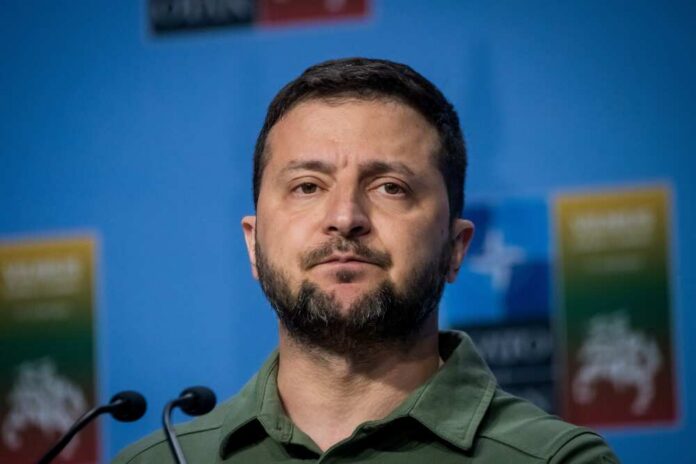
Ukrainian President Volodymyr Zelensky called for a temporary Easter ceasefire focused on long-range missile and drone strikes, including a request to halt attacks on energy infrastructure. Russian President Vladimir Putin separately announced a unilateral Easter truce window beginning the evening of April 19, 2025, and running into April 20–21. Ukraine said it was prepared to reciprocate, while reporting continuing attacks during the period.
Ukrainian authorities later said Russia violated the truce thousands of times, citing infantry assaults and drone attacks as examples. Moscow responded with its own claim that Ukraine committed thousands of violations.
Drone warfare and energy targets keep civilians in the crosshairs
Russia’s expanded use of Shahed-type drones has intensified pressure on Ukrainian cities and infrastructure, with analysts describing refined tactics and increased production. The Easter ceasefire concept also followed a prior 30-day moratorium aimed at reducing strikes on energy assets, which Ukrainian officials said was repeatedly violated. Energy sites matter beyond headlines: transformers, transmission lines, and generating equipment are hard to replace quickly, and repeated damage drives up costs and instability.
Reports surrounding the Easter period described continued long-range attacks and then renewed strikes after the window closed. After the truce ended, Russia launched dozens of drones at Odesa, damaging civilian locations and injuring residents, and struck Zaporizhzhia with glide bombs that killed and wounded civilians, including children, according to Ukrainian officials. These post-truce strikes undercut the practical value of short pauses that lack enforceable terms and third-party monitoring.
U.S. leverage, peace talk pressure, and the limits of “quick deals”
U.S. pressure for progress in talks has been a major backdrop, with the Trump administration signaling it wants results and is weighing how long to stay invested in negotiations. That leverage cuts two ways. A credible threat to step back can force clarity, but it can also encourage both sides to stage-manage optics—announcing narrow truces, trading claims, and positioning for the next campaign. Without clear definitions, “civilian” and “military” targets become political talking points, not enforceable categories.
For American conservatives, the core question is not whether peace is desirable, but whether Washington is being maneuvered into open-ended commitments with unclear endpoints. It shows disputed compliance, blurred target definitions, and rapid reversion to attacks as soon as a window closes. That reality fuels voter skepticism when leaders promise “no new wars,” yet diplomacy still risks becoming a conveyor belt for more funding, more escalation, and less congressional accountability.
What’s verifiable, what isn’t, and why it matters for MAGA voters
Several elements are consistent across the timing of Putin’s announced truce, Zelensky’s call for a halt to long-range strikes, and the return of major attacks after the truce period. The biggest uncertainty is the scale of violations claimed by each side, because there is no comprehensive, independent way to validate thousands of incidents across the front. That uncertainty is not a small detail; it is exactly how propaganda thrives and how outsiders get pressured to “do something.”
MAGA-aligned voters are split on foreign entanglements, and the Israel-Iran debate has only sharpened the demand for America-first clarity. Ukraine adds another layer: if “truce” announcements are routinely used for blame and leverage, then U.S. policy should prioritize defined objectives, strict oversight, and measurable off-ramps. The conservative case is straightforward: protect U.S. interests, avoid mission creep, and insist that any commitments abroad do not erode constitutional checks at home or become blank checks sold as “humanitarian” urgency.
Sources:
Putin announces Easter truce in Ukraine
Russian Offensive Campaign Assessment, April 20, 2025
Russian drones batter Ukraine’s Odesa as peace talks come to a crux
Mutual accusations of non-compliance with the truce on day 1155 of the war
Zelensky Calls For Easter Truce Amid Nightly Russian Drone Assaults