When cancer screening trucks in supermarket car parks quietly detect thousands of lung tumors that hospitals were missing, it raises hard questions about how many other life‑and‑death services the system has failed to deliver until public pressure and embarrassment forced change.
Story Snapshot
- Mobile lung cancer checks in English supermarket car parks have uncovered thousands of cases, many at an early, more treatable stage.
- A Manchester pilot scanning just 2,500 people found 46 cancers and quadrupled local early diagnosis rates, prompting national rollout plans.[1][3]
- The checks target older current and former smokers in poorer communities who often miss traditional hospital screenings.[1][3]
- Officials promote the program as a success, but public data on costs, false positives, and long‑term survival impact remain thin.[1][3]
How supermarket scanners became a frontline against lung cancer
Health authorities in England have turned supermarket car parks into unlikely battlegrounds against the deadliest cancer, sending out mobile trucks to offer lung checks to older smokers and ex-smokers.[3] The model grew out of a Manchester pilot that brought scans directly to three deprived neighborhoods where lung cancer deaths were high.[1] By meeting people where they shop, rather than waiting for them to navigate hospital systems, the program reached residents who often feel ignored or underserved by big institutions.[1][3]
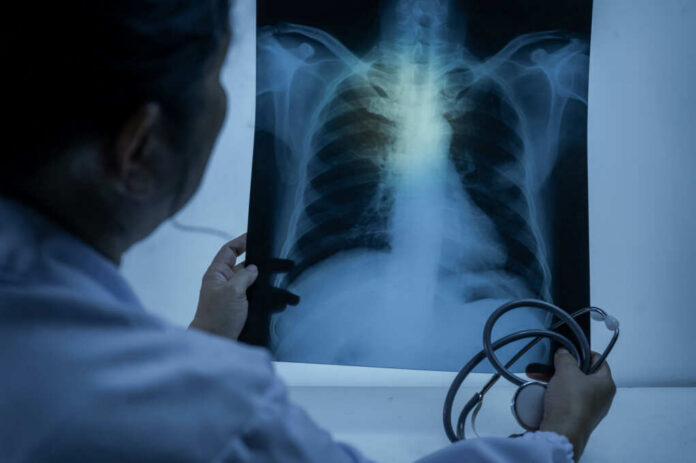
Nurses at these mobile clinics conduct lung health checks, ask about smoking history and breathing problems, and, for those at higher risk, arrange a low-dose computed tomography scan, sometimes on the same day in the truck parked outside.[3][5] The government and National Health Service say this targeted screening aims to catch lung cancer before symptoms appear, when surgery or other treatment is more likely to work.[3][5] Officials present it as a practical fix after years of late diagnoses and avoidable deaths.
What the Manchester pilot really showed—and what it did not
The Manchester supermarket project scanned more than 2,500 people and discovered 46 cases of cancer, with 80 percent found at stage one or two, far earlier than usual for lung disease.[1] National Health Service England says this quadrupled the early diagnosis rate for lung cancer in that city, a dramatic shift in where patients sit on the timeline between invisible disease and terminal illness.[1] That result convinced local commissioners to expand the service across north Manchester, an area with especially high lung cancer deaths among people under seventy-five.[1]
Subsequent research on these community checks found that thousands of older smokers from deprived parts of Manchester actually showed up and completed appointments when the units were placed in supermarket car parks. Almost all participants could perform breathing tests, and more than a third showed airflow obstruction, including many with previously undiagnosed chronic lung disease. Those findings support the claim that community-based screening can uncover hidden illness in groups the health system has long struggled to reach, aligning with broader international moves toward risk-based lung screening.[3]
National rollout: convenience, criteria, and quiet limits
On the back of these pilots, the British government announced that targeted lung cancer screening will be rolled out across England, starting with areas facing the highest lung cancer rates.[3] People aged fifty-five to seventy-four who currently smoke or used to smoke, are registered with a general practitioner, and live in participating regions can be invited for lung health checks.[3][7] Appointments may happen by phone, online, or in person, with higher-risk patients then offered a scan in mobile units parked at supermarkets or other community sites.[3][4]
Private providers working under National Health Service contracts state that these lung health checks are free, available seven days a week including evenings, and deliberately staged at convenient venues like supermarkets and sports grounds.[2] Promotional videos show patients receiving invitations through the mail, speaking with nurses about their history, and then walking straight onto a parked scanning truck for same-day imaging if they are classified as high risk.[5] Officials emphasize a simple message: if it is lung cancer, finding it early makes treatment easier and can save lives.[3][5]
The missing pieces behind the feel‑good headlines
While headlines now claim that supermarket checks have found around ten thousand hidden lung cancers, the public record offered here documents only pieces of that picture: forty-six cases from the original Manchester pilot and six hundred reported in one national article.[1][6] None of the supplied sources provide full national data confirming the “ten thousand” figure, nor do they spell out how many invitations were ignored, how many scans were false alarms, or how many lives have actually been extended.[1][3][6]
Supermarket scans to spot your cancer: NHS scheme detects thousands more lung cancer cases early https://t.co/vkpSv7DEBk
— Daily Mail (@DailyMail) May 24, 2026
For citizens on both the left and right who worry that elites sell polished stories while hiding tradeoffs, those gaps matter. National Health Service and partner materials strongly promote supermarket screening but give little space to questions about cost, over diagnosis, or whether money might save more lives if spent on cleaner air, smoking cessation, or broader primary care access.[1][3] The program may well be a genuine advance, especially for poorer communities, yet the absence of transparent, independent audits feeds suspicion that once again the public is asked to trust a system that rarely trusts them with the full truth.
Sources:
[1] Web – Supermarket scans boost early lung cancer diagnoses – NHS England
[2] Web – Lung Cancer Screening – InHealth Group
[3] Web – Lung cancer screening – NHS
[4] Web – About the Lung Cancer Screening Programme
[5] YouTube – Come with me for a Lung Health Check…
[6] Web – How a trip to the supermarket could save your life – The Times
[7] Web – Lung Cancer Screening – Cheshire & Merseyside Cancer Alliance