A central Seoul overpass collapsed during demolition work, killing three people and exposing how quickly a major infrastructure failure can turn into a public-safety and accountability crisis.
Quick Take
- The Seosomun overpass in Seodaemun-gu partially collapsed during demolition work in central Seoul.
- Fire authorities activated a Level 1 emergency response and deployed dozens of responders to the scene.
- Initial reporting said three people died and three others were injured, with rescue and casualty counts still being updated.
- Rail service between Seoul Station and Sinchon Station was suspended because of the incident.
Demolition Work Turns Deadly in Central Seoul
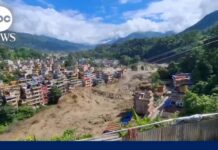
South Korean reporting says a section of the Seosomun overpass collapsed at about 2:30 p.m. while demolition work was underway in Seodaemun-gu, Seoul. The reports describe the incident as a collapse at the demolition site, not a spontaneous failure away from the work zone. Fire authorities moved quickly, treating the scene as a major emergency and dispatching large rescue resources to the overpass.
Initial accounts from multiple outlets said three people were killed and three others were injured, though early casualty totals varied as rescue efforts continued. Reports also said workers had detected a small level change earlier in the day and later began a safety check when the collapse occurred. That sequence matters because it points to a demolition-site event with an unresolved technical cause, not yet a fully explained engineering failure.
Emergency Response and Transit Fallout
Fire officials activated a Level 1 emergency response and sent 16 fire trucks, five ambulances, and about 60 personnel to the collapse site, while police also secured the area. The scale of the response underscores the seriousness of the incident and the likelihood that workers were trapped or injured in the collapse zone. The available reporting does not provide a final official rescue tally beyond the early casualty figures.
The collapse also disrupted transportation beyond the immediate site. Korea Railroad Corporation suspended train operations between Seoul Station and Sinchon Station, and nearby roads were closed as rescuers worked. For commuters, that kind of disruption is the clearest sign that an infrastructure failure has moved from a construction problem to a citywide public-safety issue with real economic and logistical consequences.
What the Public Record Still Does Not Prove
The current record is still thin on primary-source evidence. The available reporting does not include the demolition contractor’s work plan, a police incident report, a fire-service after-action brief, or an engineering forensic analysis that identifies the immediate cause. That means the public can confirm a collapse during demolition, but not yet whether the trigger was sequencing, equipment operation, structural instability, or some other failure inside the work plan.
South Korea's national rail operator KORAIL has deployed extra late-night commuter trains following the deadly overpass collapse in Seoul.
The temporary services will run until 1:50 a.m. on four major lines to assist stranded or delayed passengers near the disrupted capital hub. https://t.co/7pStcLKUjb
— News Korea (@NewsHanguk) May 26, 2026
That gap matters because early wire reports can harden a simple narrative before investigators publish facts. In a case like this, the first version of events often dominates public understanding: a bridge fell, workers were hurt, and officials rushed to contain the damage. The harder question is whether the demolition itself was conducted properly, and the available material does not answer that yet.
Why This Collapse Will Draw Wider Scrutiny
Seosomun overpass was already headed for demolition after safety concerns and deterioration had been reported in prior coverage, which makes this incident even more consequential. When a structure known to need replacement collapses during controlled demolition, officials, contractors, and engineers all face scrutiny over whether warning signs were handled properly. For taxpayers and residents, the central concern is simple: who planned the work, who supervised it, and whether safety discipline failed.
South Korean media also reported that police formed a special investigation team and that Seoul city officials activated emergency response measures after the collapse. Those steps suggest the incident is being treated as more than a routine workplace accident. Until investigators release a full reconstruction, the public record supports only a narrow conclusion: a demolition-phase collapse in central Seoul caused deaths, injuries, and major disruption, but the exact technical cause remains unconfirmed.
Sources:
[1] Web – Three Die in Seosomun Overpass Demolition Collapse
[3] YouTube – South Korea Overpass Collapses Mid-Demolition, Workers Crushed
[4] Web – 3 dead in South Korea after collapse at overpass demolition site
[5] Web – 3 dead in South Korea after collapse at overpass demolition site
[6] Web – Seoul overpass collapse shuts roads and prompts rescue of two
[8] Web – Police Form 50-Member Task Force to Probe Seosomun Overpass …