
After the Supreme Court shut down one tariff pathway, the Trump administration moved fast to reopen the fight—this time with investigations that could hit roughly 60 countries and reset America’s trade leverage by midsummer.
Quick Take
- U.S. Trade Representative Jamieson Greer announced new Section 301 investigations targeting “structural excess capacity” and forced-labor concerns across dozens of countries.
- The probes follow a Supreme Court ruling that blocked tariffs pursued under IEEPA, pushing the administration toward a more evidence-based legal process.
- A temporary global 10% tariff under Section 122 is in effect and is set to expire July 24, 2026, raising pressure to finish the investigations quickly.
- The administration says the investigations can proceed independent of existing trade agreements, including deals with key partners.
Supreme Court ruling forces a legal pivot, not a retreat
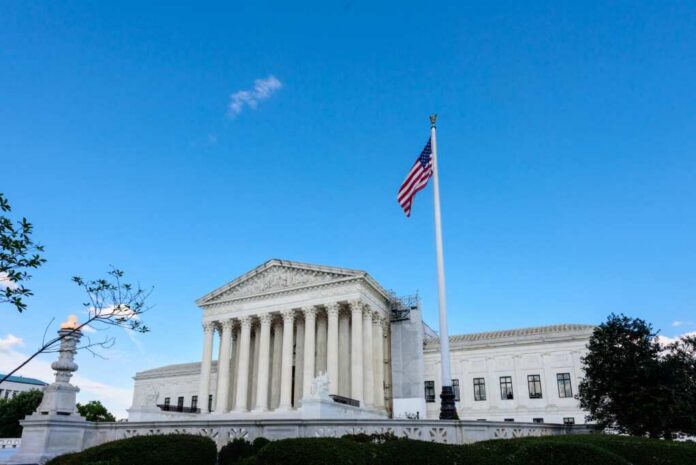
Late February 2026 brought a major constraint: the Supreme Court ruled the president lacked authority to impose broad tariffs under the International Emergency Economic Powers Act when the situation did not meet the law’s emergency standard. That decision did not end the Trump administration’s tariff strategy, but it did force a switch to more traditional trade statutes. The result is a renewed emphasis on Section 301 investigations, which require an administrative record and findings.
Early March also saw the administration use Section 122 to impose temporary global tariffs of 10%, a stopgap scheduled to run until July 24, 2026, with warnings that the rate could rise to 15%. That clock matters because Section 122 is time-limited, and any longer-term tariff policy needs a sturdier legal foundation. Section 301 offers that framework, but it is slower by design because it hinges on investigation, evidence, and process.
What Section 301 investigations target: overproduction and forced labor
On March 11, 2026, USTR Jamieson Greer announced an investigation into “structural excess capacity,” a term trade officials use to describe industries producing far more than domestic markets can absorb and then exporting the surplus abroad. Countries mentioned include major U.S. trading partners such as the European Union, China, Mexico, Japan, and India, among others. Greer’s public message was straightforward: if tariffs are needed to resolve unfair practices, tariffs remain on the table.
USTR also moved toward a separate, broader forced-labor investigation expected to cover roughly 60 countries, beginning around March 12. The scope is significant because a forced-labor probe can affect supply chains that run through multiple jurisdictions, not just one named adversary. For American consumers, the stated goal is to keep coercive labor out of U.S. commerce. For U.S. industry, it also signals tougher screening pressure on imports that may be cheap partly because labor standards are not genuinely voluntary.
Why the July deadline matters for prices, planning, and leverage
July 24, 2026 is the practical deadline shaping nearly every stakeholder’s decision-making. Importers and manufacturers need to know whether the temporary global 10% rate becomes a more targeted set of Section 301 tariffs, whether the 10% becomes 15%, or whether Congress intervenes to extend the stopgap. This indicates the administration wants the Section 301 work concluded before the Section 122 authority expires, but there is no guaranteed timeline for investigations of this scale.
Trade enforcement also comes with trade-war risk points to ongoing friction with allies as well as competitors. The EU Commission previously consulted on countermeasures tied to U.S. trade actions, and past steel and aluminum disputes show how quickly tariff rounds can stack. Section 301’s investigative process may reduce legal vulnerability compared with IEEPA-based tariffs, but it does not automatically reduce the odds of retaliation once penalties are announced.
What it means for “America First” voters watching the economy
For voters frustrated by years of globalist assumptions that hollowed out U.S. industry, the administration’s approach is a clear signal that trade policy will be used to defend domestic production and push back on coercive labor. These probes are designed to build an evidence trail rather than rely on emergency powers. That matters in constitutional terms because a process built on statute and findings is more likely to withstand court scrutiny and create durable policy.
At the same time, it flags real near-term tradeoffs. Tariffs can raise input costs and disrupt supply chains, which may filter into consumer prices depending on the product and how quickly firms can source elsewhere. The administration appears to be betting that targeted enforcement—focused on overproduction and forced labor—will better align economic security and moral clarity than blanket globalism. Americans will learn more as USTR releases findings and outlines any tariff remedies.
Sources:
Trump administration launches new trade investigation (Axios)
Trump administration takes steps to impose new tariffs, announcing investigations (CBS News)
Trump 2.0 tariff tracker (Trade Compliance Resource Hub)