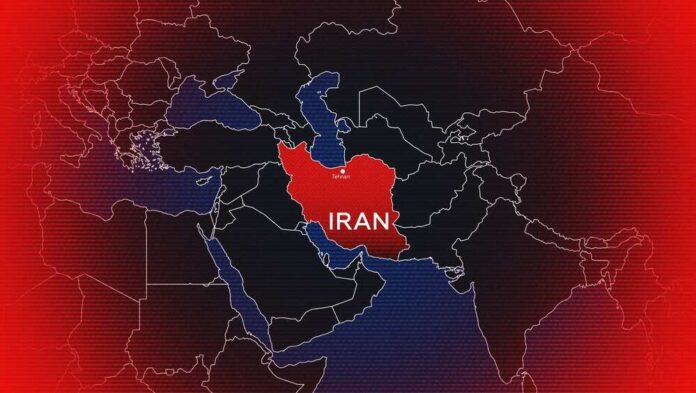
President Trump is betting that a U.S.-enforced chokehold on the Strait of Hormuz can break Iran’s finances faster than Iran can break global energy markets.
Quick Take
- Trump says Iran is “collapsing financially” and losing $500 million per day under a U.S. naval blockade tied to the Strait of Hormuz.
- The White House is extending a ceasefire window for talks while keeping the blockade in place, a pressure strategy that raises stakes for both diplomacy and deterrence.
- Key details—like alleged unpaid Iranian military and police and reported backchannel requests to reopen the strait—remain unverified beyond Trump’s public claims.
- Because Hormuz is a major global oil chokepoint, even partial disruption can ripple into fuel prices, inflation, and broader economic confidence.
Trump’s Truth Social claim: Iran “starving for cash” under blockade
President Donald Trump posted on Truth Social on April 22, 2026, claiming Iran is “collapsing financially,” “starving for cash,” and losing $500 million a day because the United States is enforcing a blockade connected to the Strait of Hormuz. Trump also asserted Iran’s military and police are complaining about not getting paid. The post’s central message is simple: economic pain is the leverage, and the U.S. intends to keep applying it.
Trump’s post also framed Iran’s public threats and closure rhetoric as more performative than real, suggesting Tehran is trying to “save face” while seeking relief behind the scenes. According to reporting that summarizes the episode, Trump referenced intermediaries approaching him roughly four days earlier with claims that Iran wants the strait opened immediately. Those details matter because they would indicate strain inside Iran and potential interest in de-escalation, though independent confirmation is limited.
Ceasefire extension without lifting the blockade raises the leverage—and the risk
The administration’s posture pairs a ceasefire extension for negotiations with the continued blockade—an approach designed to keep maximum pressure on Tehran while testing whether talks can produce concessions. The problem is that ceasefires work best when both sides publicly acknowledge them and have incentives to comply. Reporting notes there was no immediate confirmation from Iran or Israel on the extension, leaving the status of any truce uncertain and increasing the chances of miscalculation.
This dynamic also fits a broader pattern Americans have watched for years: Washington uses sanctions, naval power, and diplomacy simultaneously, but the public often learns key terms through political messaging rather than transparent, institution-level briefings. Conservatives tend to support strong deterrence and secure trade routes, while many on the left worry about escalation and humanitarian consequences. What both sides share is skepticism that permanent, open-ended crisis management abroad improves life at home.
Why the Strait of Hormuz is the pressure point the world can’t ignore
The Strait of Hormuz is one of the world’s most important maritime chokepoints, often described as carrying roughly a fifth of global oil flows. That reality makes any blockade, closure threat, or ship attack more than a regional headline. If insurance costs climb, vessels reroute, or shipping slows, the effects can show up quickly in energy prices. For U.S. families already wary of inflation, foreign shocks that raise fuel costs can feel like an immediate tax.
Trump’s $500 million-per-day loss figure is central to the narrative, because it implies Iran’s oil revenue is being squeezed hard enough to destabilize state operations. At the same time, available reporting does not independently verify the number, the internal pay claims, or the alleged backchannel requests. Readers should treat those points as the president’s stated rationale for the blockade strategy rather than settled public evidence about Iran’s budget or payroll operations.
Domestic politics: energy security, inflation, and distrust of “elite” decision-making
For the Trump administration, a Hormuz strategy that protects shipping while financially pressuring Tehran can be presented as America First energy security—deterrence abroad to prevent price spikes and protect U.S. interests. For Democrats, the same strategy can be attacked as reckless escalation, especially if markets react or if a maritime incident turns deadly. With Republicans controlling Congress, oversight will likely focus on outcomes: stable shipping lanes, credible deterrence, and a clearer end state.
NEW: President Trump says Iran is "collapsing financially" as tensions escalate over the U.S. naval blockade of the Strait of Hormuz. pic.twitter.com/9Qtekfr4Mn
— Fox News (@FoxNews) April 22, 2026
The larger undercurrent is institutional trust. Many Americans—right and left—believe foreign policy is too often steered by entrenched bureaucracies, defense contractors, and career interests that thrive on permanent conflict. The Hormuz episode will test whether this pressure campaign produces verifiable concessions or simply becomes another cycle of claims and counterclaims. Until there is independent confirmation of ceasefire terms and measurable changes in shipping and exports, the public is left judging strategy through contested narratives.
Sources:
Is Iran Facing Economic Collapse? Trump Points to Blockade Losses
Trump claims Iran ‘collapsing financially’ over Hormuz closure
Trump says Iran collapsing financially over Hormuz closure