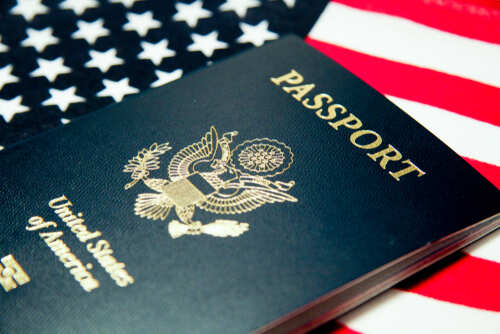
The U.S. government is about to put a sitting president’s portrait inside an official passport—an unprecedented move that’s already testing whether national symbols can stay above everyday politics.
Story Snapshot
- The State Department says it is preparing a limited-edition, America 250-themed passport design featuring President Donald Trump’s portrait and gold signature on interior visa pages.
- The commemorative artwork is tied to the Declaration of Independence and is expected to roll out around July 2026 for the nation’s 250th anniversary celebrations.
- Early reporting cited a run of roughly 25,000–30,000 copies, but the State Department disputed that specific number without providing an alternative figure.
- The “Patriot passport” is expected to be the default option for in-person applicants at the Washington Passport Agency, while standard designs remain elsewhere and online.
What the State Department says is changing—and what isn’t
State Department reporting indicates the agency plans to issue a commemorative passport redesign for America’s 250th anniversary that places President Trump’s portrait on interior visa pages, alongside a gold signature and text from the Declaration of Independence. Officials say the document retains the security features of the “Next Generation” passport introduced in 2021. The planned release window aligns with July 2026 celebrations, and the department describes the project as customized artwork rather than a new passport class.
Practical details matter because passports are not souvenirs; they are citizenship documents used at borders and by foreign governments. The commemorative version will be available without extra fees and will be the default issue at the Washington Passport Agency for in-person applicants. Standard designs are expected to remain available through other channels, including online and non-D.C. locations. For travelers, the biggest day-to-day impact may simply be where you apply and which design you receive.
Why the “first living president” question is fueling backlash
Multiple reports frame this as the first time a living U.S. president has appeared in a U.S. passport. That “first” is the core reason the story has expanded beyond graphic design into a broader argument about civic symbolism. Traditional passport imagery tends to emphasize landscapes, shared history, and cultural motifs precisely to avoid looking like an endorsement of current leaders. Critics argue personalization invites partisan fights; supporters argue America 250 is a fitting moment for stronger patriotic branding.
The political temperature is heightened by how the announcement landed: a White House social-media push promoted a “Patriot passport” concept before the full administrative details were widely understood. That sequence—branding first, process second—feeds skepticism among Americans who already believe federal agencies serve political interests more than the public. At the same time, the State Department has publicly defended the project in institutional terms, emphasizing security and commemorative design rather than personal adoration or campaign-style messaging.
The unresolved question: how “limited” is limited?
One of the few hard uncertainties is quantity. Initial accounts described a limited run in the tens of thousands, while the State Department pushed back on the cited figure as “fake news” without confirming a specific production number. Scarcity drives demand, travel planning, and the perception that the government is creating an exclusive “insider” item. Without a confirmed print run, the public is left to interpret motive through their existing trust—or distrust—of institutions.
What this debate says about trust in government in 2026
The passport fight lands in a moment when many voters—right, left, and politically exhausted middle—share a belief that government increasingly feels performative, self-protective, and disconnected from everyday struggles. Conservatives frustrated by years of cultural lectures and bureaucratic overreach see the commemorative design as either harmless pride or a long-overdue pushback. Liberals who fear institutional capture see it as another example of state power drifting into personal branding. The facts so far confirm the design plan, but the long-term precedent remains the real story.
Cue the Meltdown: State Dept to Issue Commemorative 'Patriot Passport' Featuring Trump's Imagehttps://t.co/D2bHuSy5oq
— RedState (@RedState) April 29, 2026
For Republicans controlling Congress and the White House, the safest path is transparency: publish clear eligibility rules, confirm production numbers, and keep the standard passport readily accessible nationwide. For everyone else, the practical takeaway is simple: this is not a new legal category of passport and does not change citizenship status or travel requirements, but it does reveal how quickly routine governance becomes a proxy war over national identity. With America 250 approaching, expect more symbolic battles like this.
Sources:
State Department passport design Trump portrait
State Department will issue commemorative passports with Trump’s image