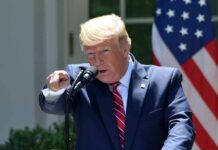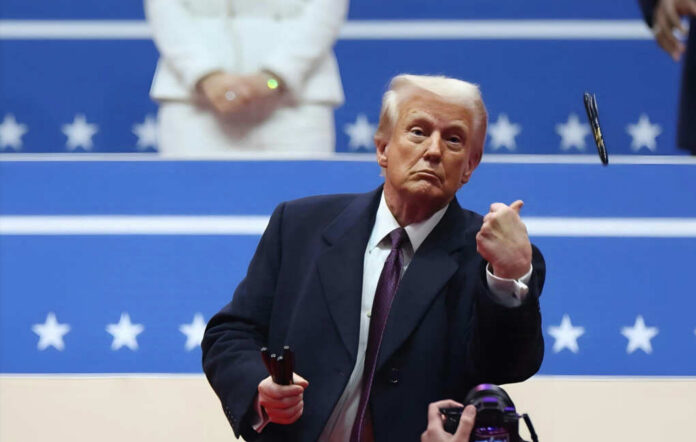
An anonymous “outside adviser” says President Trump is already “bored” with the Iran war—raising fresh questions about whether Washington is drifting toward another messy conflict with no clear finish line.
Quick Take
- A report attributed to an unnamed Trump confidant claims the president is “bored” with the Iran war and wants an exit.
- The account is not an official White House position, and its anonymous sourcing limits what can be verified.
- Trump has repeatedly signaled “victory,” including after Iran briefly reopened the Strait of Hormuz roughly three weeks before the report.
- The White House had not publicly responded as the story spread across outlets on May 9, 2026.
- Any U.S. drawdown could affect gas prices and inflation, but it also risks sending mixed deterrence signals to Iran and its partners.
What the “Bored” Quote Actually Claims—and What It Doesn’t
The Atlantic, as amplified by other outlets, quoted an unnamed “outside adviser” who regularly speaks with President Donald Trump claiming the president is “bored” with the Iran war. The adviser reportedly described impatience as a defining Trump trait and cast Iran as intransigent, suggesting the president is frustrated that the conflict has lasted longer and proved more complicated than expected. No official statement accompanied the claim, so it remains a portrait of mood, not policy.
The practical takeaway for voters is less about gossip and more about governance: anonymous sourcing can spotlight real internal debates, but it can also be used to shape public expectations without accountability. Until the administration confirms a change in objectives, timelines, or negotiating posture, the “bored” narrative should be treated as a clue about possible direction—not a verified decision to escalate or disengage.
Hormuz, “Victory” Messaging, and Why Energy Still Drives the Politics
Reporting tied the adviser’s account to Trump’s repeated signals that the U.S. was close to finishing the job, including a “victory” posture after Iran briefly reopened the Strait of Hormuz around mid-April. Because Hormuz is central to global oil shipping, even short disruptions can hit American households through higher fuel and transport costs. For conservatives already angry about inflation and high energy prices, the key question is whether Washington can secure shipping lanes without drifting into an open-ended campaign.
The political bind is familiar: voters want strength abroad but also want limits, clarity, and results at home. When officials message “mission accomplished” too early, trust erodes among Americans who remember long wars sold as quick and clean. When officials avoid clear goals, critics on both left and right see the same pattern—an insulated national-security class that can always justify “one more month,” no matter what it costs families.
Putin on the Phone: Diplomacy, Leverage, and the Risk of Mixed Signals
Separate reporting cited a lengthy Trump-Putin call that included discussion of the Iran war, adding another layer to the story. The same stream of coverage pointed to Russia-Iran military ties and noted U.S. steps described as sanctions relief on Russian oil in April. None of that proves a deal is imminent, but it does underline how quickly foreign policy turns into bargaining among great powers—often with energy markets as the pressure point.
For Americans skeptical of “globalism,” this is where the frustration becomes bipartisan: average citizens don’t get a seat at these negotiations, yet they pay the bill if talks go sideways. If Russia gains leverage through energy chaos, or if Iran interprets U.S. impatience as weakness, the country could face a worse outcome—more instability abroad paired with higher prices at home—without Congress ever delivering a clear, accountable debate.
What to Watch Next: Proof Points That Matter More Than Leaks
The most important near-term indicators are measurable actions, not anonymous quotes. Watch for changes in U.S. force posture, new directives about maritime security around Hormuz, or formal diplomatic signals about objectives and end states. Also watch whether the administration frames any step as a temporary pause, a negotiated off-ramp, or a finished campaign. Each narrative implies different risks for deterrence, allies, and domestic economic pressure.
Trump Adviser Says President Is 'Bored' With the Iran War https://t.co/JC3f4rxZvt
— Mediaite (@Mediaite) May 9, 2026
Voters who distrust “the deep state” tend to focus on one test: transparency. If the war’s goals are clear, timelines are realistic, and Congress is pressed to own the costs, public confidence can be rebuilt even amid disagreement. If the public instead gets competing leaks, early victory declarations, and shifting rationales, the story will reinforce a darker conclusion shared across the spectrum—that Washington protects institutions and careers first, and the American people last.
Sources:
Trump Adviser Says President Is ‘Bored’ With the Iran War
The Atlantic: Trump bored with Iran war