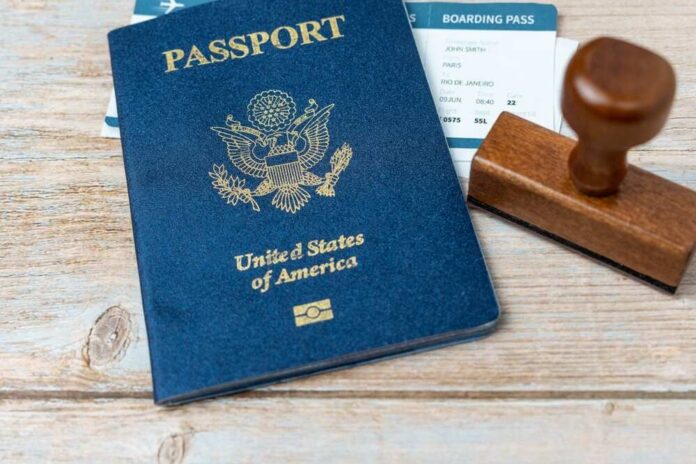
The Trump administration is escalating enforcement of a 30-year-old law by revoking valid U.S. passports from thousands of parents owing more than $2,500 in child support, marking a dramatic shift from merely denying new applications to actively stripping travel rights from existing passport holders.
At a Glance
- The State Department is revoking valid passports for parents with child support arrears exceeding $2,500, certified by state agencies through HHS.
- This represents a significant escalation from the prior policy of denying new passport applications, now targeting individuals with existing valid documents.
- Affected parents receive 30 days to contest the certification or arrange payment plans through state child support agencies before losing travel privileges.
- The enforcement targets thousands of debtors, with HHS verification delays of 2-3 weeks creating additional obstacles for those seeking to restore eligibility.
Enforcement Expansion Under Federal Authority
The State Department’s passport revocation program operates under federal law codified in 42 U.S.C. § 652(k), originally enacted through the Personal Responsibility and Work Opportunity Reconciliation Act of 1996 and amended by the Deficit Reduction Act of 2005. The threshold of $2,500 in arrears triggers certification by state child support enforcement agencies to the Department of Health and Human Services Office of Child Support Enforcement, which then notifies the State Department to revoke passports. This streamlined process, enabled by enhanced HHS data-sharing capabilities, represents the first mass revocation wave targeting existing valid passports rather than blocking new applications.
Scale and Impact on Affected Families
Approximately 13 million active child support cases exist nationwide, with roughly $120 billion in total arrears outstanding. Historical data shows the State Department denied or revoked approximately 20,000 passports annually under the prior denial-only framework. The current revocation expansion targets thousands of additional parents, many facing unemployment, incarceration, or reduced income circumstances that contributed to their arrears. Travel disruptions cascade beyond individual hardship—job loss for those requiring international work, inability to attend family emergencies, and separation of families with one parent abroad represent documented consequences affecting multiple household members.
State agencies like Florida’s Department of Revenue actively certify debtors and provide 30-day contest windows for those disputing arrears amounts or claiming inability to pay. However, the certification process itself remains largely administrative, with limited judicial review mechanisms for individuals asserting non-willful arrears or extenuating circumstances.
The Certification Process and Restoration Barriers
Once the State Department receives HHS certification of arrears exceeding $2,500, it notifies affected parents via email or mail that their passports are revoked effective immediately. The notification period provides 30 days for parents to either pay the full arrears through their state child support agency or contest the certification. Even after payment, HHS verification requires an additional 2-3 weeks minimum before the State Department restores eligibility, creating extended travel delays for those resolving their debt promptly.
Broader Questions About Government Authority and Fairness
While child support enforcement addresses a legitimate public interest—ensuring custodial parents and children receive owed financial support—the revocation mechanism raises concerns about proportionality and due process. Passport revocation essentially confines individuals to U.S. borders without judicial determination of ability to pay or consideration of hardship. Critics note the policy disproportionately affects low-income men, many facing systemic barriers to employment and unable to meet inflated arrears calculations that accumulate during periods of incarceration or joblessness.
The policy also reflects broader frustrations shared across the political spectrum: that government agencies prioritize debt collection and administrative efficiency over individual circumstances, that enforcement mechanisms often hurt vulnerable populations more than affluent debtors with resources to navigate legal challenges, and that once systems like these are established, they expand without meaningful public debate about their human costs.
State Department set to revoke passports of thousands of parents with unpaid child support debt https://t.co/42qLX7AOqy
— ConservativeLibrarian (@ConserLibrarian) May 8, 2026
For parents facing revocation, state child support agencies offer payment plans and hardship waivers in some cases, though availability varies by jurisdiction. Those overseas holding valid passports receive limited-validity return documents through U.S. embassies, enabling only travel back to the United States—a measure that underscores the enforcement mechanism’s primary goal of compelling domestic compliance rather than facilitating legitimate travel needs.
Sources:
State Department Passport Services: Child Support Debt Information
Florida Department of Revenue: Child Support Passport Denial Program
State Department Official Release: Passport Revocations Due to Significant Child Support Debt