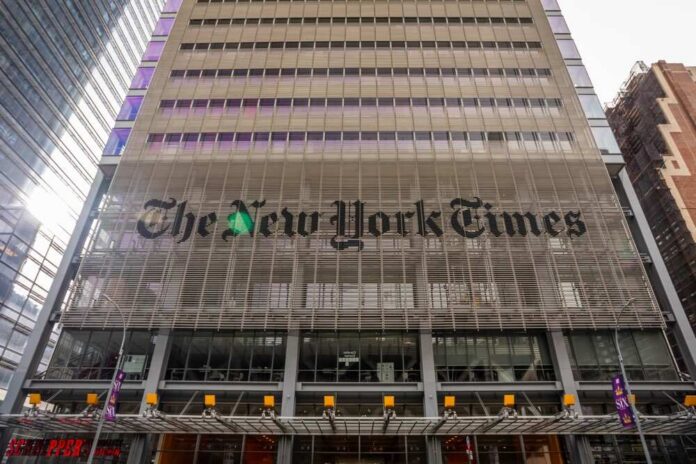
EEOC sues New York Times for allegedly discriminating against a white male editor to advance DEI hiring goals, marking a major victory for equal protection under the law.
Story Highlights
- EEOC filed lawsuit on May 5, 2026, against NYT for violating Title VII by passing over qualified white male employee for less-experienced female candidate.
- Case centers on 2025 Deputy Real Estate Editor position; NYT’s published diversity goals cited as evidence of discriminatory intent.
- EEOC Chair Andrea Lucas declares no “diversity exception” to federal anti-discrimination laws, targeting elite institutions.
- Lawsuit reflects Trump-era EEOC shift enforcing color-blind hiring amid post-Supreme Court crackdown on affirmative action.
- NYT denies race or gender influenced decision, calls EEOC approach a “predetermined narrative.”
Lawsuit Details and Timeline
The Equal Employment Opportunity Commission filed suit in U.S. District Court for the Southern District of New York on May 5, 2026, case number 1:26-cv-03704. A white male editor, employed since 2014 with real estate experience, was not advanced to final interviews for Deputy Real Estate Editor in early 2025. An external multiracial female with limited experience received the promotion. EEOC alleges this violated Title VII of the 1964 Civil Rights Act, citing NYT’s 2021 diversity plan aiming for 50% more Black and Latino leaders by 2025, achieved early in 2022.
EEOC Leadership Drives Anti-DEI Enforcement
Under Chair Andrea Lucas and Acting General Counsel Catherine L. Eschbach, appointed amid Trump administration influence, EEOC aggressively targets DEI practices. Lucas stated, “No one is above the law—including ‘elite’ institutions. There is no such thing as ‘reverse discrimination’; all race or sex discrimination is equally unlawful.” Eschbach warned employers of litigation risk for DEI-motivated decisions. This follows 2023 investigations, 2024 actions against training, and 2025 hiring scrutiny, building on 2023 Supreme Court rulings ending race-based college admissions.
New York Times Response and Broader Context
Spokesperson Danielle Rhoades Ha responded: “Neither race nor gender played a role—we hired the most qualified candidate.” NYT achieved diversity goals ahead of schedule yet continued focus. The suit occurs in a media landscape pressured by talent needs and post-2020 DEI expansions. EEOC seeks injunction against race/sex discrimination, back pay, damages. Failed conciliation preceded filing. This tests if published goals prove intent, amid national shift from DEI favoring merit-based hiring.
Legal experts note EEOC strengths in Title VII text and facts but challenges proving causation. Outcomes could chill DEI nationwide, forcing merit-only processes and aligning with conservative values of individual liberty and equal protection without racial preferences. Both sides face high stakes in precedent-setting case.
New York Times sued by US employment agency over diversity, hiring https://t.co/SQXFsOryIT
— Reuters Legal (@ReutersLegal) May 5, 2026
Implications for American Workplaces
NYT incurs legal costs, reputational hits, and hiring adjustments and victory for EEOC restricts diversity considerations, deterring lawsuits across industries. This upholds 1964 Civil Rights Act principles against government-backed discrimination, resonating with Americans frustrated by elite-driven “woke” policies eroding meritocracy and the American Dream of advancement through hard work alone.
Sources:
CBS News: EEOC sues New York Times over discrimination allegations
ABC News: US rights agency sues New York Times for discriminating
EEOC: EEOC Sues New York Times for DEI-Related Race and Sex Discrimination
Politico: Federal discrimination watchdog sues New York Times
NYT Co: The New York Times’s Response to the EEOC’s Lawsuit Alleging Employment Bias