
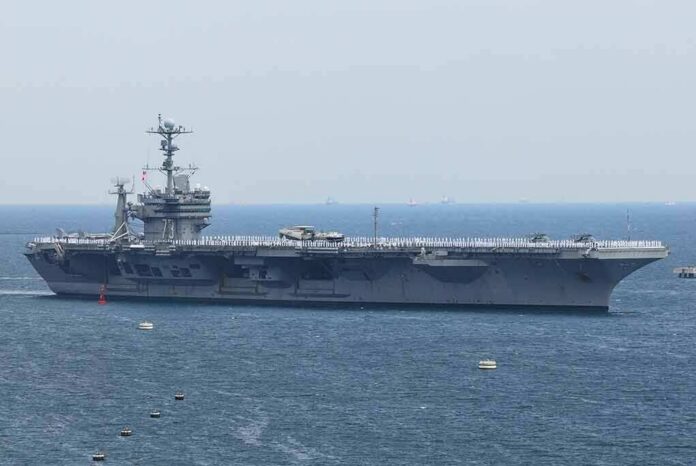
President Trump blasted reports of “hungry sailors” on the USS Abraham Lincoln as false, while the Navy released denials and photos as families and lawmakers pressed claims of meager meals and failing ship services.
Story Highlights
- President Trump rejected food-shortage reports about the USS Abraham Lincoln as “fake.”
- The Navy’s top leadership said the carrier and a second ship had adequate food supplies.
- Families and some lawmakers described meager meals and poor conditions during the long deployment.
- The dispute reflects broader gaps between official logistics data and on-the-ground experiences.
What President Trump And The Navy Said
President Trump dismissed media reports of food shortages on the USS Abraham Lincoln, calling a key story “a CNN fake report.” He said the ship had enough food and was well maintained during the long deployment. Video clips captured him repeating that message at public events. His remarks tracked with Navy statements that labeled shortage claims false and stressed normal supply levels on the Lincoln and on the USS Tripoli.
The U.S. Navy’s leadership backed that position. The Chief of Naval Operations said deployed ships had adequate stores and met nutrition standards. Defense outlets reported that ships in the Lincoln’s group had at least a 10‑day food supply and that sailors were not missing required calories. Navy posts also shared images of “fresh meals” on both ships to counter pictures of small portions that had circulated online earlier in the spring.
What Families And Lawmakers Reported From The Deckplates
Family members of sailors painted a different picture. One mother told local television that food had been scarce and that her son at one point ate only half a cup of rice and two tortillas. The BBC relayed complaints from a California congressman who cited moldy showers, broken toilets, weeks without laundry, and long stretches without hot water. NPR reported lawmakers were seeking an investigation after families described shortages and low morale.
National and international outlets amplified those accounts. Reports said sailors and marines faced more than 250 days at sea with strained services and exhaustion. Advocates and veterans raised alarms about mental health and the impact of failing plumbing and thin supplies on daily life. These reports did not claim every meal failed, but they stressed periods of meager portions and deteriorating living conditions that could wear down crews over time.
Why The Stories Clash And What It Says About Accountability
This split follows a common pattern in military controversies. Officials cite inventories, logistics plans, and standards. Families and crew point to actual meals, broken fixtures, and long days without relief. Fact-checkers noted the Navy and the Secretary of Defense labeled early shortage claims “false” on social media, while also acknowledging the need for more verified detail. That puts the public in the middle, choosing between records and lived accounts.
President Donald Trump pushed back against reports of food shortages aboard the USS Abraham Lincoln, calling CNN’s reporting “fake news.” pic.twitter.com/AQAeqzp88y
— MEAWW News (@meawwcom) August 18, 2026
For readers across the spectrum, the stakes are clear. People want the truth about how the government treats service members. Conservatives and liberals both distrust polished images if they mask real problems. A practical next step would be a transparent review that releases ship logs, resupply dates, and galley records, along with sworn testimony from crew. Until that happens, this fight will run on trust, not proof—and that serves no one on the mess line.
Sources:
facebook.com, bbc.com, sandiegouniontribune.com, middleeasteye.net, nine.com.au, youtube.com, wionews.com, snopes.com